Nova & Adam's Italy Trip
Nova & Adam's Italy Adventure
(...and Duncan came too 😏)
March 9-16, 2026
📸 What We Actually Did
Tuesday, March 10 — Arrival Day in Bologna
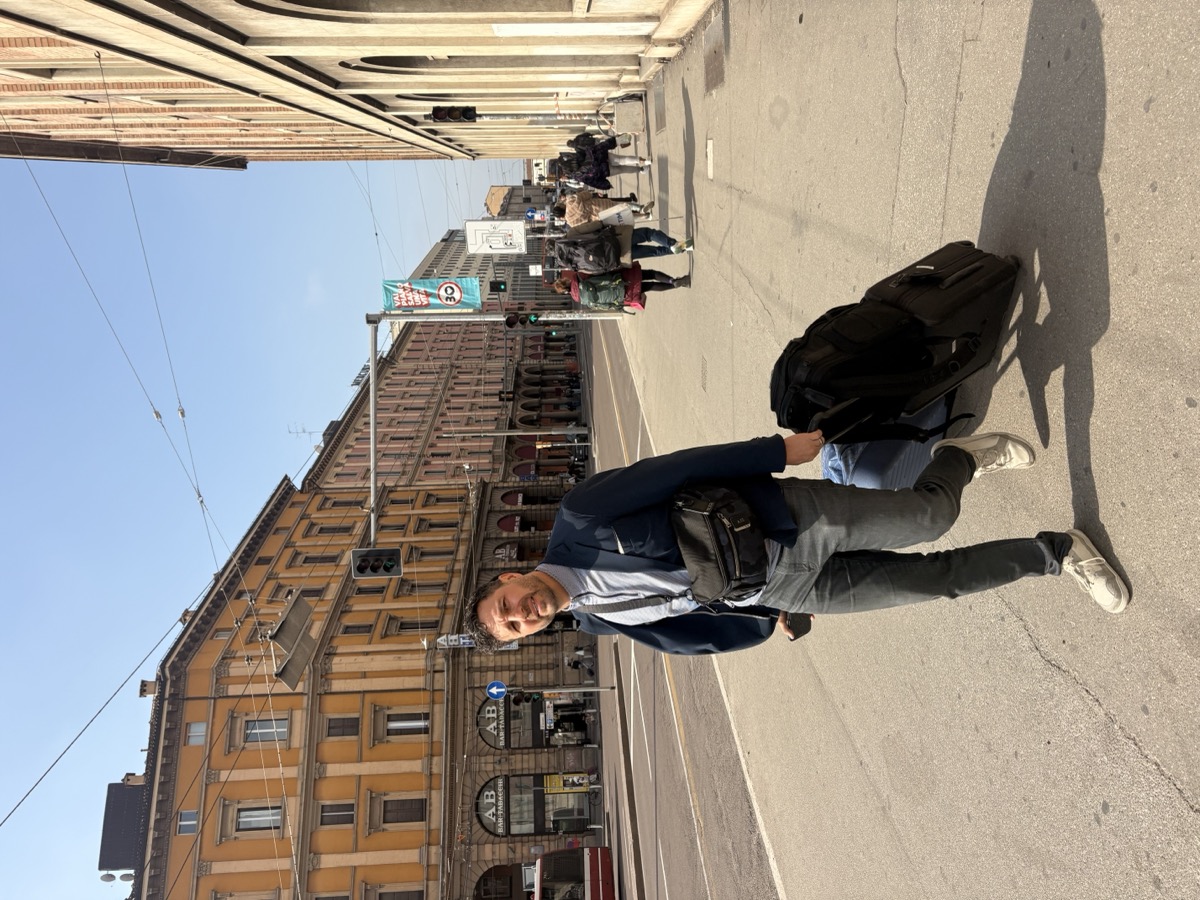
Walking to the Airbnb
🚶 ArrivalRolling into Bologna — suitcase in tow, walking down Via dell'Indipendenza under the porticoes from Bologna Centrale to the Airbnb. This grand boulevard connects the train station straight to Piazza Maggiore, lined with shops, cafés, and the covered arcades that keep you dry in any weather. The trolleybus wires overhead and the ochre-colored buildings are your first taste of "La Rossa."
📍 Via dell'Indipendenza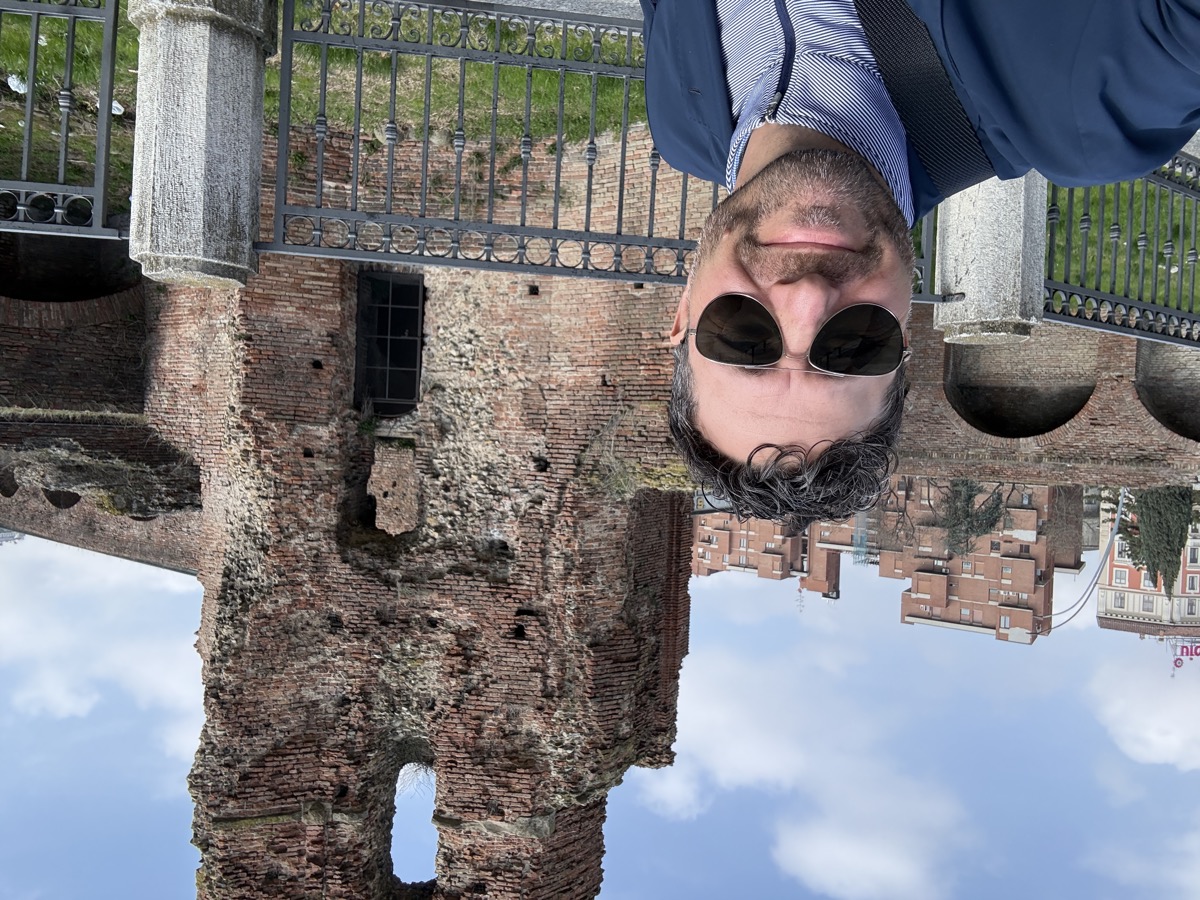
Anfiteatro Romano
🏛️ RuinsFirst stop after dropping bags — the ruins of Bologna's ancient Roman amphitheater in Parco dell'Arena. Built in the 1st century AD, this amphitheater once held 20,000 spectators for gladiatorial contests. Most of it was dismantled over the centuries for building materials, but these weathered brick arches still stand as a reminder that Bologna was the Roman colony of Bononia, founded in 189 BC.
📍 Anfiteatro Romano 📖 History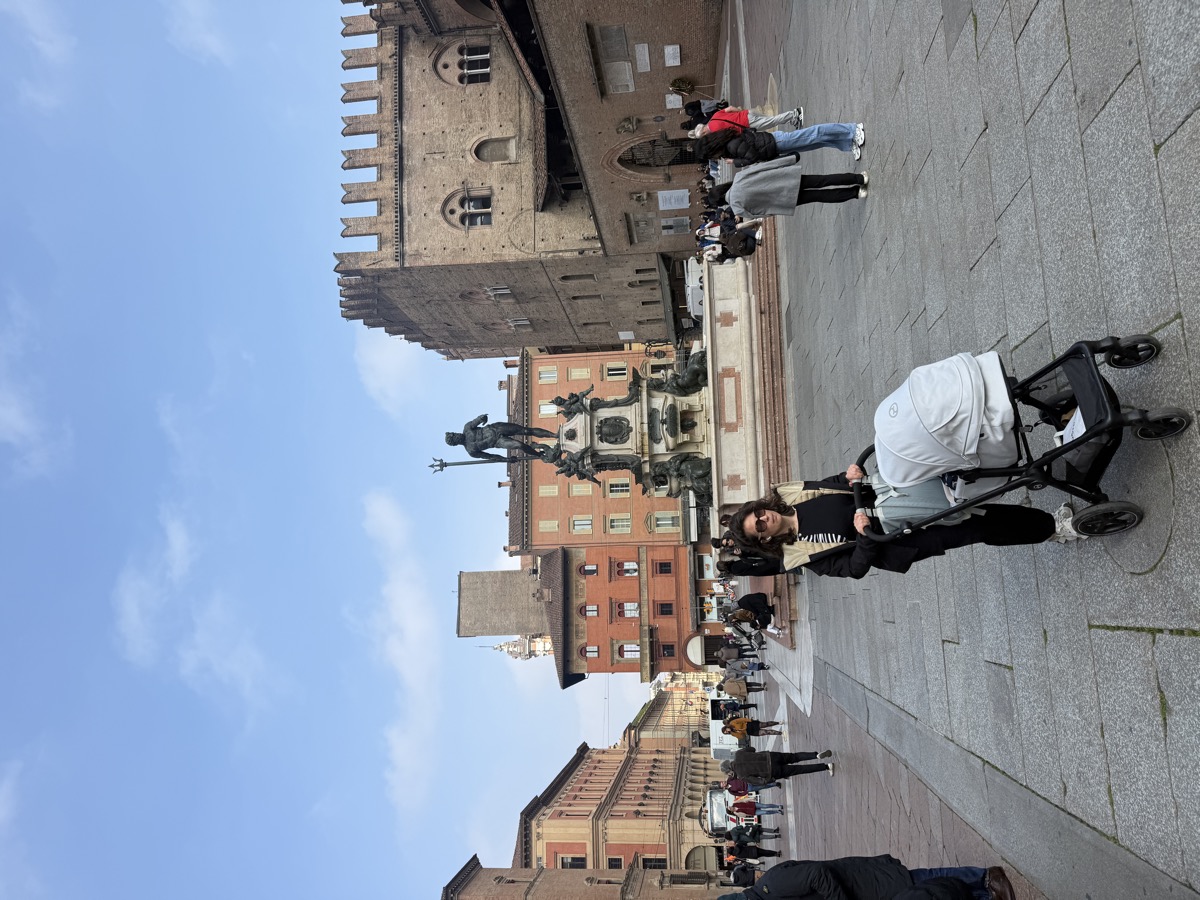
Fontana del Nettuno
🏛️ LandmarkThe iconic Neptune Fountain in Piazza del Nettuno with the medieval Palazzo di Re Enzo behind it. Sculpted by Giambologna in 1563-1567, the fountain was commissioned by Pope Pius IV. Fun fact: the four mermaids were so provocative that the Church considered covering them up. The fountain has become Bologna's unofficial symbol — locals call it "Il Gigante" (The Giant).
📍 Piazza del Nettuno 📖 History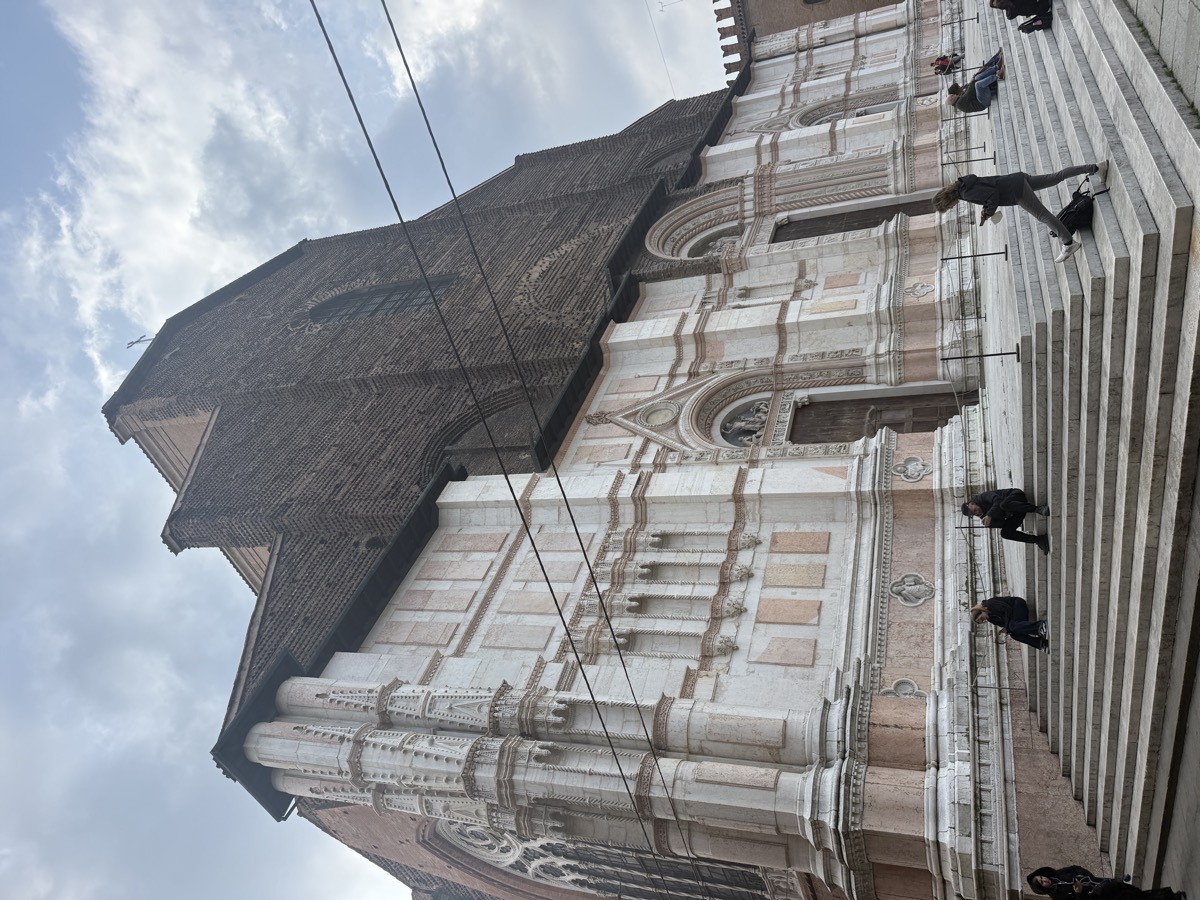
Basilica di San Petronio
🏛️ Must SeeThe famously unfinished facade of San Petronio — the lower half clad in pink and white marble with intricate Gothic detailing, the upper half still in raw red brick after 600 years. Construction began in 1390 with plans to make it bigger than St. Peter's in Rome. The Pope put a stop to that by building the university next door instead. Inside: the world's longest indoor sundial (1655), stretching 67 meters across the floor.
📍 Basilica di San Petronio 📖 History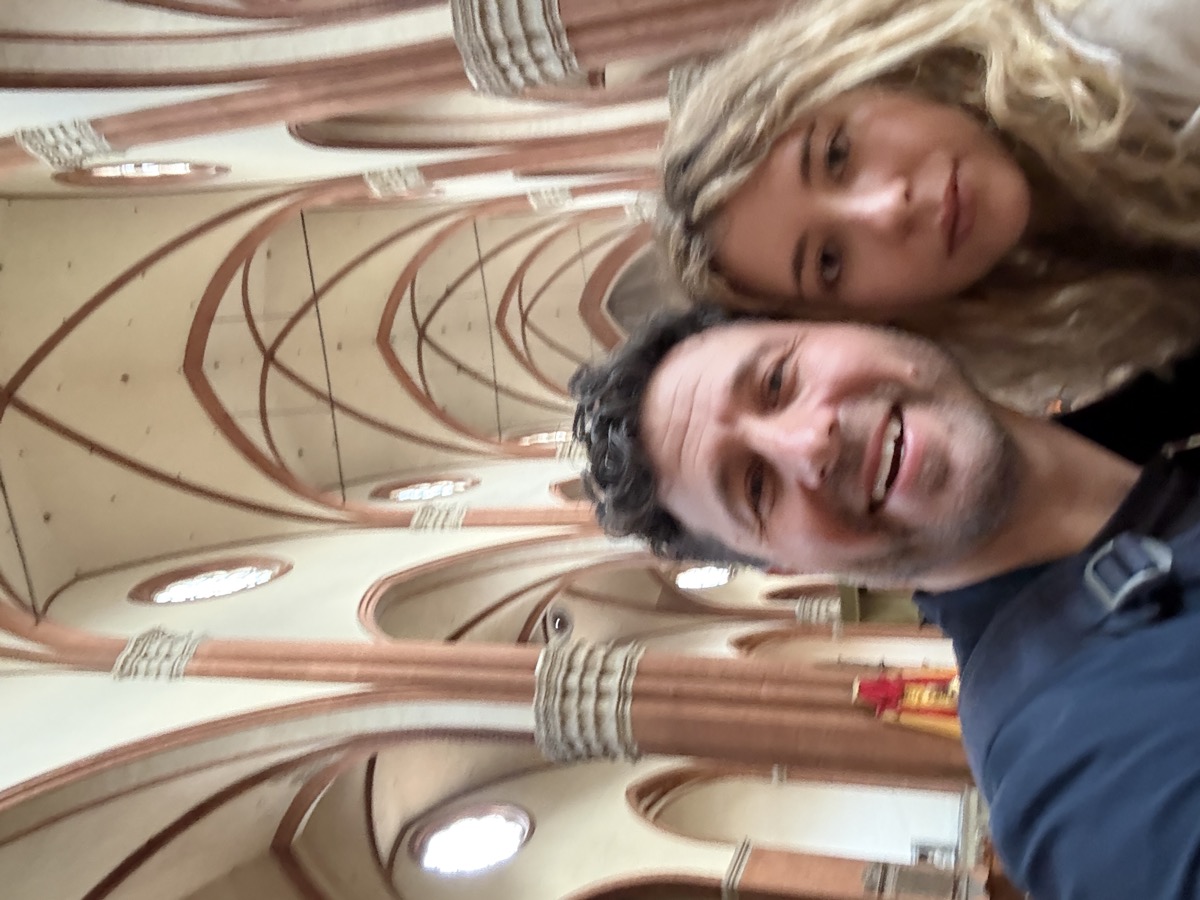
Inside San Petronio
📸 PhotoAdam and Nova inside the basilica — soaring Gothic arches, red brick columns, and elegant ribbed vaulting stretching toward the distant altar. The 5th largest church in the world, and it's not even a cathedral (it's just a basilica — the actual cathedral is the much smaller San Pietro nearby).
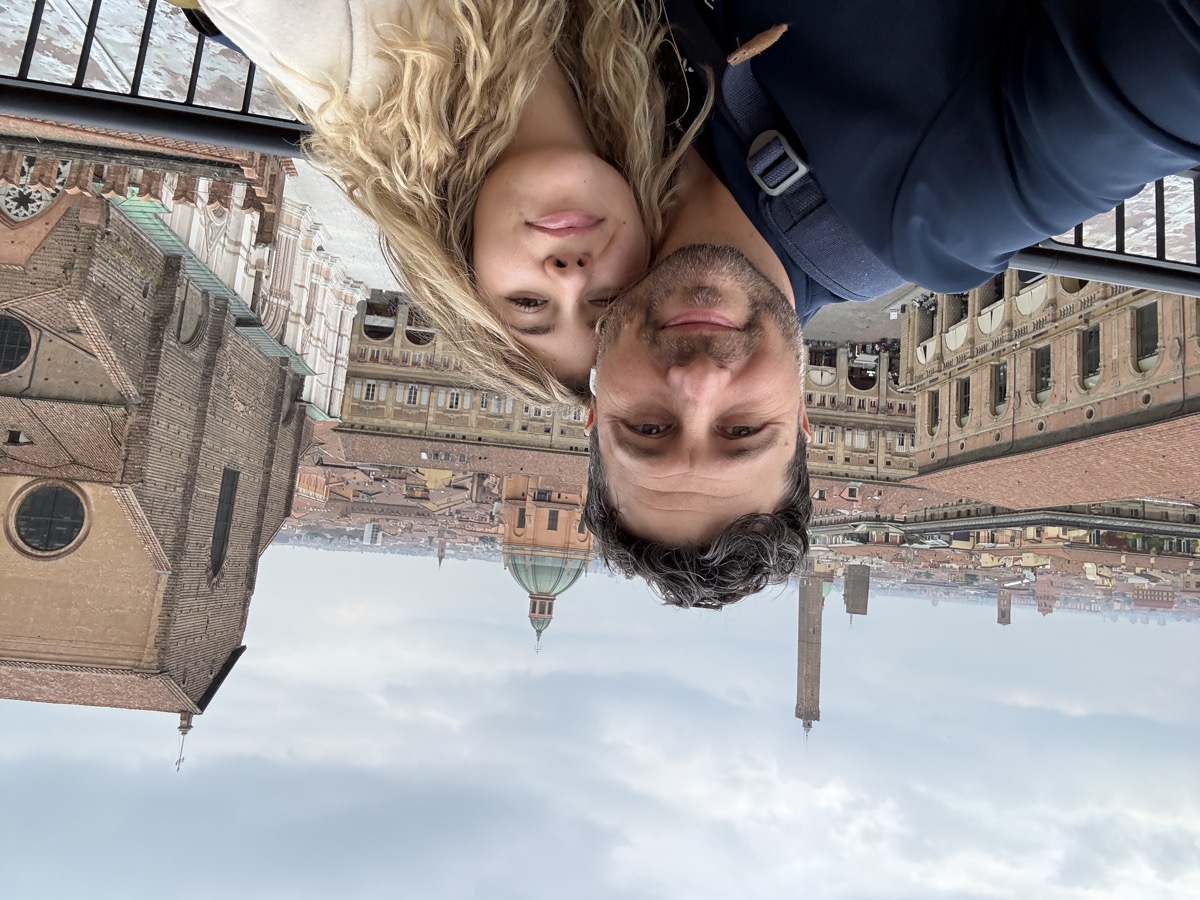
Bologna from Above
🏔️ ViewsThe rooftop terrace view — Bologna's famous red-tiled rooftops stretching to the horizon. The Due Torri (Two Towers) visible in the distance, with the green copper dome of Santa Maria della Vita below. Bologna is called "La Rossa" partly for this sea of terracotta red that blankets the entire city. One of those views that makes you understand why people never leave.
📍 Piazza Maggiore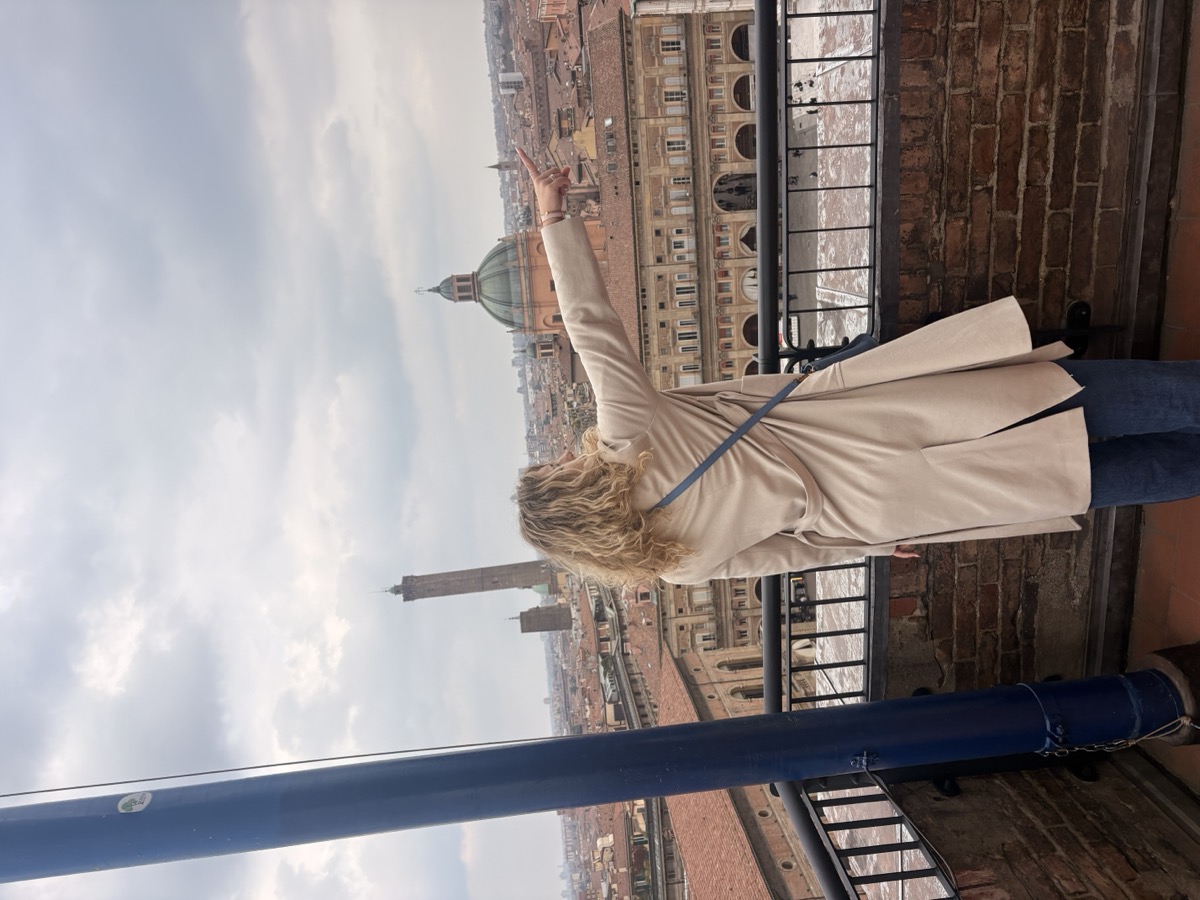
Nova Spotting the Two Towers
📸 PhotoNova pointing out the Torre degli Asinelli and Torre Garisenda from the rooftop terrace. From up here you can see why medieval Bologna was called the "city of towers" — wealthy families competed to build the tallest as symbols of power and prestige.
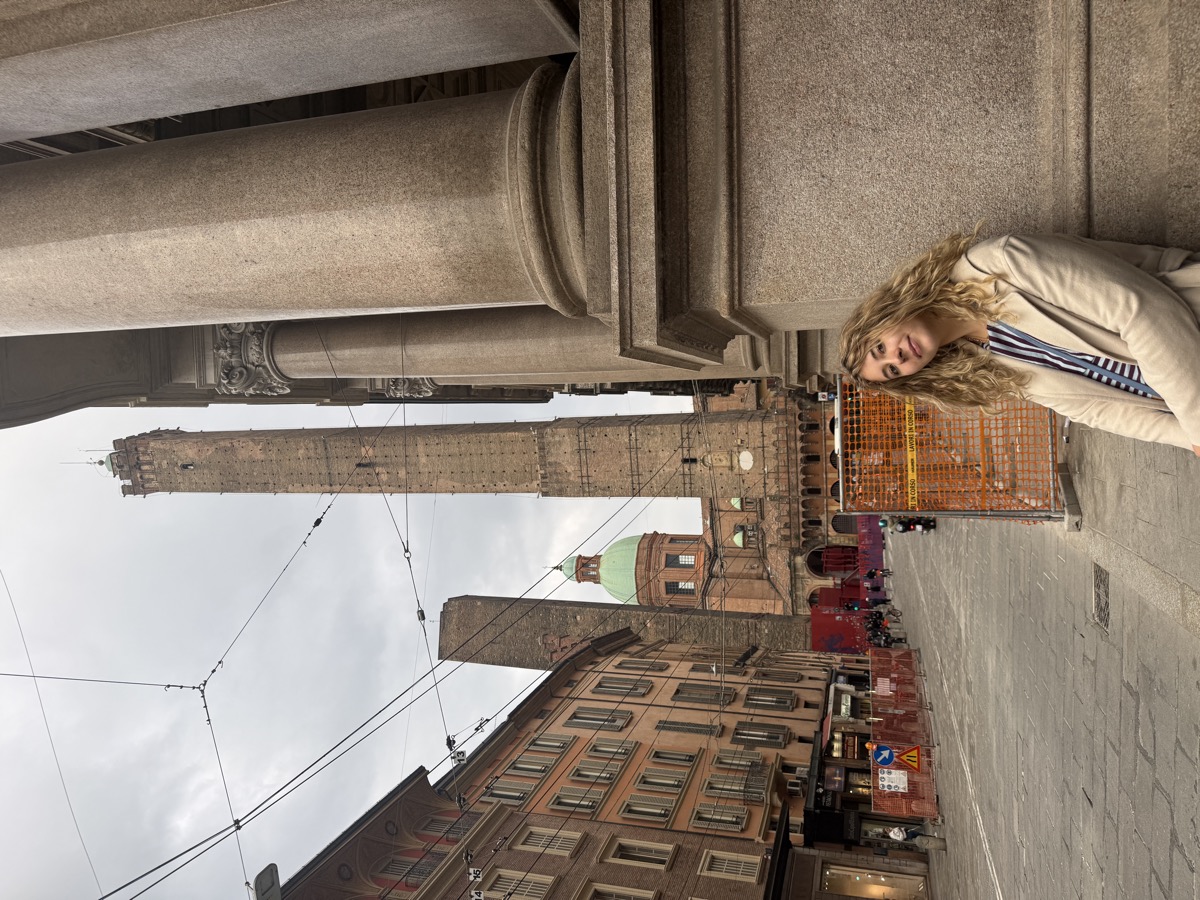
Le Due Torri — The Two Towers
🏛️ IconicNova at the base of Bologna's most famous landmarks — the Torre degli Asinelli (97 meters, built 1109-1119) and the leaning Torre Garisenda (48 meters, originally 60 but shortened due to leaning). In medieval Bologna, wealthy families competed to build the tallest tower as a show of power. At one point there were over 100 towers in the city — only about 20 survive today.
📍 Due Torri 📖 History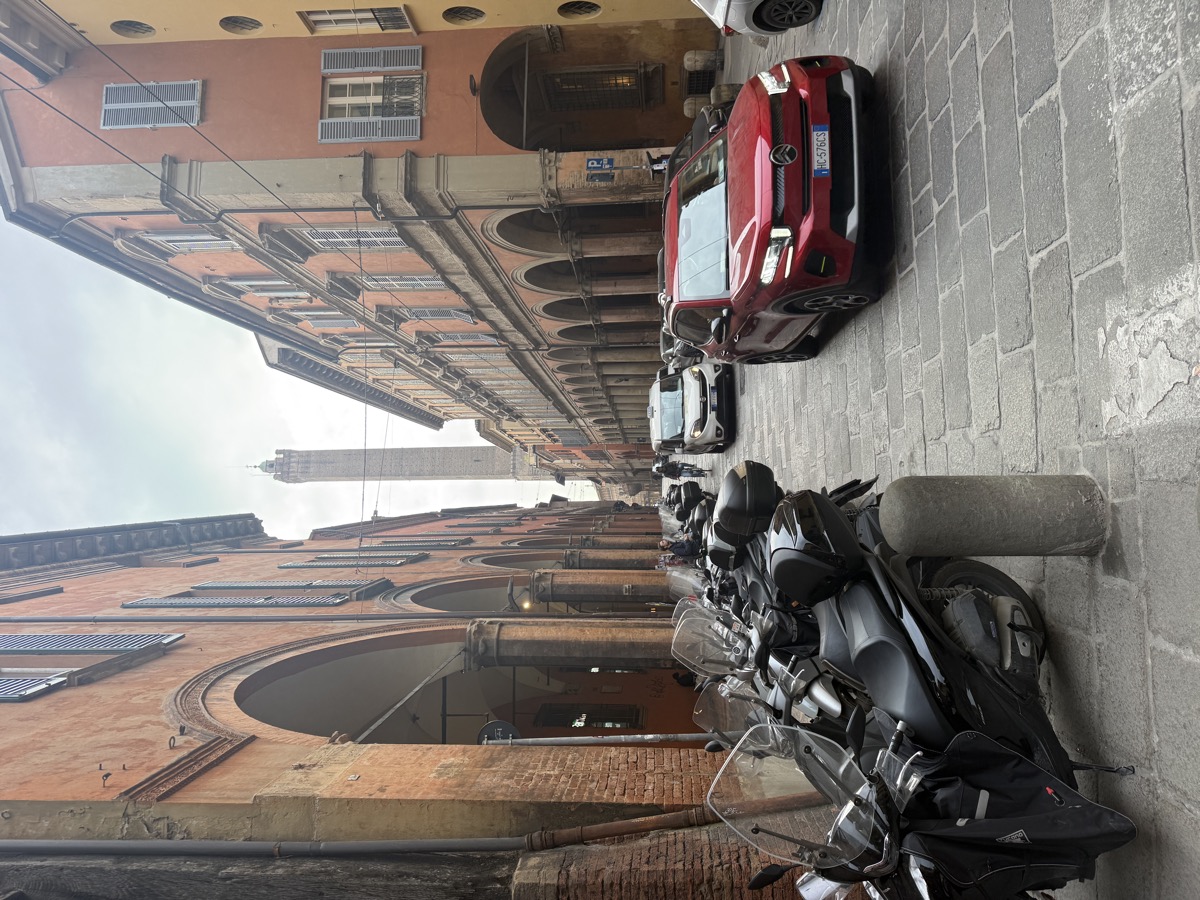
Under the Porticoes
🚶 WalkingA classic Bologna street — porticoes on both sides, warm terracotta buildings, and the Torre degli Asinelli rising at the end. Bologna has nearly 40 km of these covered walkways, earning UNESCO World Heritage status in 2021. They originated in the Middle Ages when the booming university population needed more housing, so buildings expanded over the sidewalks with covered arcades below.
📍 The Porticoes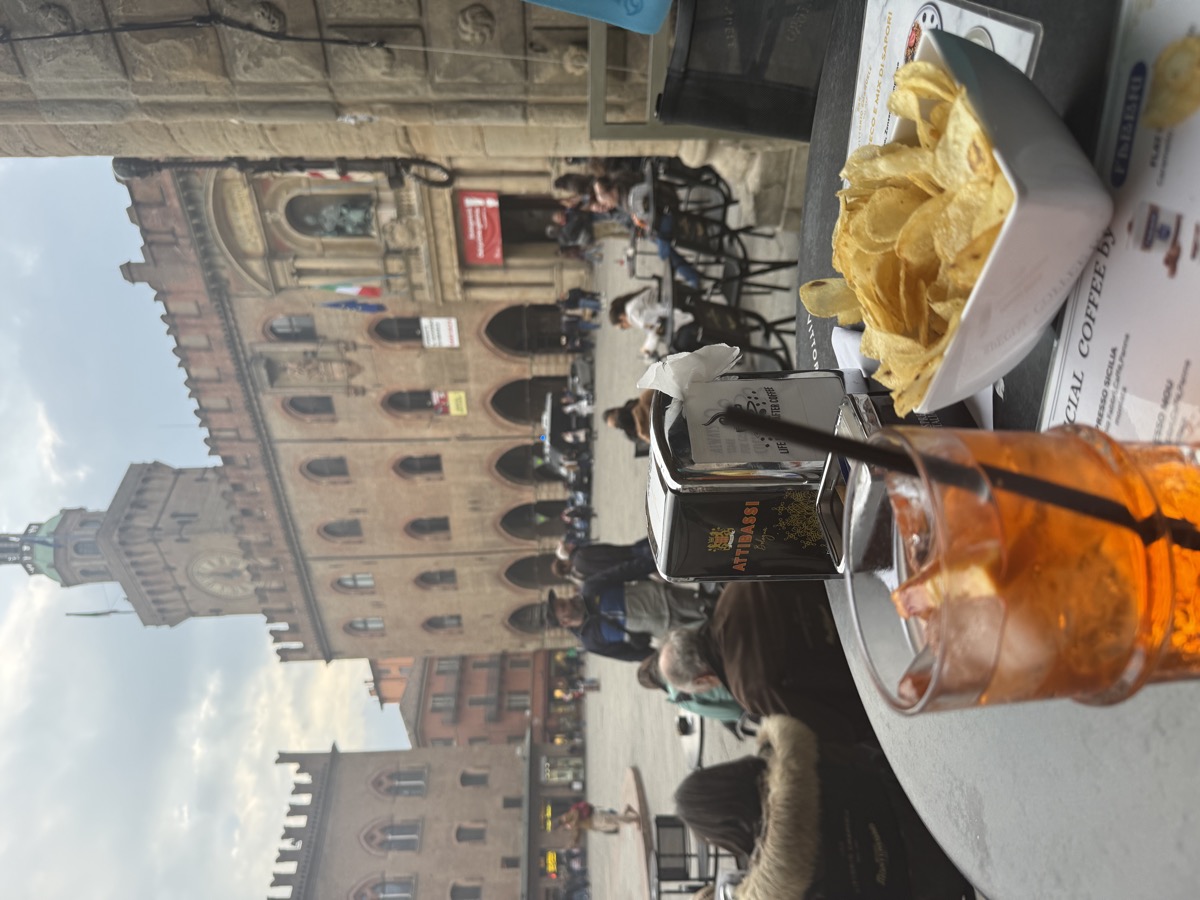
Aperitivo in the Piazza
🍹 DrinksThe Italian ritual of aperitivo — a pre-dinner drink with snacks, enjoyed at a café table overlooking Piazza Maggiore with the Palazzo d'Accursio and its clock tower in the background. The aperitivo tradition started in 18th-century Turin and spread across Italy. It's not just a drink — it's a daily social ritual, usually between 6-8 PM, marking the transition from work to evening.
📍 Piazza Maggiore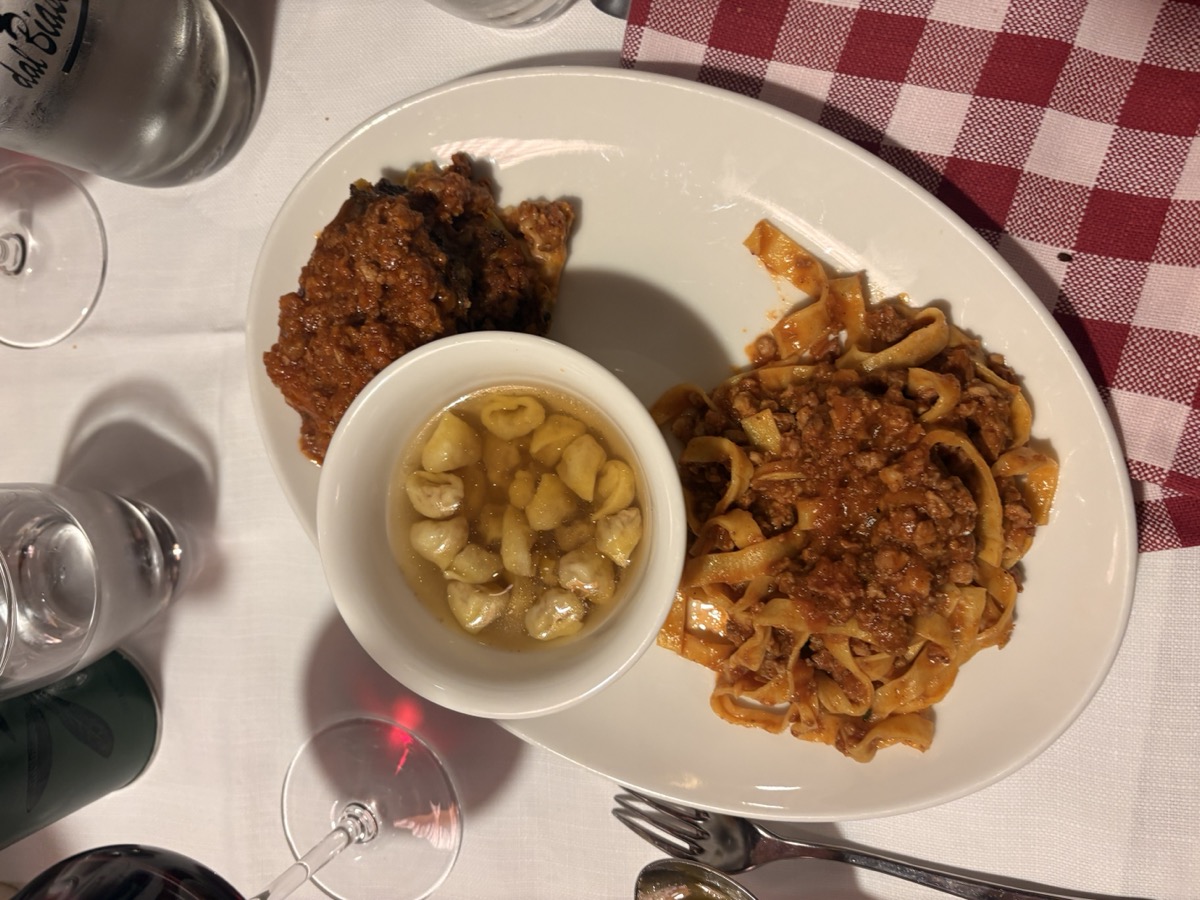
The Tris Bologna
🍝 DinnerThe legendary Tris Bologna at Trattoria dal Biassanot — tagliatelle al ragù, tortellini in brodo, and lasagna alla Bolognese, all on one plate. This is the holy trinity of Bolognese cuisine. The ragù here is nothing like "spaghetti bolognese" — it's a slow-cooked meat sauce with a soffritto base, served on fresh egg tagliatelle, never spaghetti. Tortellini in brodo is said to be inspired by Venus's navel.
📍 Dal Biassanot 🔗 Website ⭐ Reviews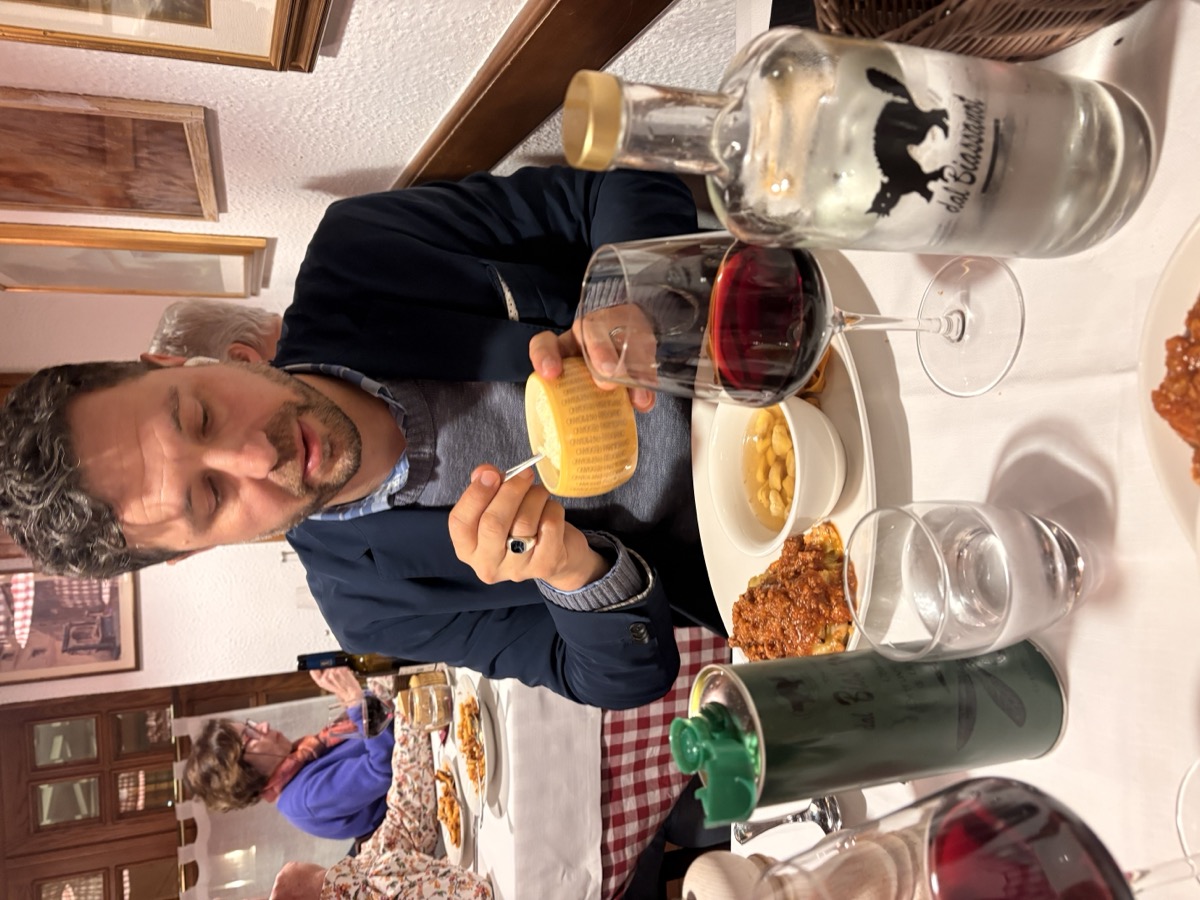
Parmigiano-Reggiano — The King of Cheese
🧀 ExperienceScooping fresh Parmigiano-Reggiano from a mini wheel right at the table. This cheese has been made the same way in Emilia-Romagna since the Middle Ages — aged a minimum of 12 months, with the best aged 24-36 months. Each wheel takes about 550 liters of milk to produce. It's called "The King of Cheeses" for a reason.
📖 History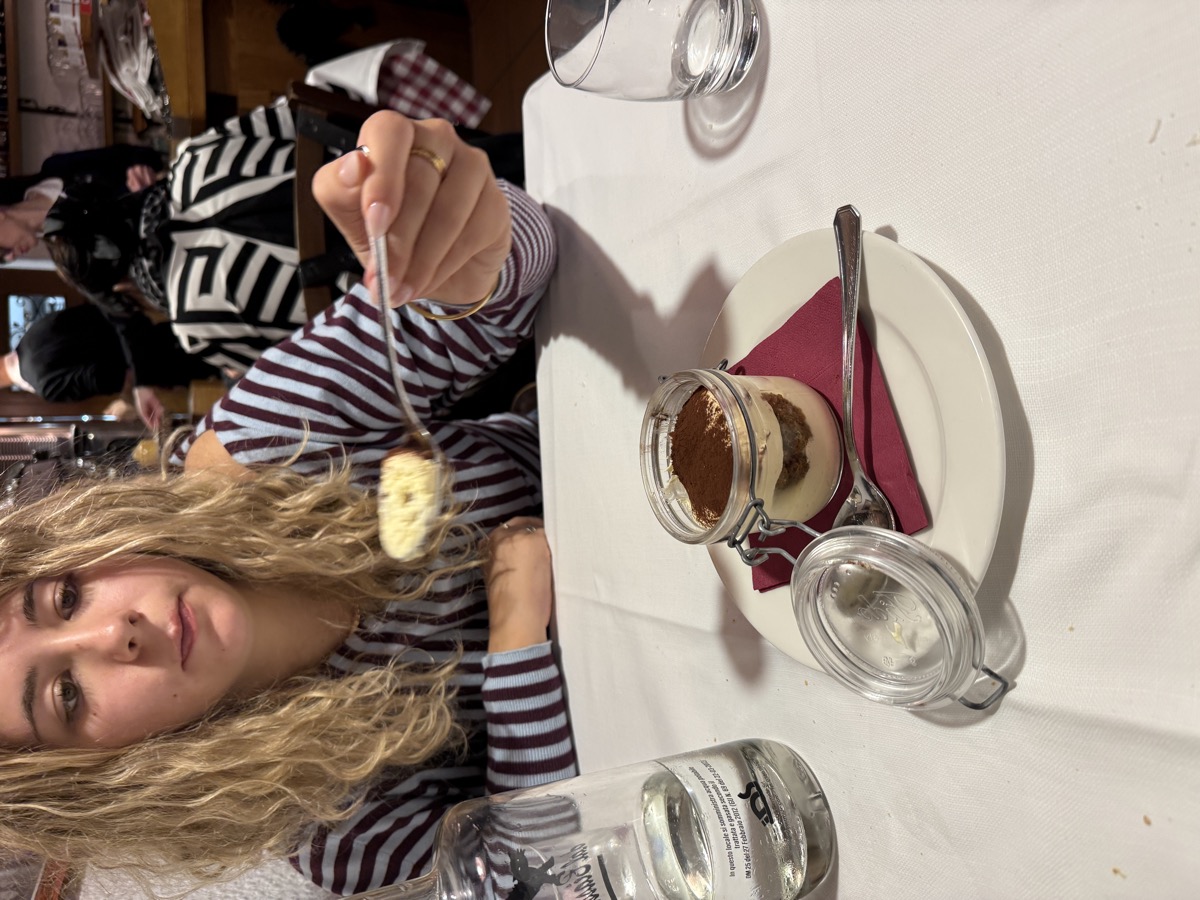
Tiramisù
🍰 DessertNova with the tiramisù — served in a glass jar with perfect layers of coffee-soaked savoiardi, mascarpone cream, and cocoa powder. Tiramisù means "pick me up" or "lift me up" in Italian. Its exact origin is debated between the Veneto and Friuli regions, but everyone agrees: it's one of the greatest desserts ever invented.
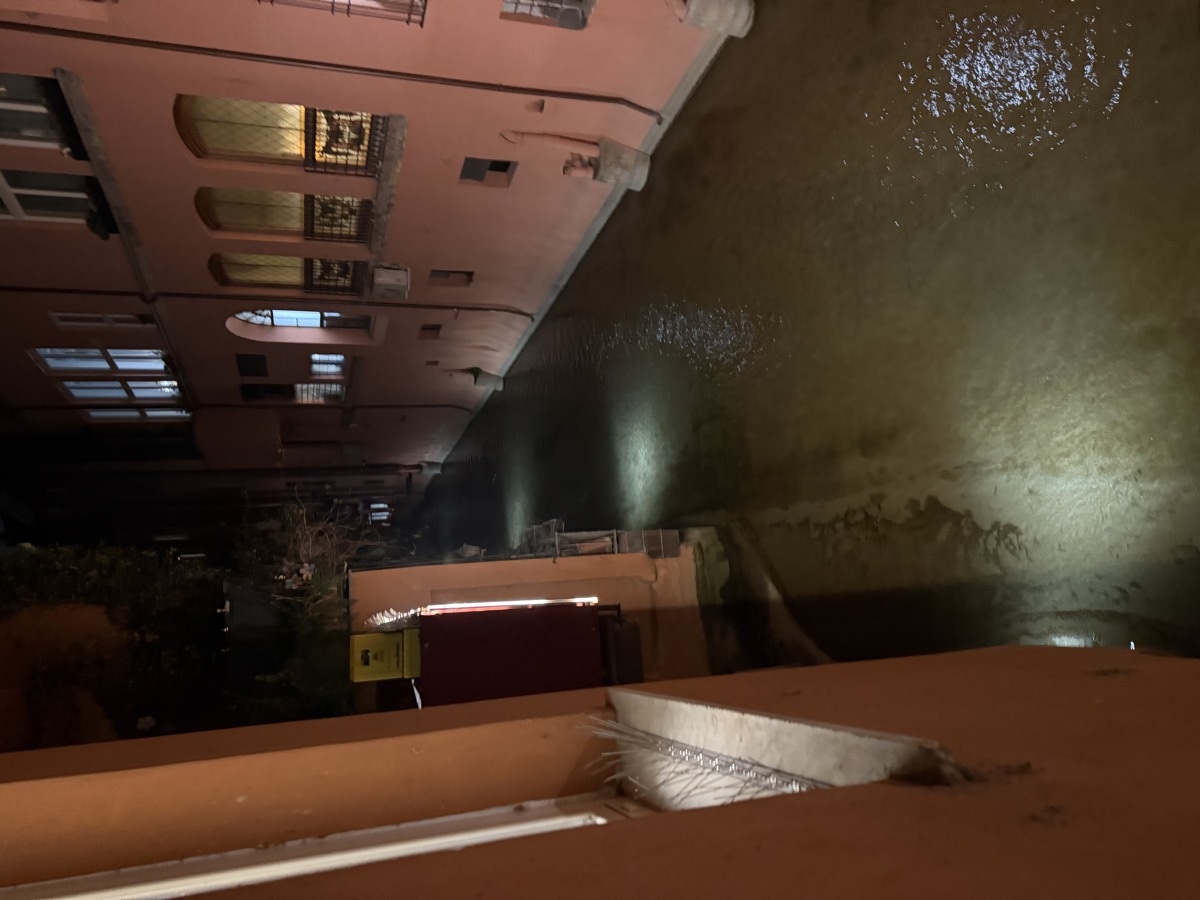
Bologna's Hidden Canal
🌙 NightThe Canale delle Moline — one of Bologna's hidden canals lit up at night. In the Middle Ages, an extensive canal system powered the city's famous silk mills, making Bologna one of Europe's wealthiest cities. Most canals were covered over in the 20th century, but sections remain visible through windows and openings. At night, underwater lights give the water an ethereal glow between the ancient walls.
📍 Canale delle Moline 📖 History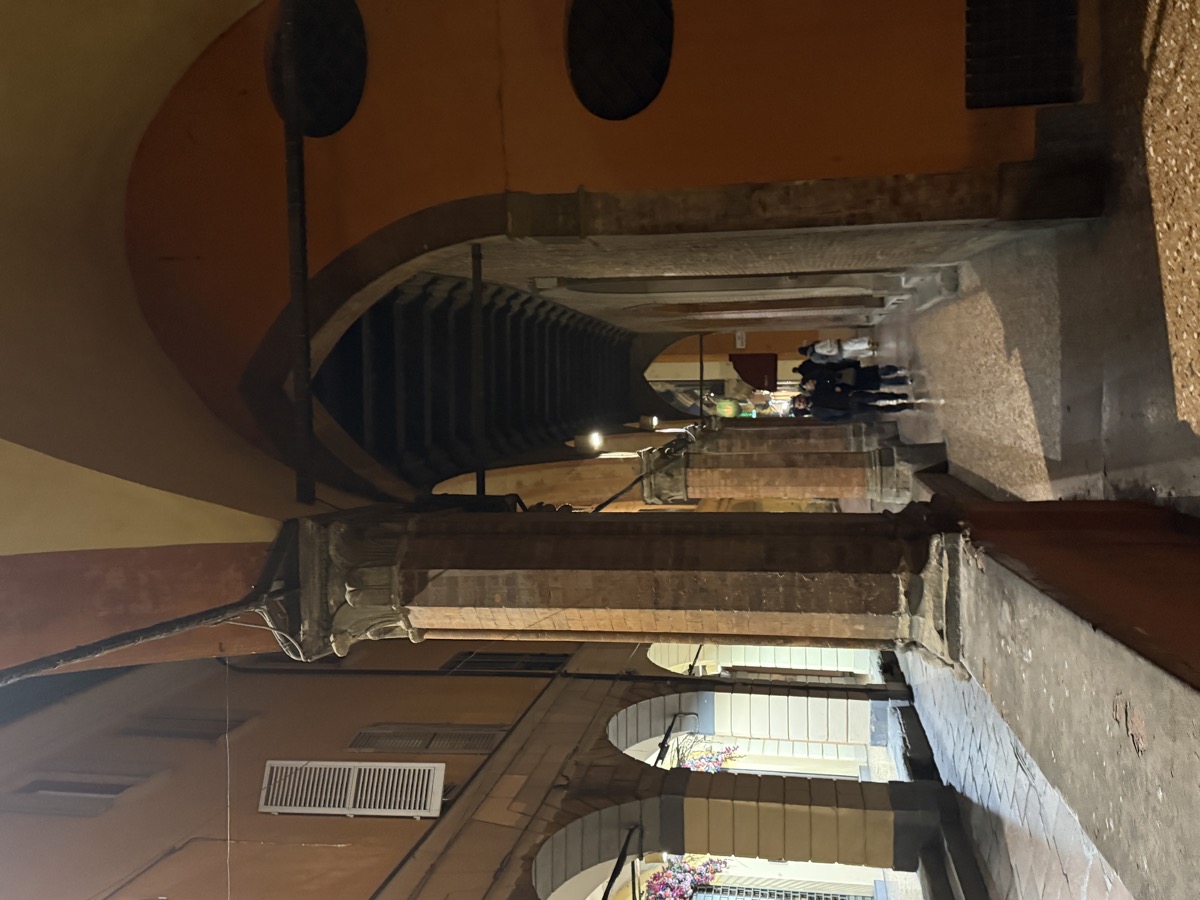
Porticoes at Night
🌙 Night WalkAn evening stroll under the porticoes — medieval stone columns with carved capitals, warm ochre walls glowing under soft lighting. Bologna at night is a completely different experience — quieter, warmer, more intimate. The porticoes that provided shade during the day become romantic tunnels of golden light.
📍 The Porticoes📸 What We Actually Did
Wednesday, March 11 — Bologna
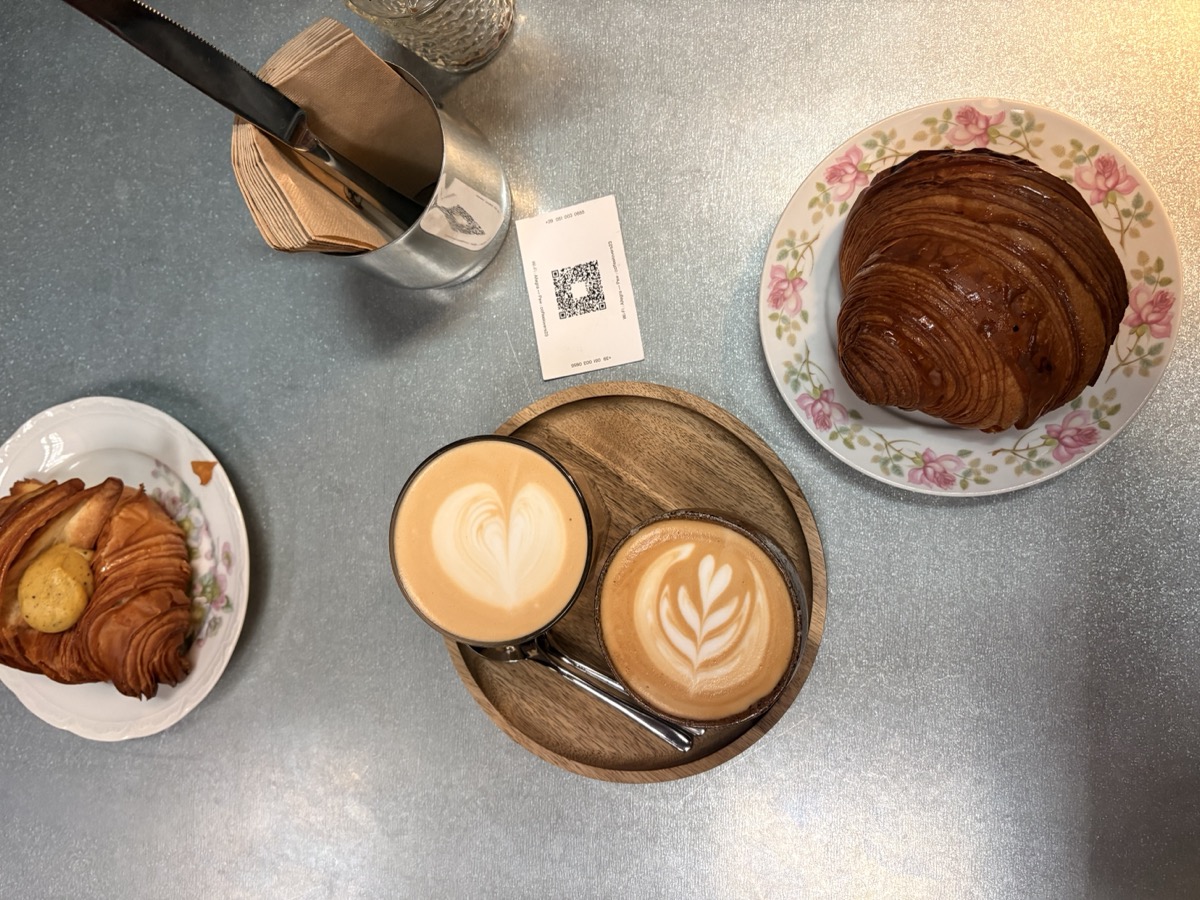
Breakfast at Allegra
☕ BreakfastArtisan cornetti and specialty coffee with gorgeous latte art at Allegra — a bakery, specialty coffee shop, and natural wine bistrot on Via Galliera. Their handmade viennoiserie (laminated pastries) are some of the best in Bologna. Served on vintage floral plates with coffees on a wooden board — breakfast as an art form.
📍 Via Galliera 11c 🔗 Website ⭐ Reviews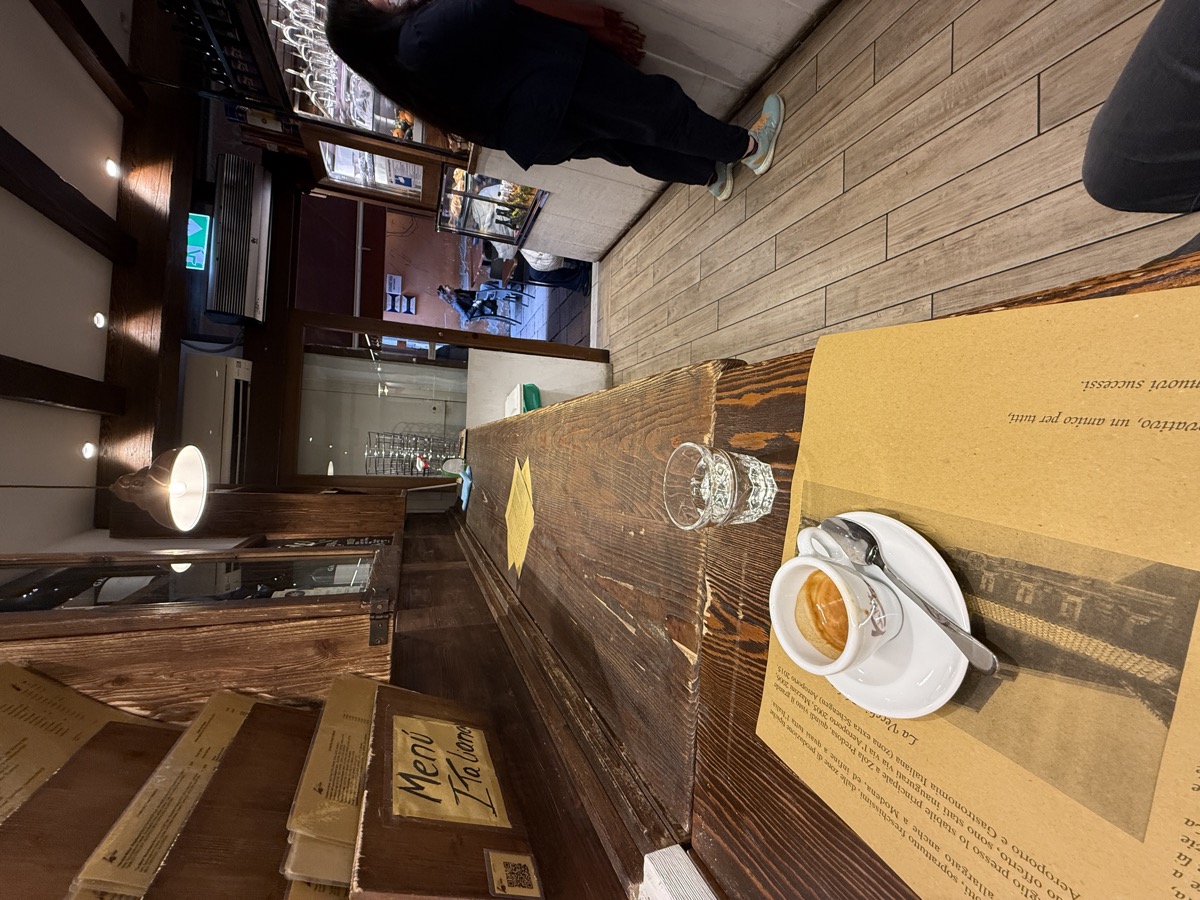
Espresso the Italian Way
☕ CoffeeAnother espresso stop — classic white cup with a glass of water on the side, exposed wooden beams, warm lighting. The Italian way of coffee since the invention of the espresso machine in 1884.
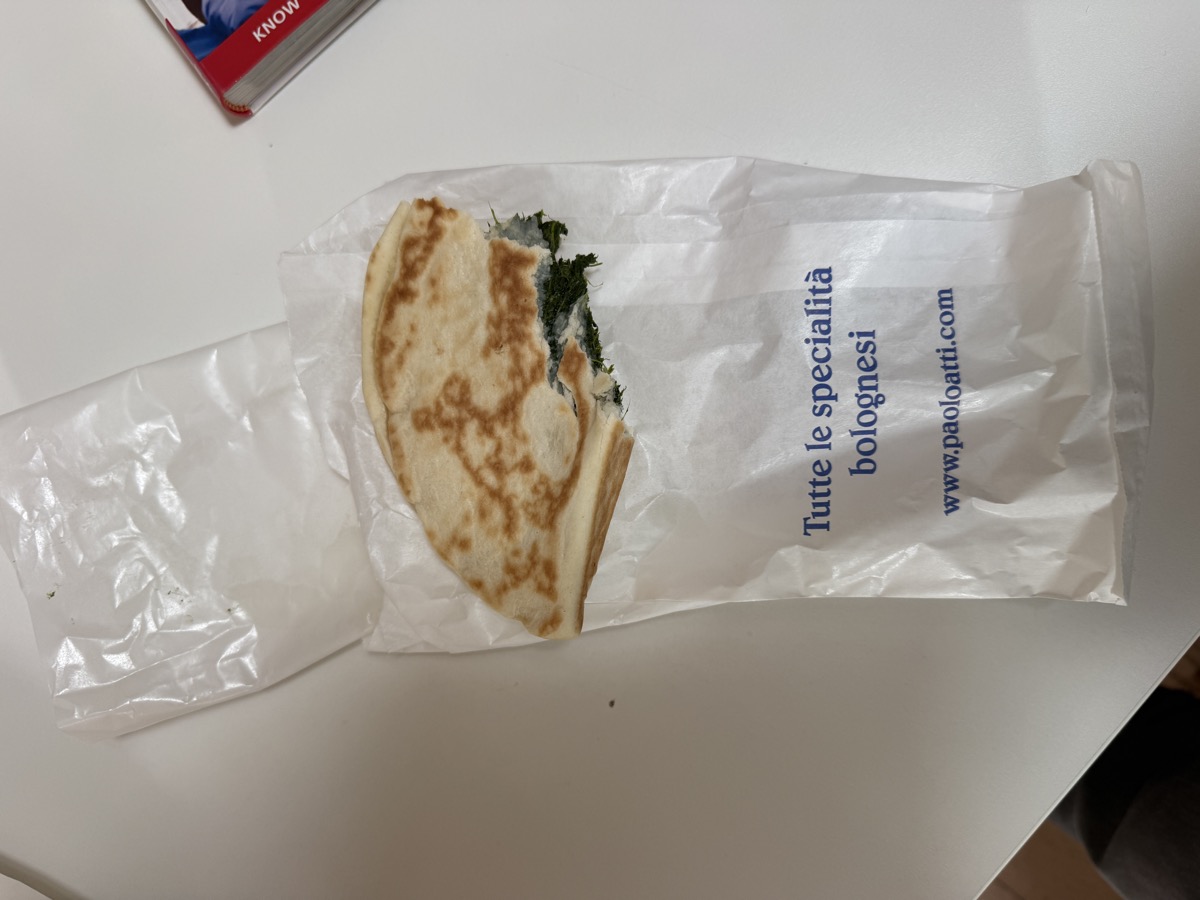
Piadina at Paolo Atti & Figli
🍞 SnackA stuffed piadina with spinach and cheese from Paolo Atti & Figli — one of Bologna's most legendary bakeries, operating since 1880. Piadina is a traditional Emilian flatbread cooked on a griddle, originally peasant food from Romagna. Five generations later, this place is still turning out perfection.
📍 Paolo Atti & Figli 🔗 Website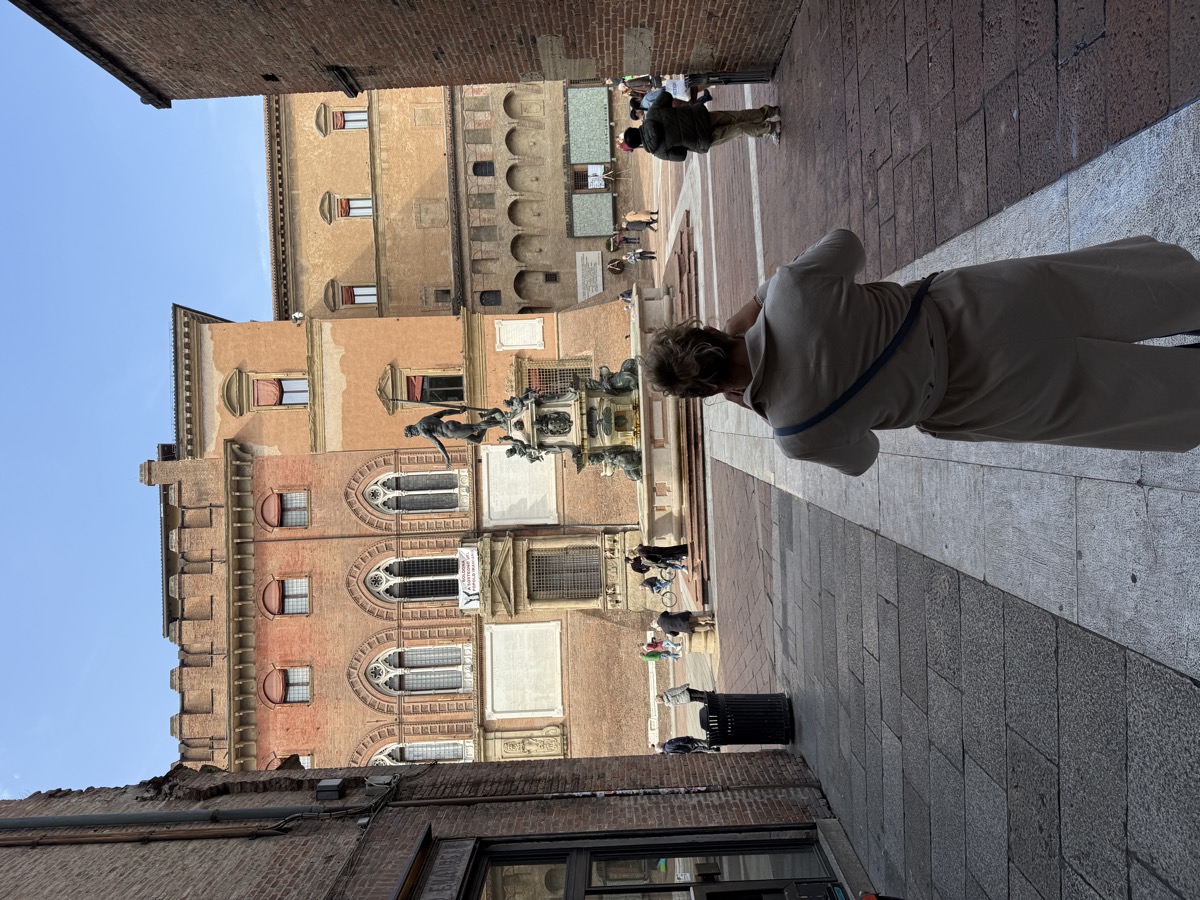
Fontana del Nettuno
🏛️ LandmarkThe mighty Neptune Fountain in Piazza del Nettuno — sculpted by Giambologna (Jean de Boulogne) between 1563-1567. Commissioned by the Pope to symbolize papal power over the world (Neptune ruling the seas). The four mermaids squeezing water from their breasts were considered so scandalous that the Church briefly considered covering them. The fountain has become Bologna's unofficial symbol.
📍 Piazza del Nettuno 📖 History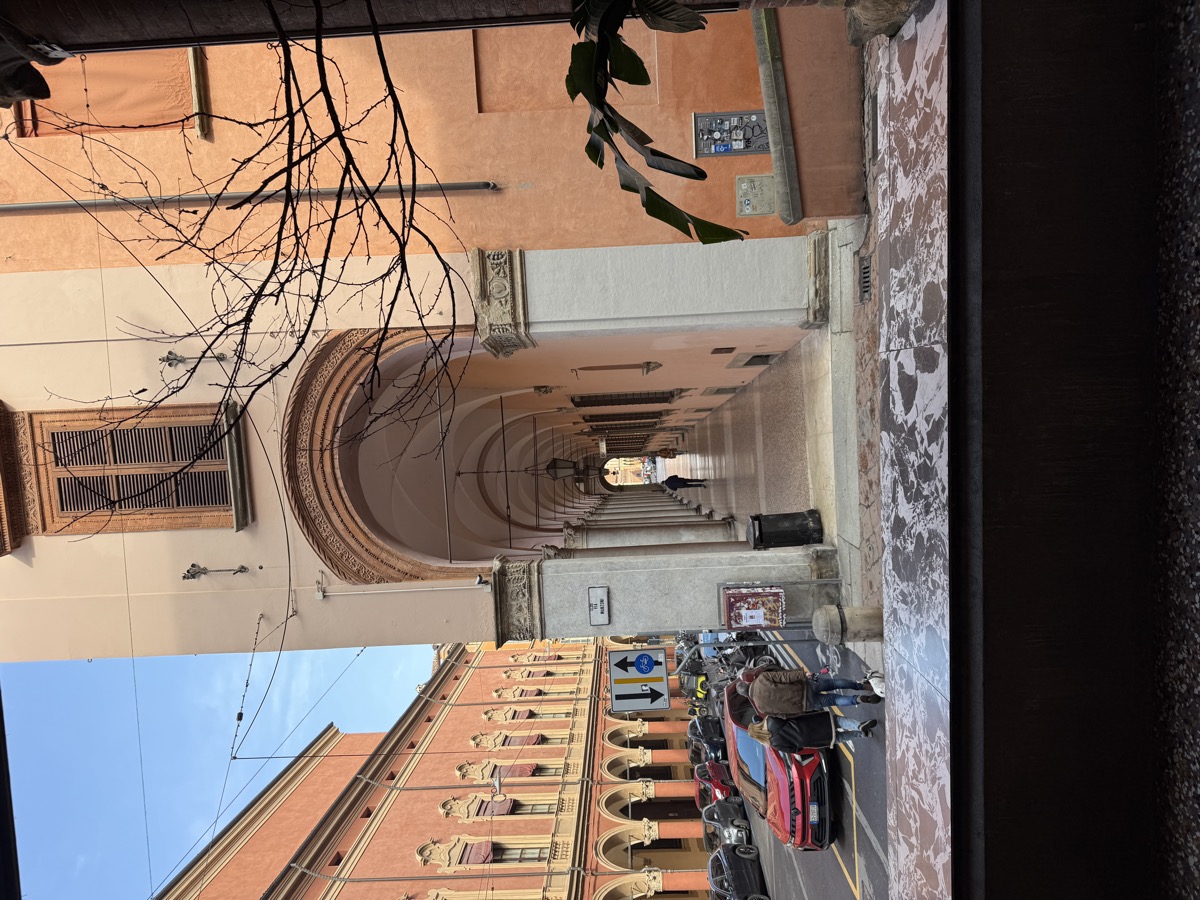
The Famous Porticoes of Bologna
🏛️ UNESCO HeritageBologna has nearly 40 km of porticoes — covered walkways that line the streets, making it possible to walk across the entire city without getting rained on. Designated a UNESCO World Heritage Site in 2021, these arcades date back to the Middle Ages when the growing university needed more space and buildings expanded over the sidewalks. What started as a practical solution became the city's most beautiful architectural signature.
📍 The Porticoes 📖 UNESCO Info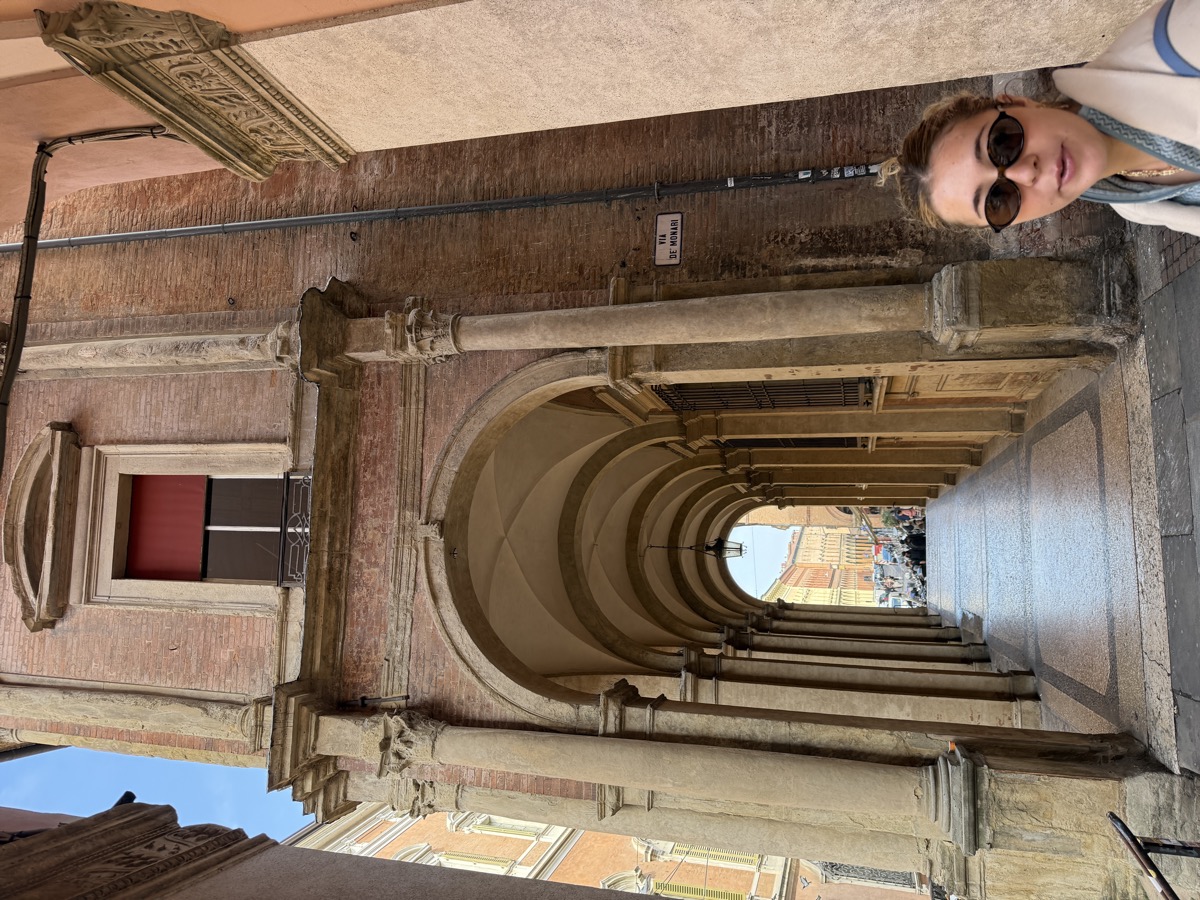
Nova Under the Arches
📸 PhotoNova striking a pose under the porticoes on Via de' Monari. The vaulted ceilings, stone columns with Corinthian capitals, and rhythmic arches stretching into the distance — this is the Bologna that postcards are made of.
📍 Via de' Monari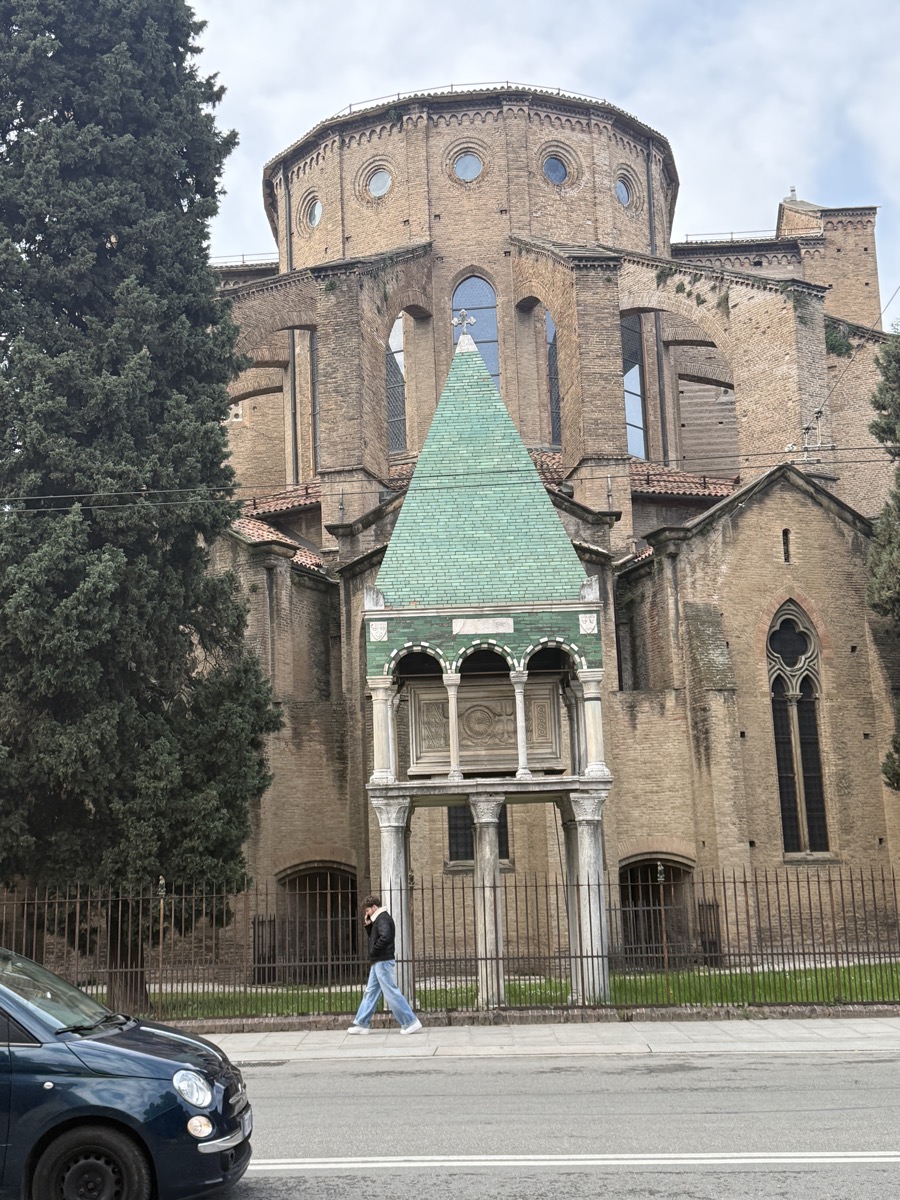
Basilica di San Francesco
🏛️ HistoryThe stunning rear apse of the Basilica di San Francesco with its brick flying buttresses and Gothic pointed-arch windows. Built between 1236-1263, it was one of the first churches in Italy designed in the French Gothic style. In front stands one of the Tombe dei Glossatori — raised medieval tomb monuments of famous law professors from the University of Bologna, topped with distinctive green-tiled pyramidal canopies.
📍 Basilica di San Francesco 📖 History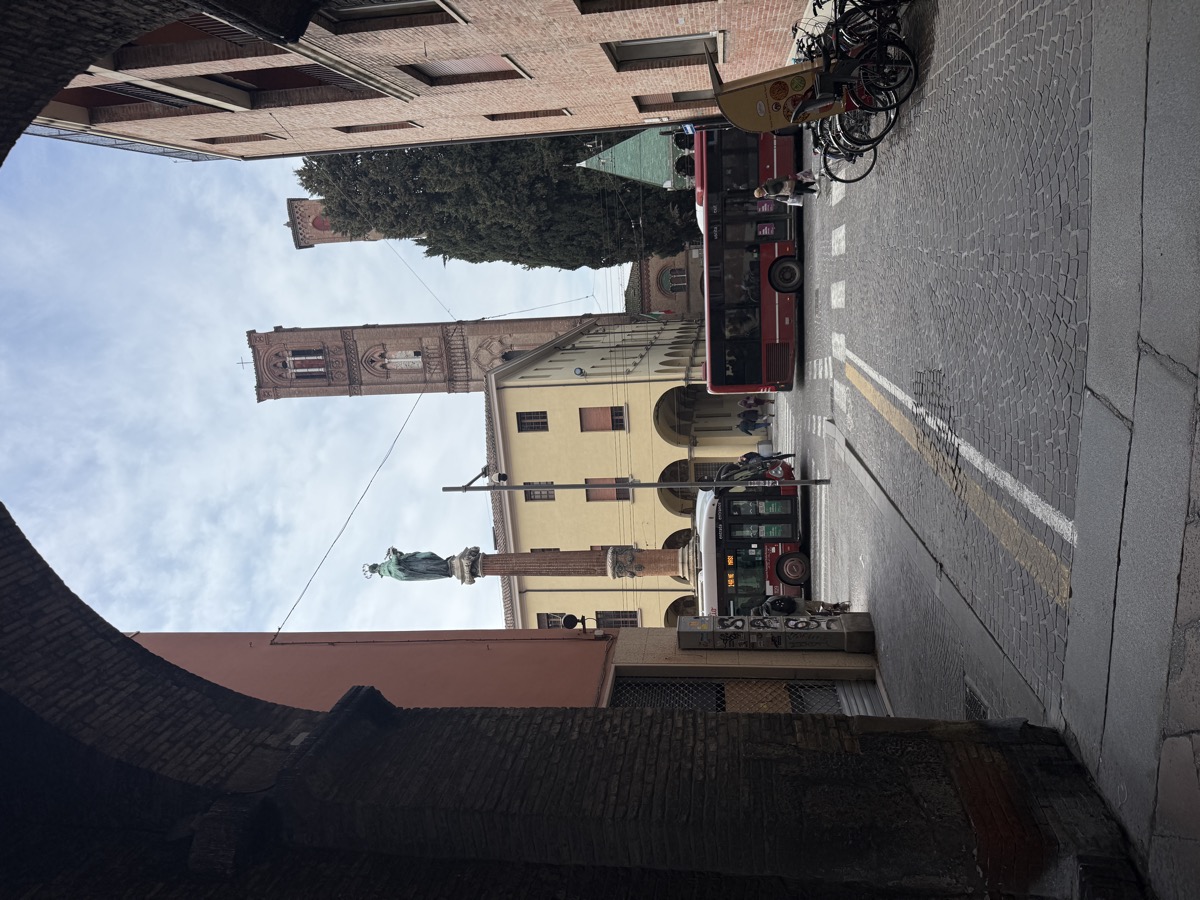
Exploring Bologna's Piazzas
🏛️ SightseeingA column topped with a statue of the Madonna, framed through a portico arch with a medieval bell tower rising behind it. Bologna is full of these hidden architectural moments — turn a corner and you're looking at something that's been standing for 800 years.
📍 Piazza Malpighi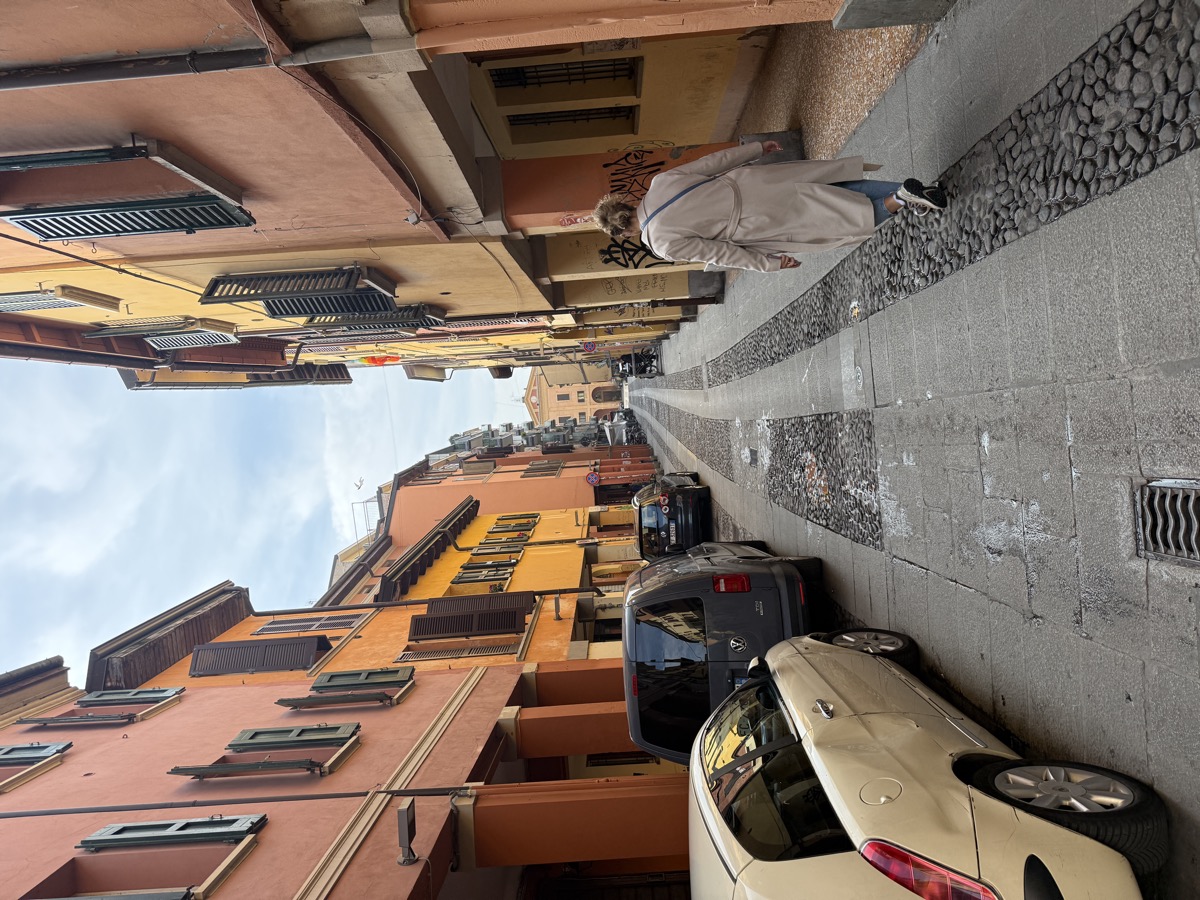
The Side Streets of Bologna
🚶 WanderingGetting lost in Bologna's narrow side streets — buildings painted in the city's signature warm palette of terracotta orange, deep salmon, and golden yellow. Bologna is called "La Rossa" (The Red One) for these warm-toned facades that glow in the sunlight.
📍 Historic Center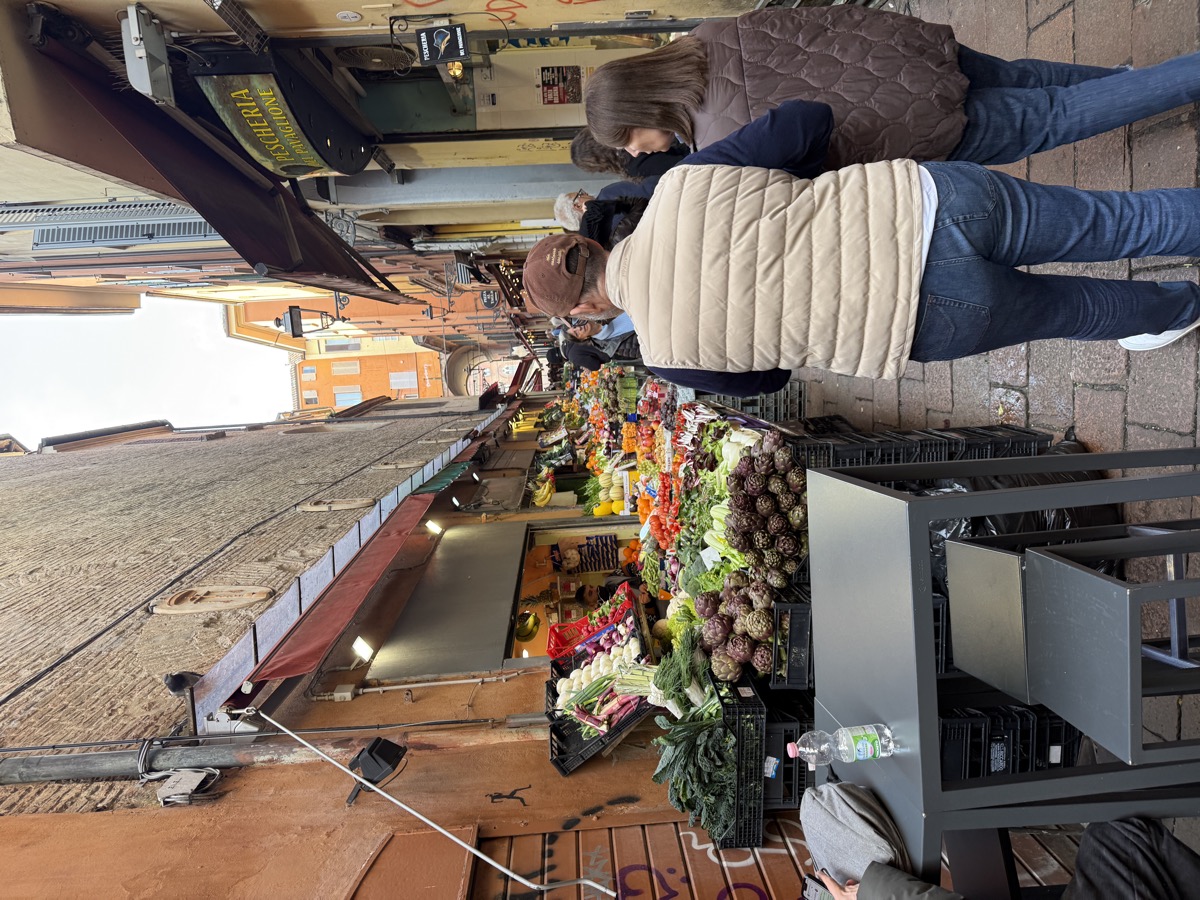
The Quadrilatero Market
🧀 MarketThe bustling Quadrilatero — Bologna's ancient market district dating back to the Middle Ages. Overflowing fruit and vegetable stands, artichokes, radicchio, fresh everything. This is where locals have been shopping for centuries, earning Bologna its other nickname: "La Grassa" (The Fat One) for its legendary food culture.
📍 Quadrilatero Market 📖 History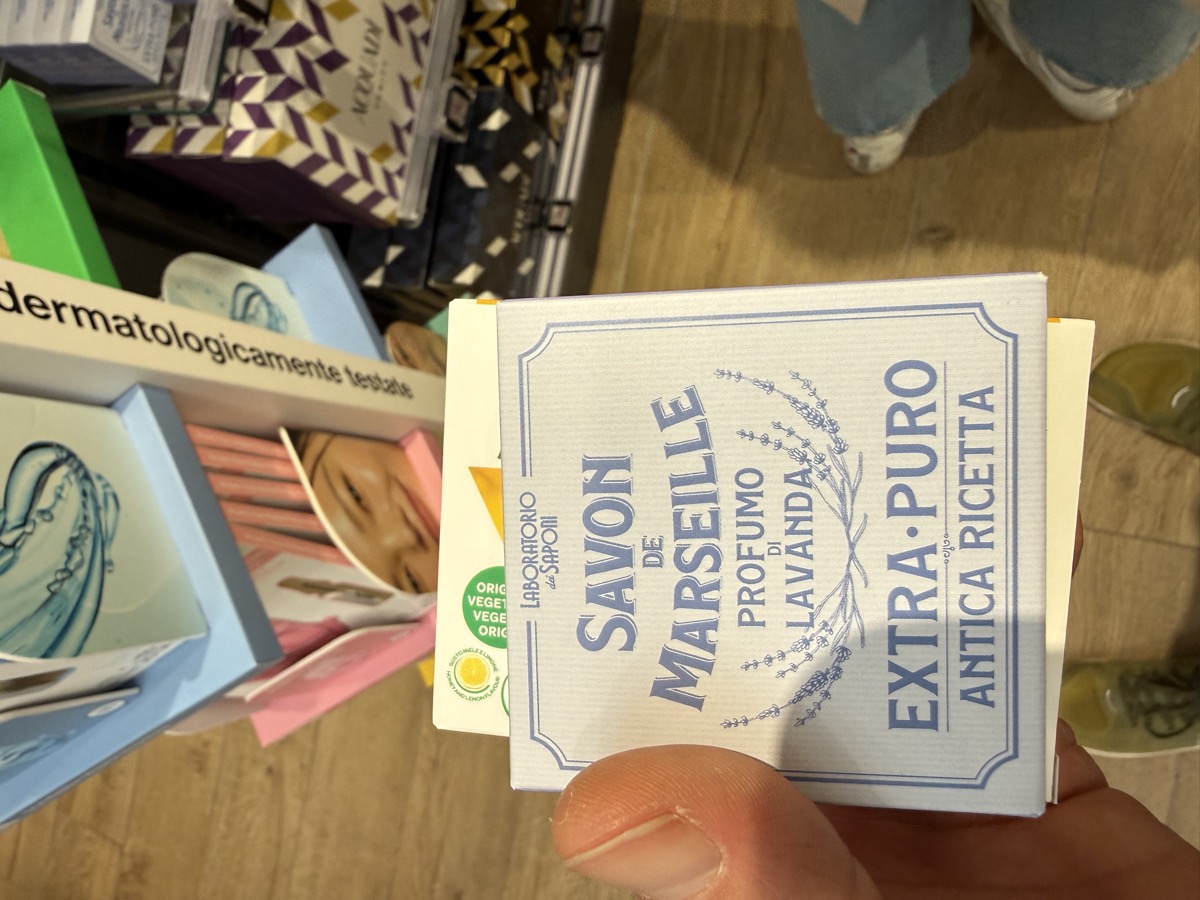
Souvenir Shopping
🛍️ ShoppingPicking up some Savon de Marseille lavender soap — "Extra Puro, Antica Ricetta" (extra pure, ancient recipe). Italy is full of artisan shops selling handmade soaps, perfumes, and skincare that put the fancy department store brands to shame.
📍 Shopping Area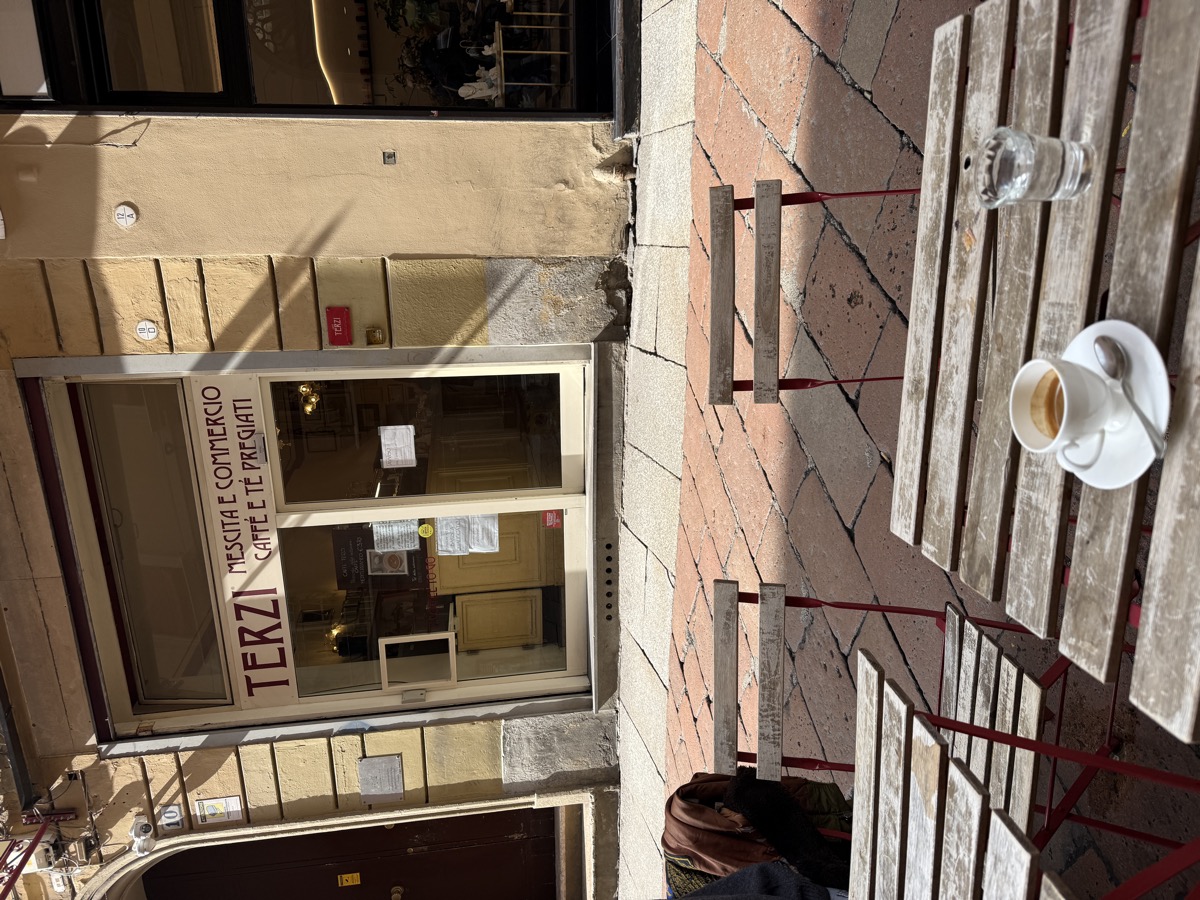
Caffè Terzi
☕ CoffeeAfternoon espresso at Caffè Terzi — one of Bologna's best specialty coffee shops. "Mescita e Commercio, Caffè e Tè Pregiati" (serving and trading fine coffees and teas). They source premium single-origin beans and treat coffee the way wine shops treat wine. The golden afternoon light on the stone pavement made this the perfect people-watching spot.
📍 Caffè Terzi 🔗 Instagram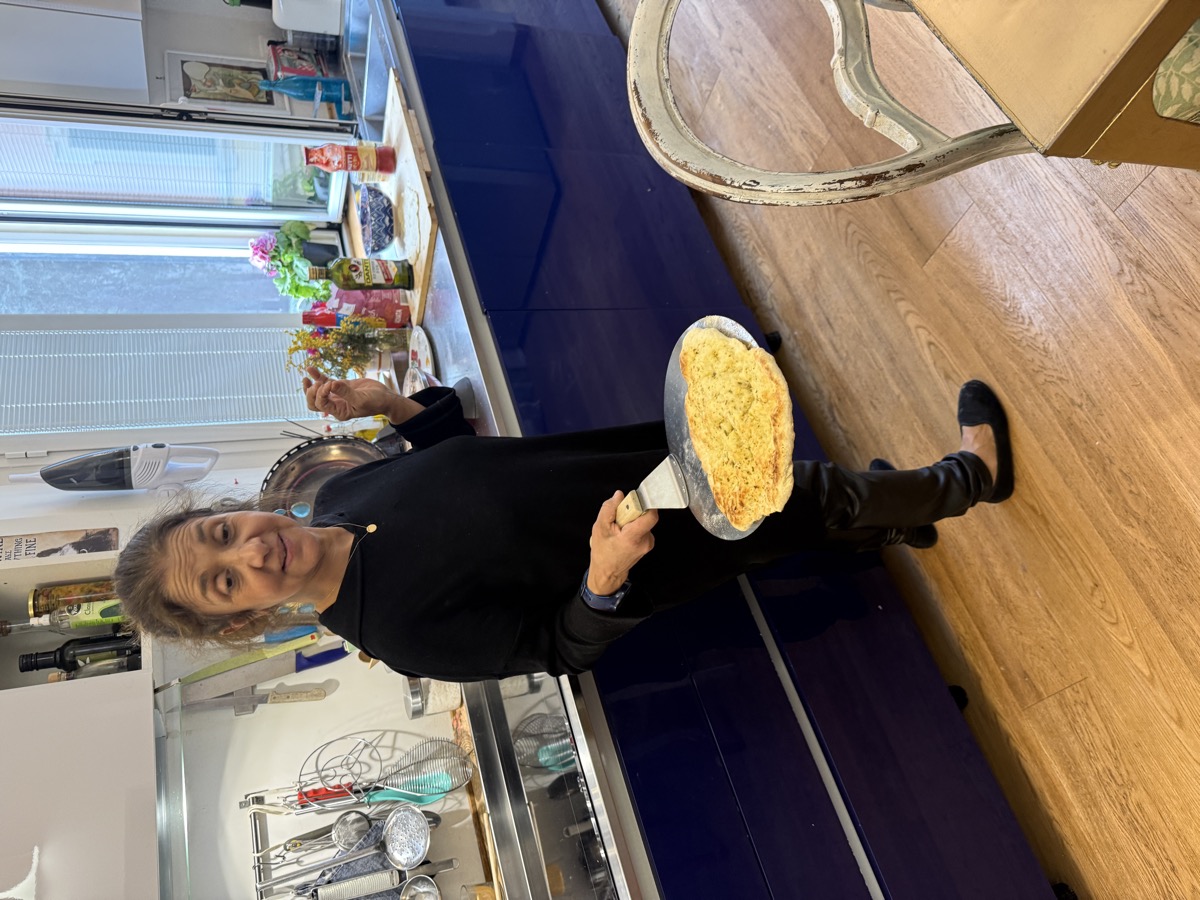
🍝 Cooking Class at Rosa's Home
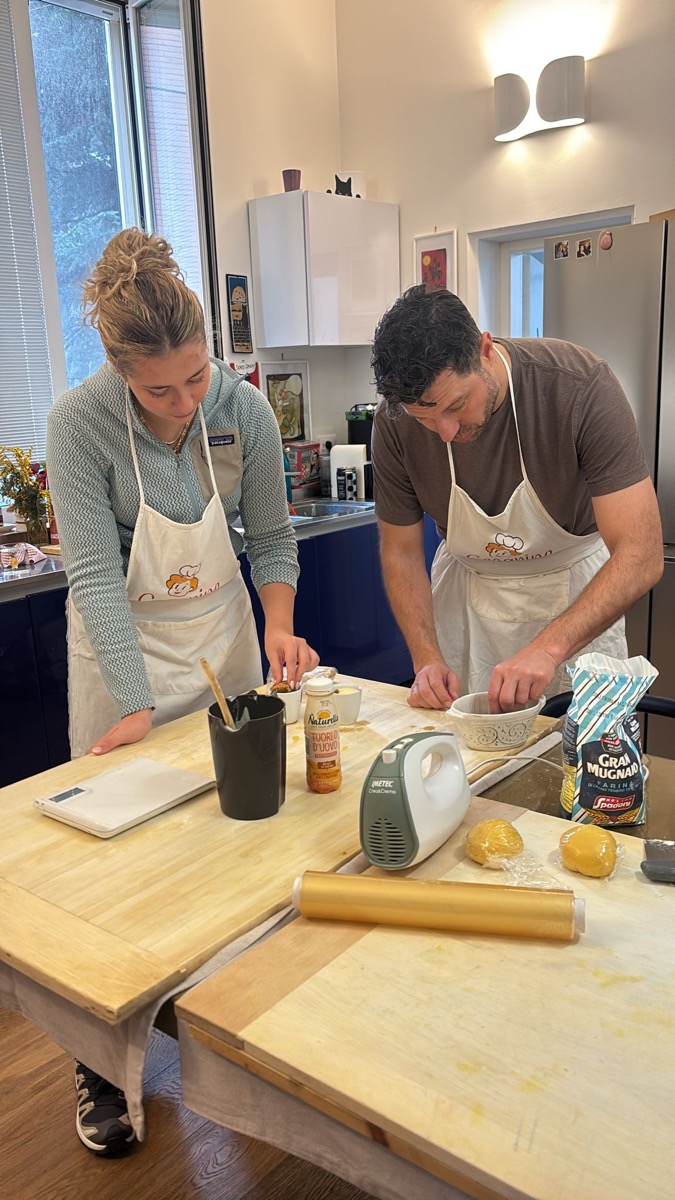
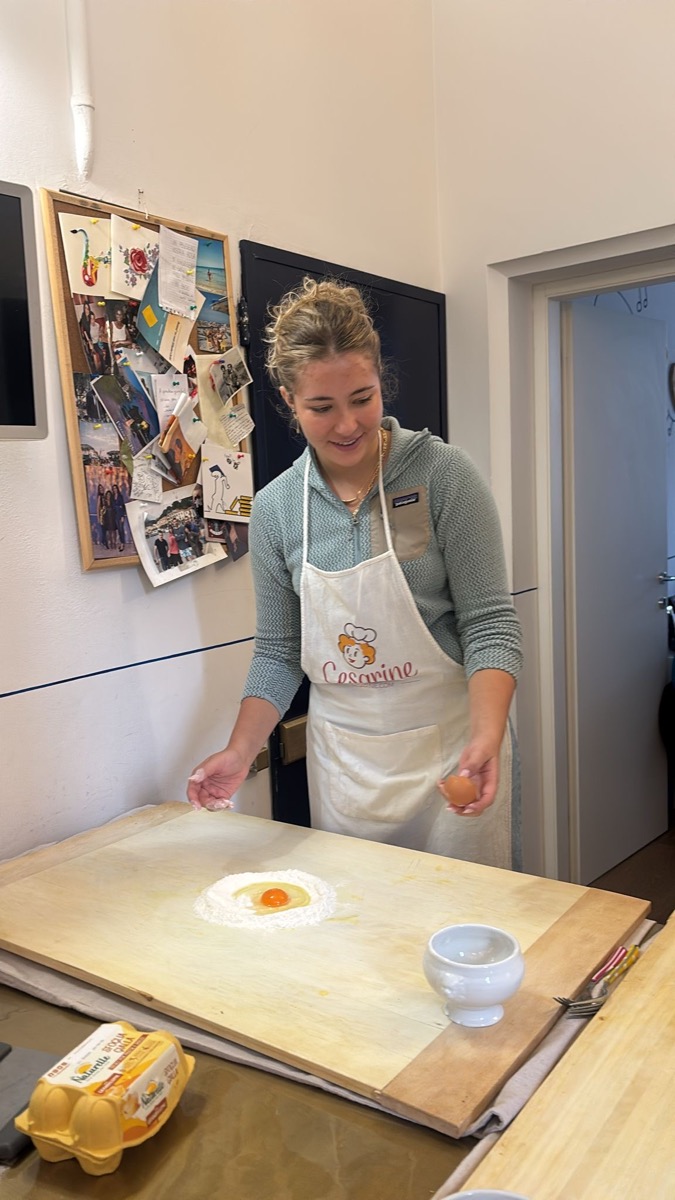
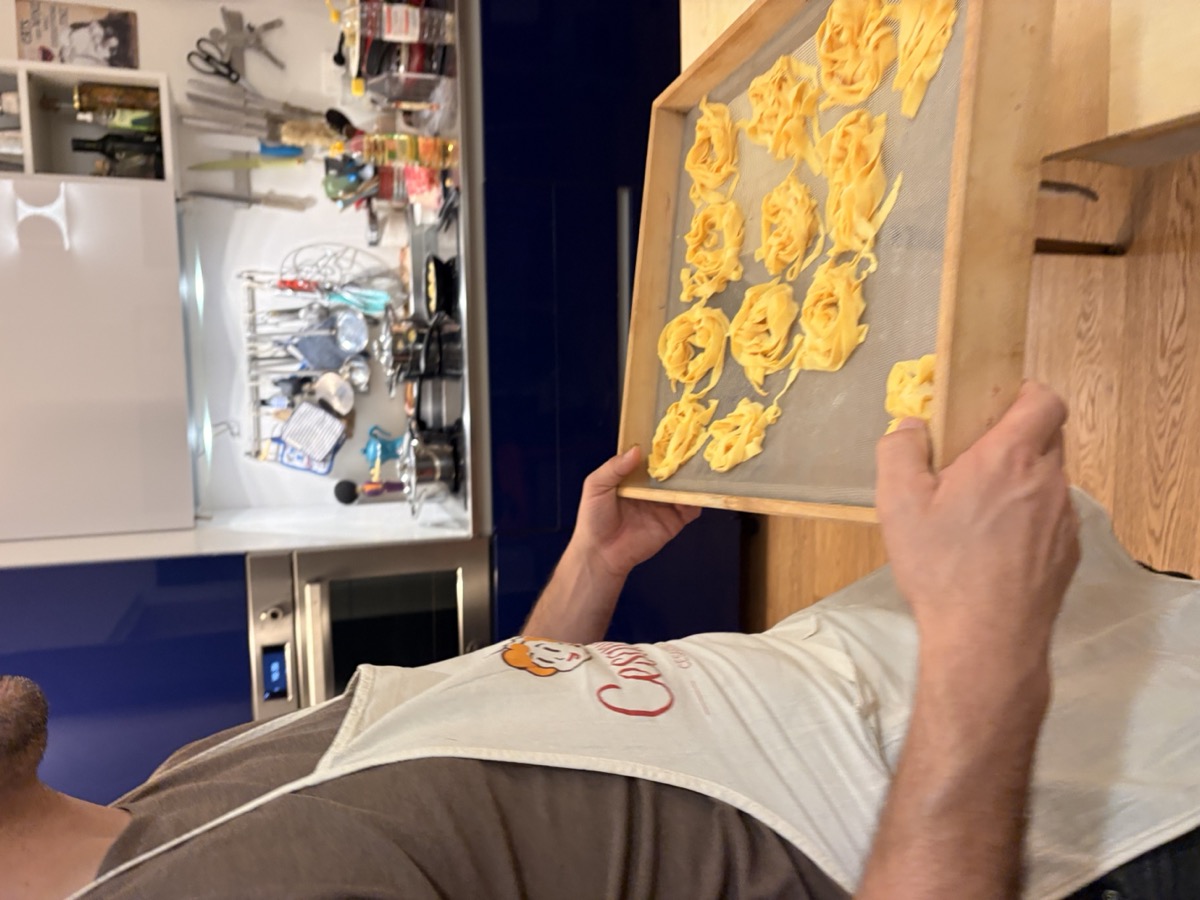
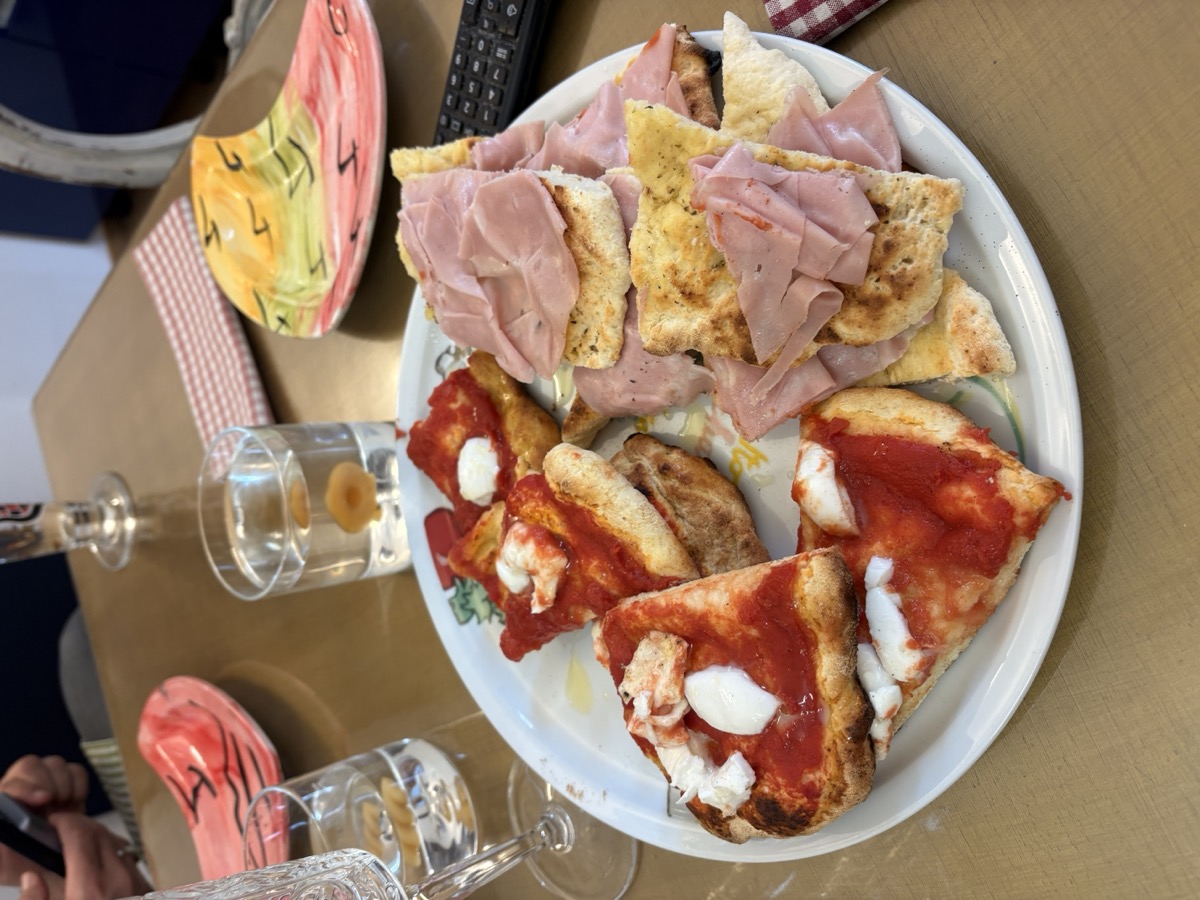
👨🍳 ExperienceThe highlight of the day! Rosa welcomed us into her home kitchen and started us off with freshly baked focaccia. Cesarine connects travelers with local home cooks for authentic Italian cooking experiences — no restaurant kitchens, no tourist menus, just real food in a real home.
📍 Rosa's Home 🔗 Cesarine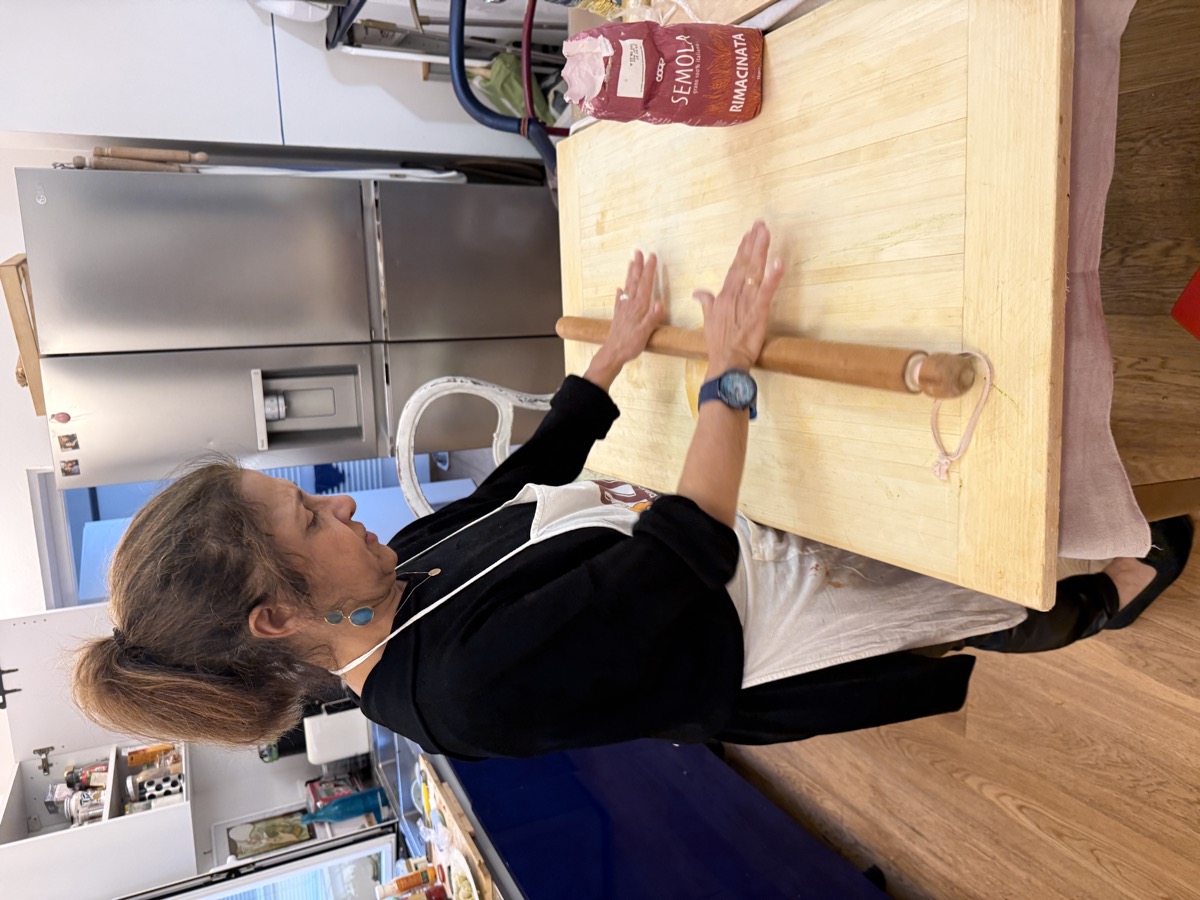
Rolling Fresh Pasta by Hand
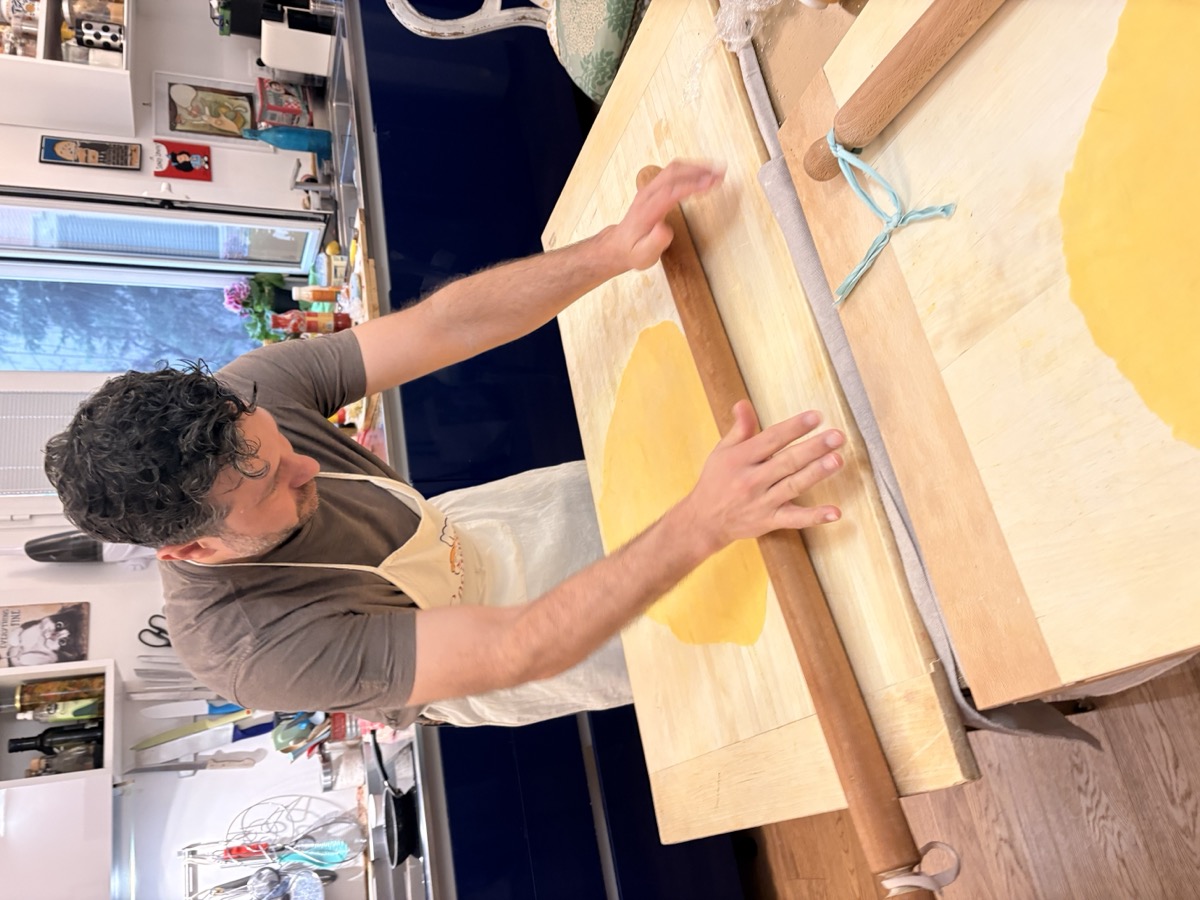
👨🍳 CookingRosa showing the art of rolling pasta dough with a traditional wooden mattarello (rolling pin) on a tagliere (wooden board). In Bologna, hand-rolled pasta is serious business — the sfogline (pasta-making women) have been passing down this technique for generations. The goal: paper-thin sheets of golden egg pasta, rolled with nothing but flour, eggs, and muscle.
The Feast
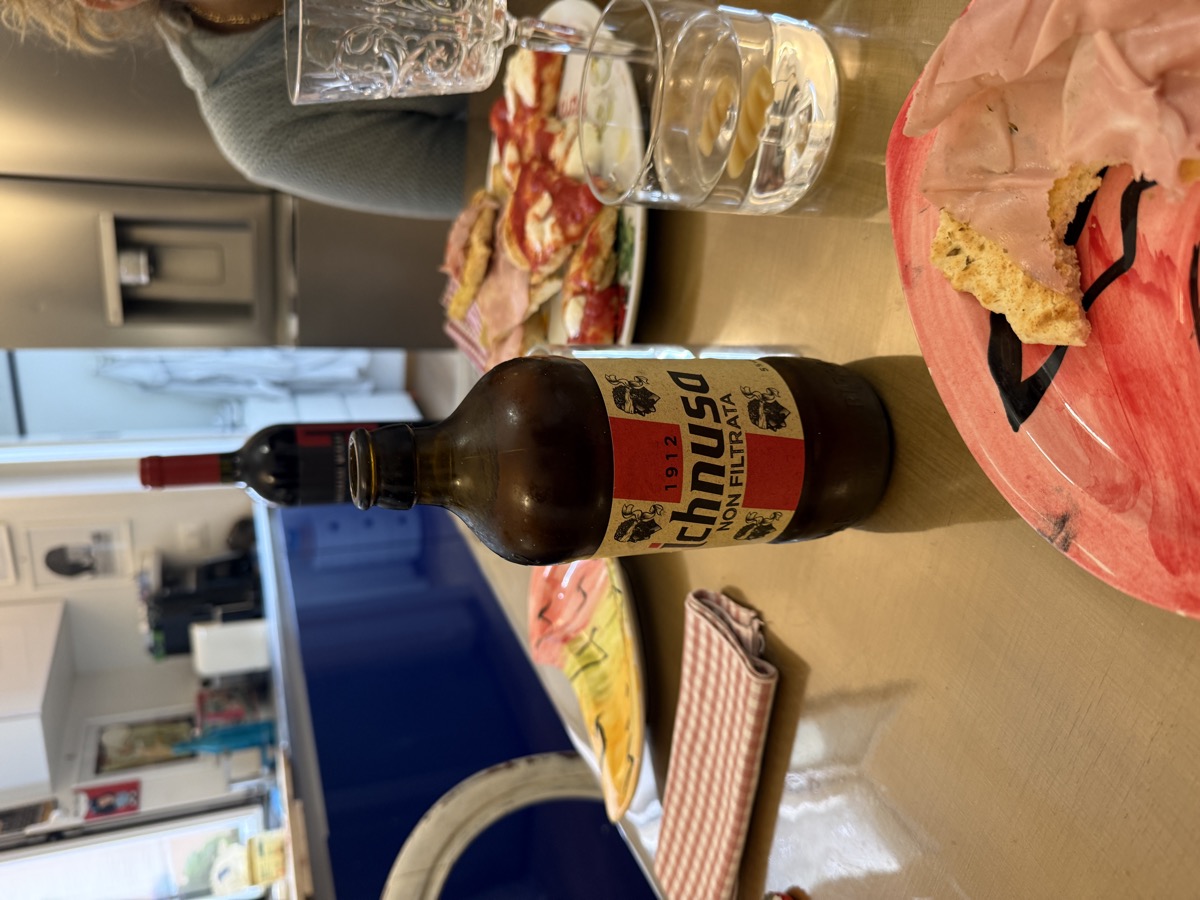
🍝 DinnerThe results of our labor — fresh focaccia with mortadella (Bologna's signature cured meat, the original "baloney"), paired with Ichnusa Non Filtrata (a Sardinian unfiltered beer, brewed since 1912) and red wine. Mortadella was invented here in Bologna and has been produced since the 14th century. The real thing is nothing like the American deli version.
📸 More from the Cooking Class
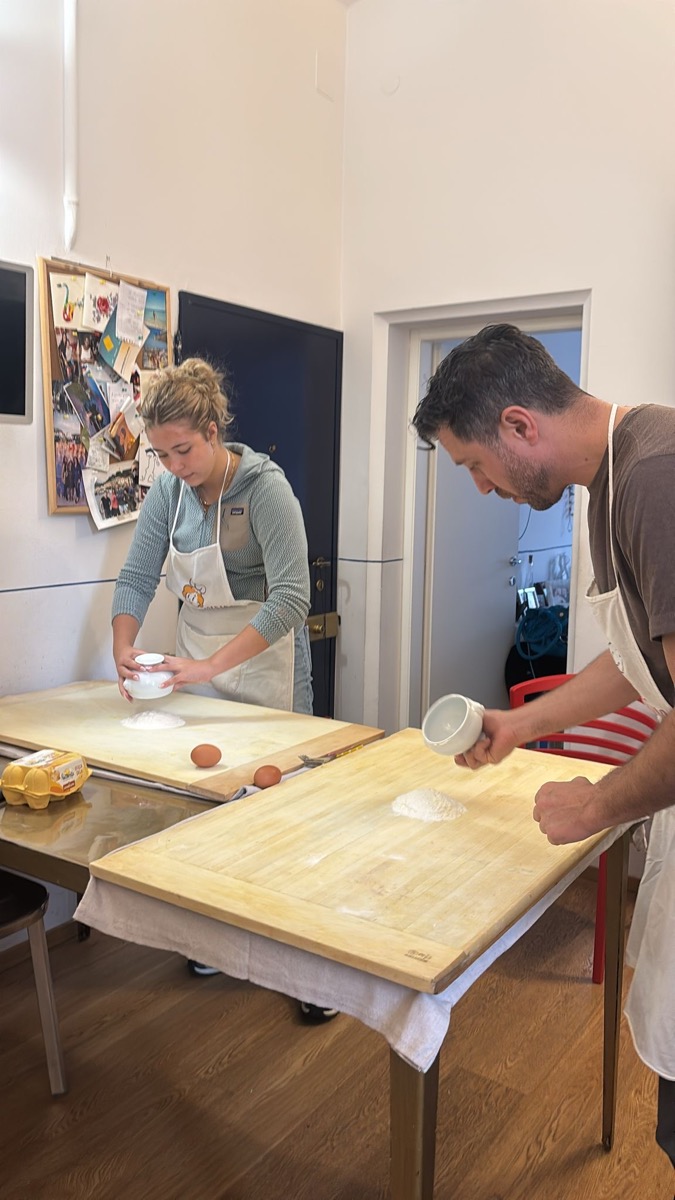
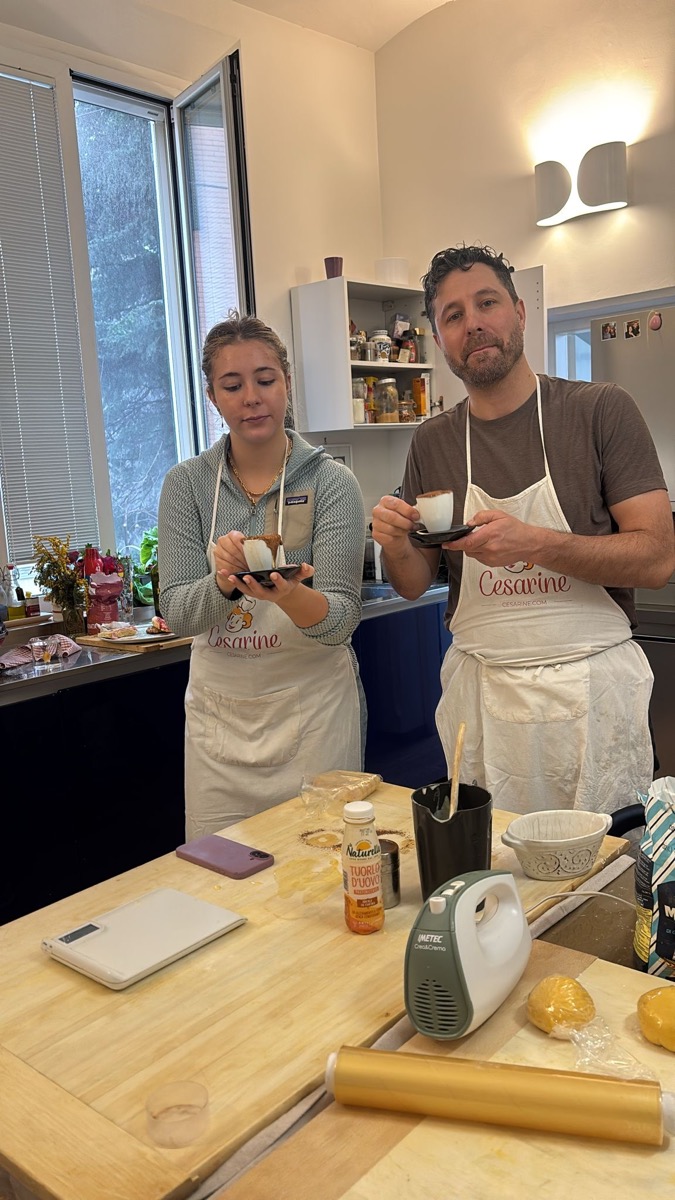
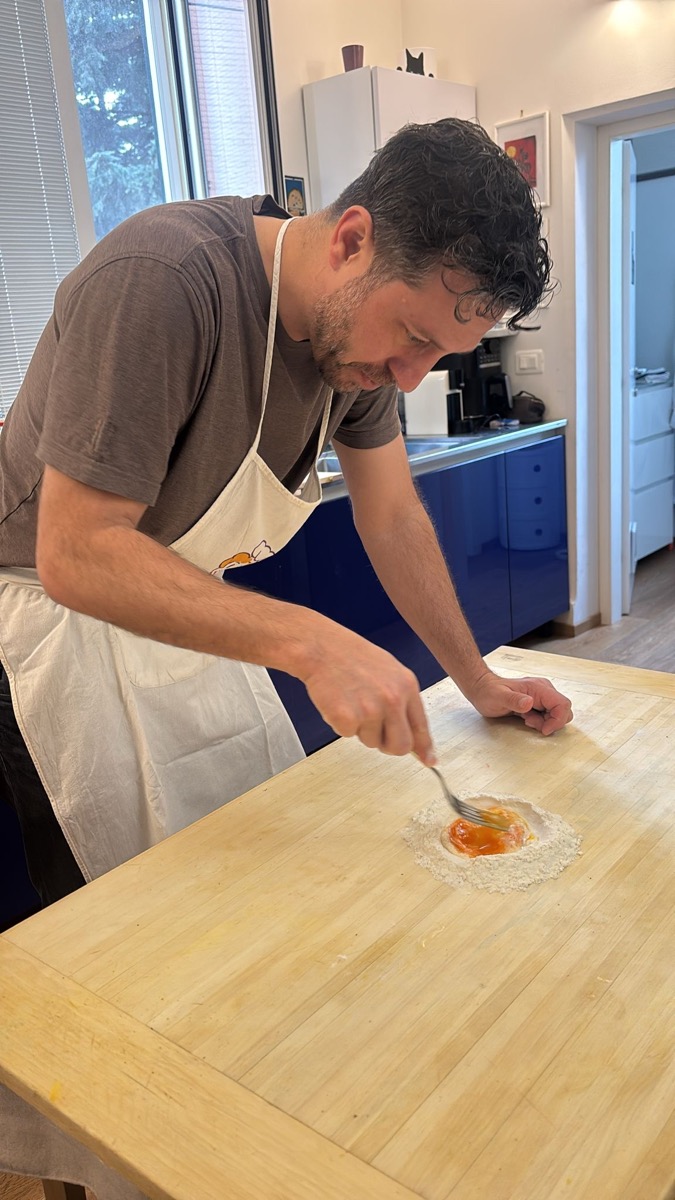
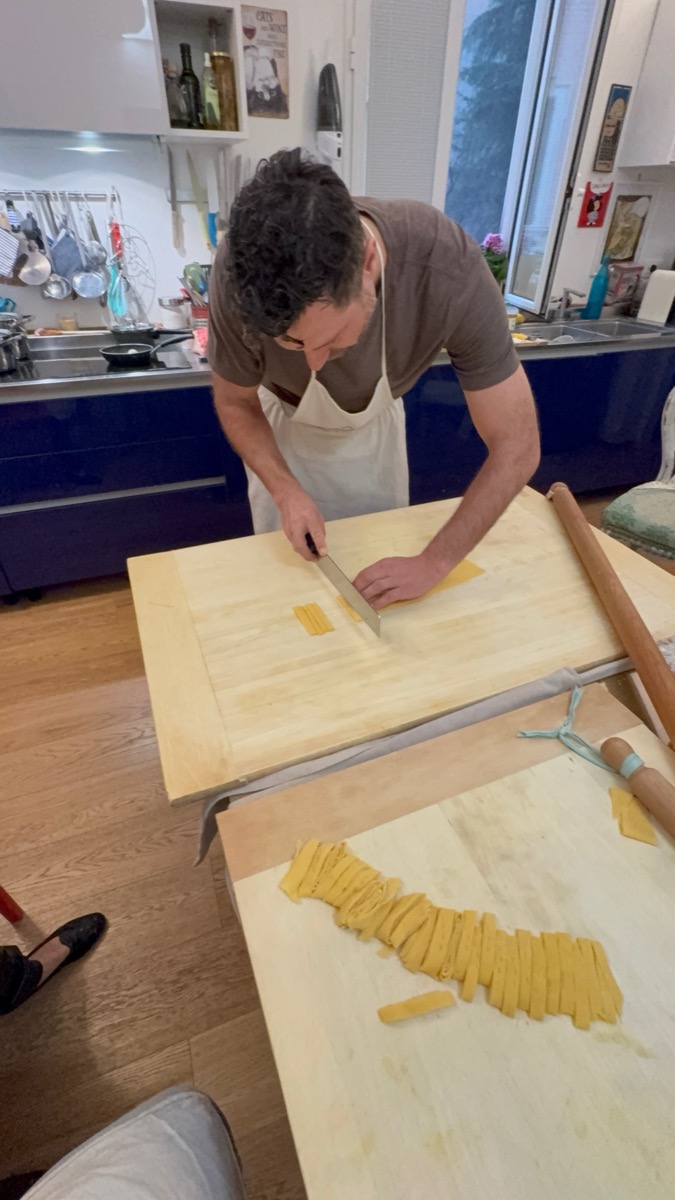
🎬 Videos
Tap photos to view full size · Tap videos to play
After-Dinner with Rosa
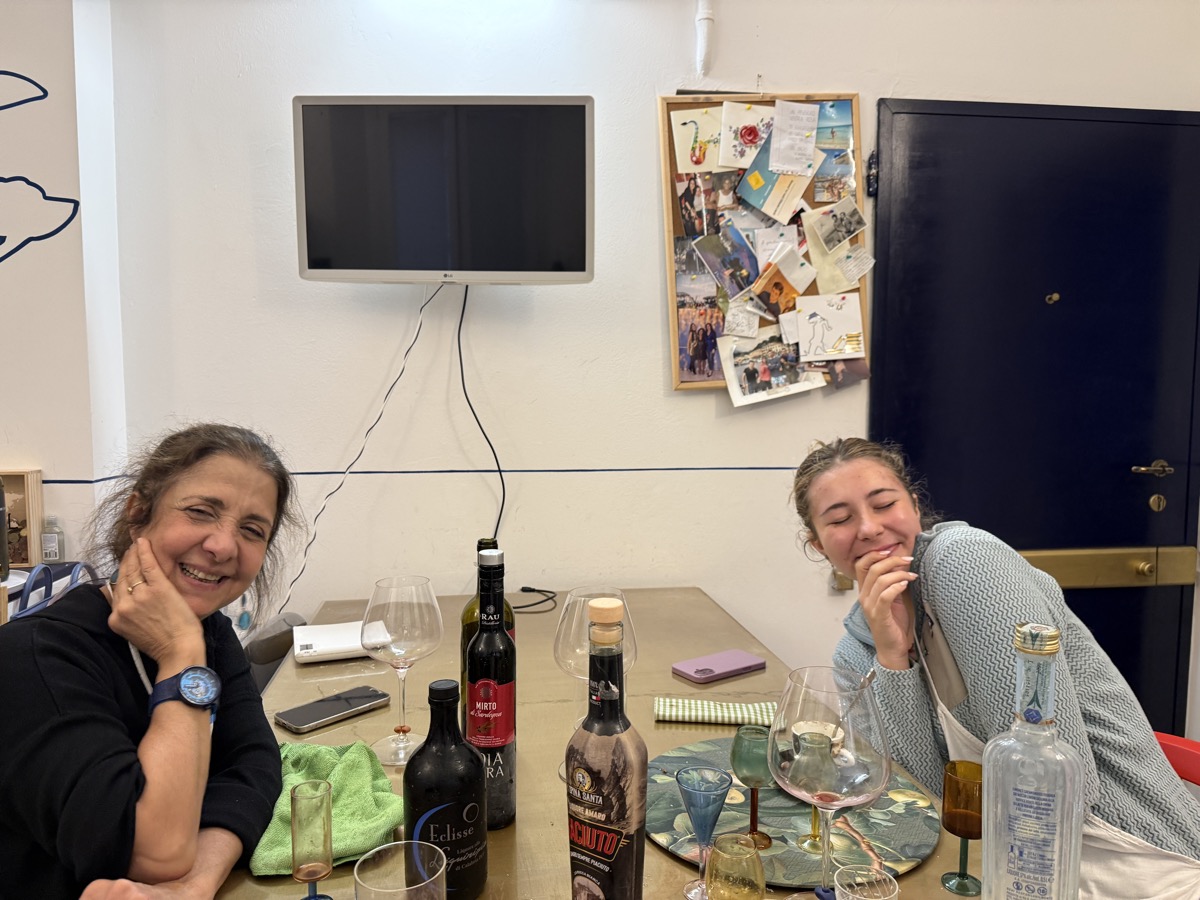
🍷 DigestiviNova and Rosa after the meal — the best part of any Italian dinner is the conversation that follows. Mirto (Sardinian myrtle berry liqueur) and amaro on the table. In Italy, dinner isn't just about the food — it's about the connection. "A tavola non si invecchia" (At the table, you don't age).
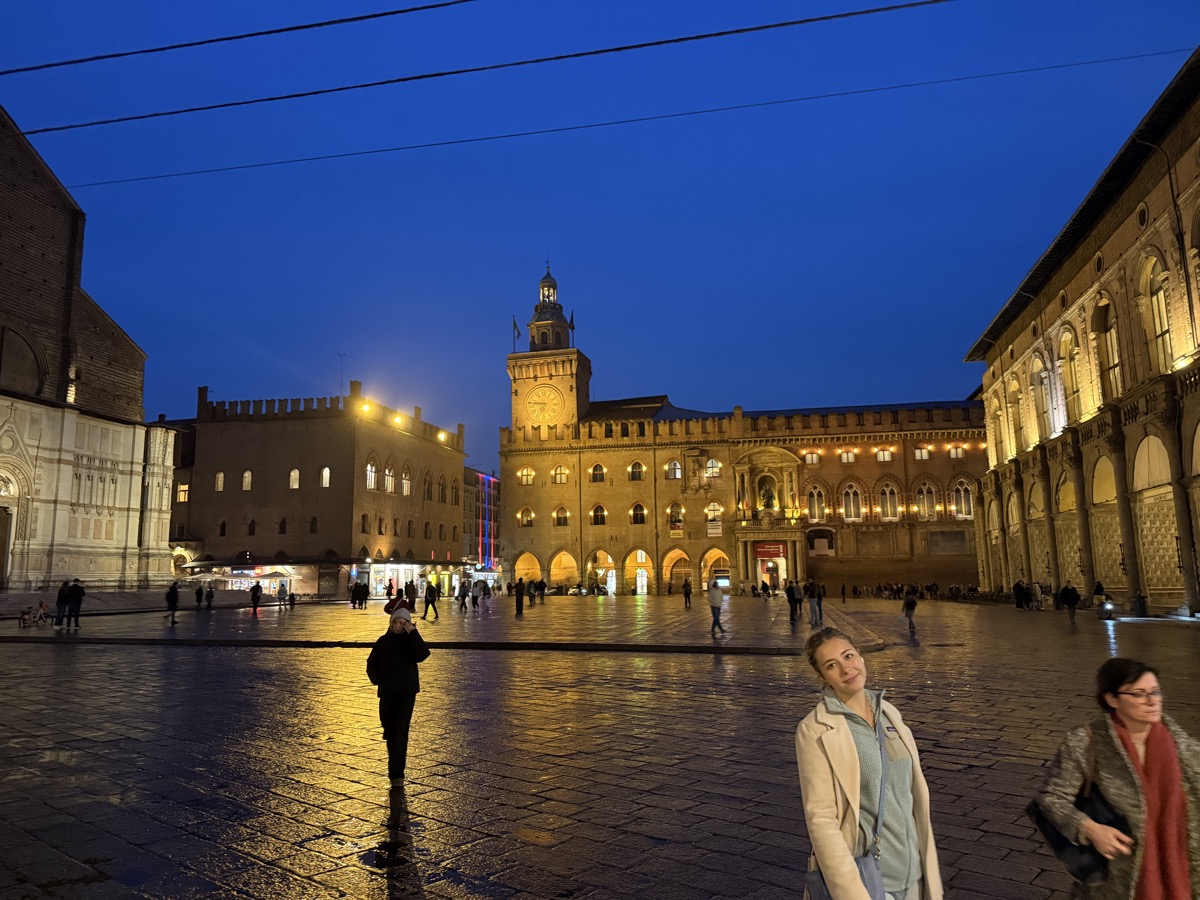
Piazza Maggiore at Blue Hour
🌙 EveningThe perfect ending — Piazza Maggiore at dusk, wet cobblestones reflecting the golden lights of the medieval palaces. The Palazzo d'Accursio (City Hall) with its clock tower glowing against the deep blue sky. Bologna's main square has been the heart of the city since the 13th century. Walking through it at blue hour, with the warm light and the evening crowd, you understand why people fall in love with this city.
📍 Piazza Maggiore 📖 History📸 What We Actually Did
Thursday, March 12 — Last Day in Bologna
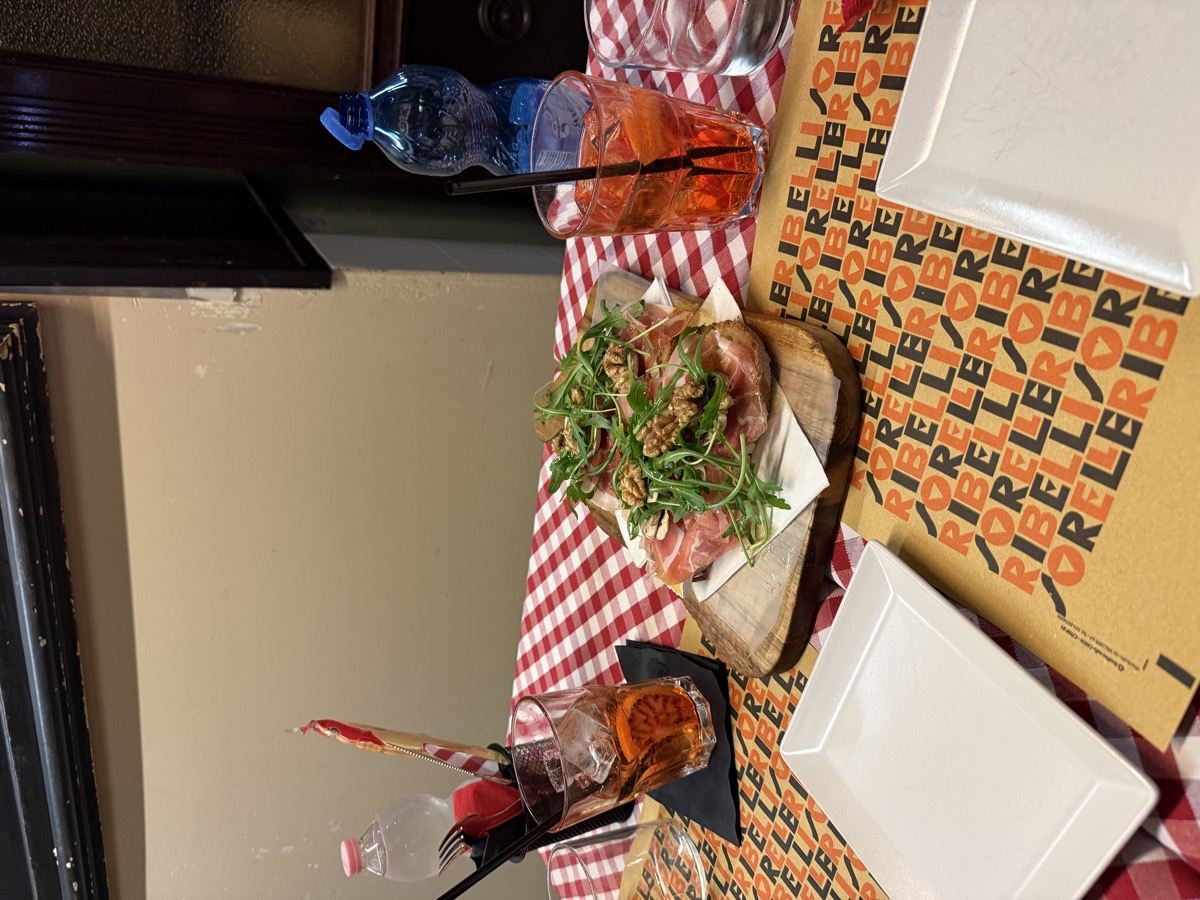
Bruschetta Brunch
🍞 BreakfastStarting the day Italian-style at Sorelle Ribelli — bruschetta with prosciutto, arugula, and walnuts, paired with Aperol Spritz. Bruschetta (pronounced "broo-SKET-tah," never "broo-SHET-ah") comes from the Roman dialect word "bruscare" meaning to roast over coals. The tradition of rubbing garlic on grilled bread and adding toppings dates back to at least the 15th century.
📍 Sorelle Ribelli 🔗 Instagram ⭐ ReviewsMorning Vibes
🎬 Video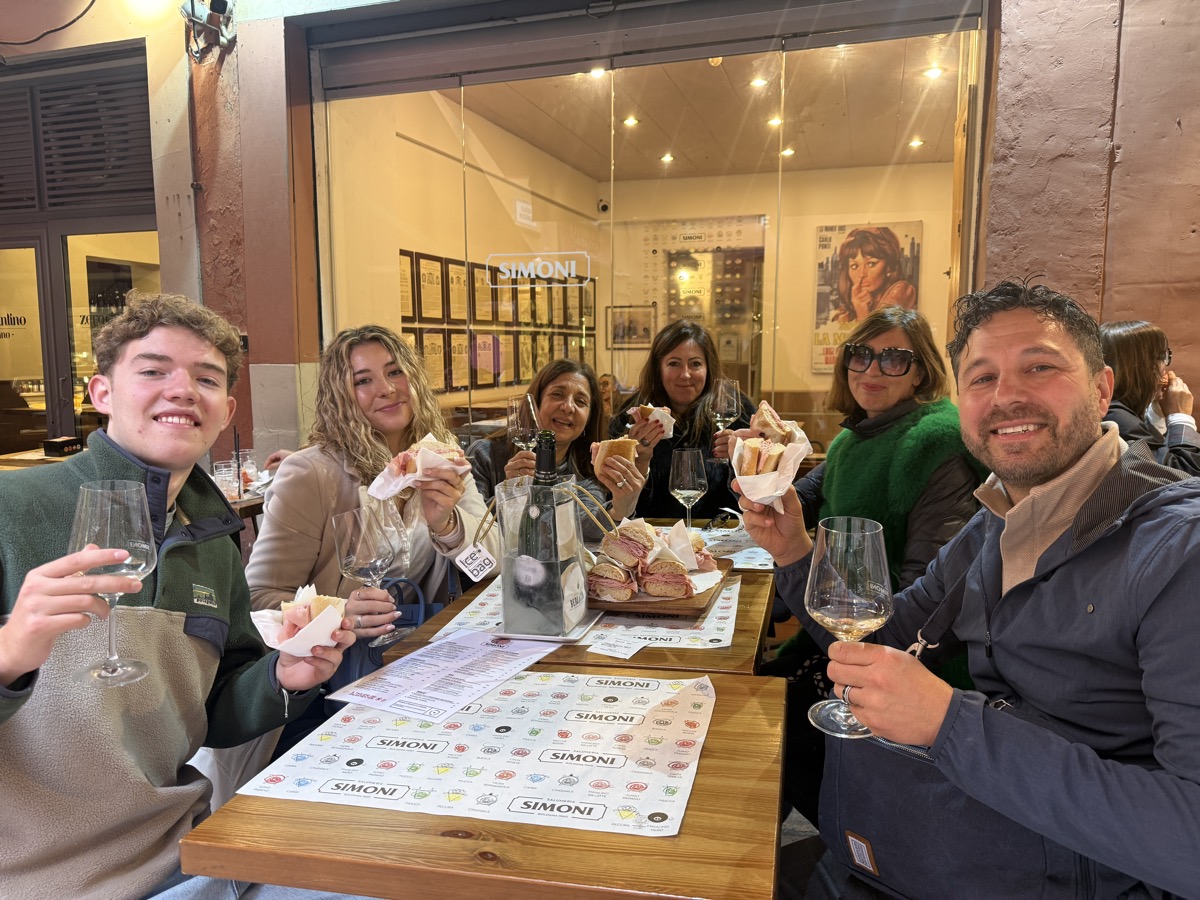
Panini at Simoni with the Crew
🤝 FriendsMeeting up with Rosa and friends — including meeting Duncan for the first time — at Simoni, one of Bologna's legendary salumerias. Everyone with panini and white wine in hand. Simoni has been a staple of Bologna's Quadrilatero market district, serving up the finest cured meats, cheeses, and wine straight from the counter.
📍 Simoni 🔗 Website ⭐ Reviews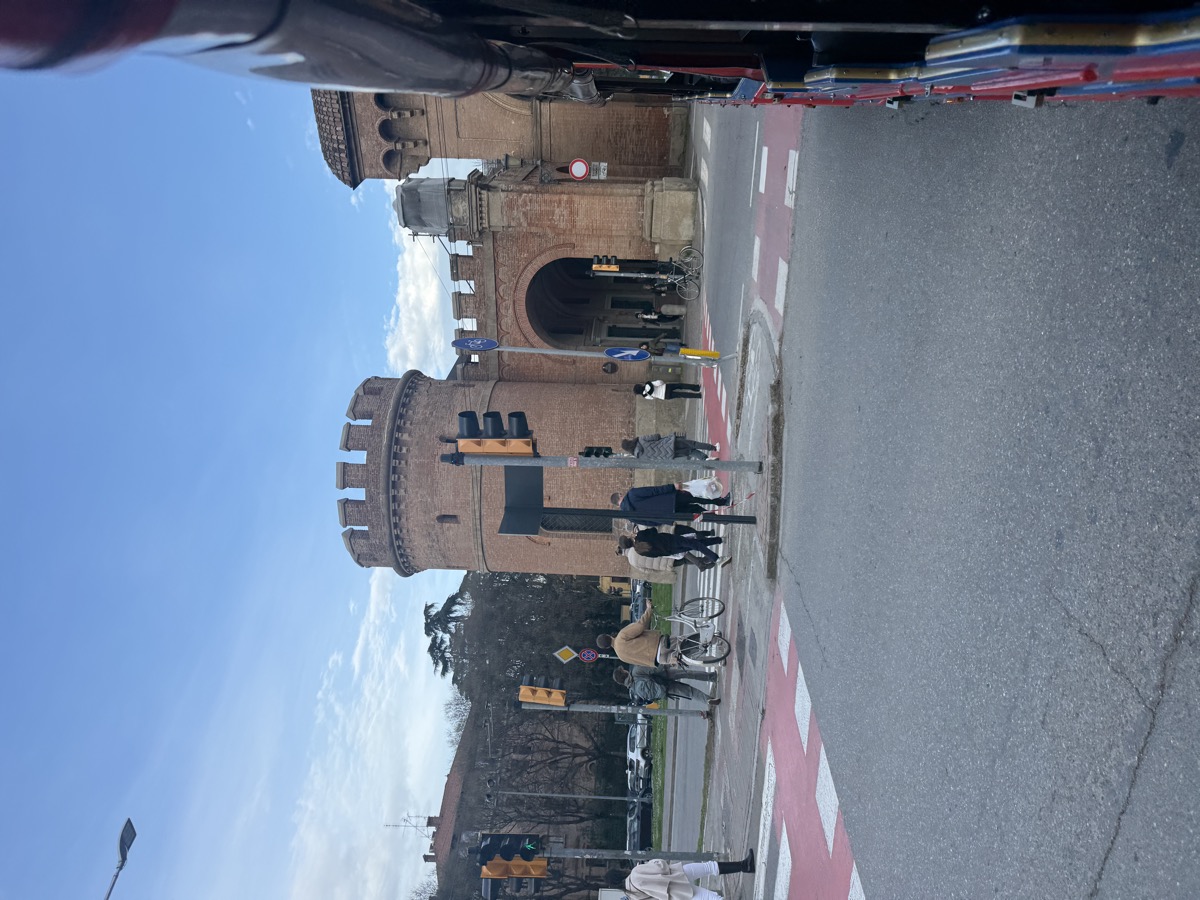
Porta Saragozza — Gateway to San Luca
🏛️ HistoryPassing through Porta Saragozza aboard the San Luca Express. This medieval gate, built in the 13th century as part of Bologna's third ring of walls, marks the beginning of the famous Portico di San Luca — the world's longest covered walkway at 3.8 km with 666 arches, built between 1674-1793 to protect pilgrims walking uphill to the basilica.
📍 Porta Saragozza 📖 History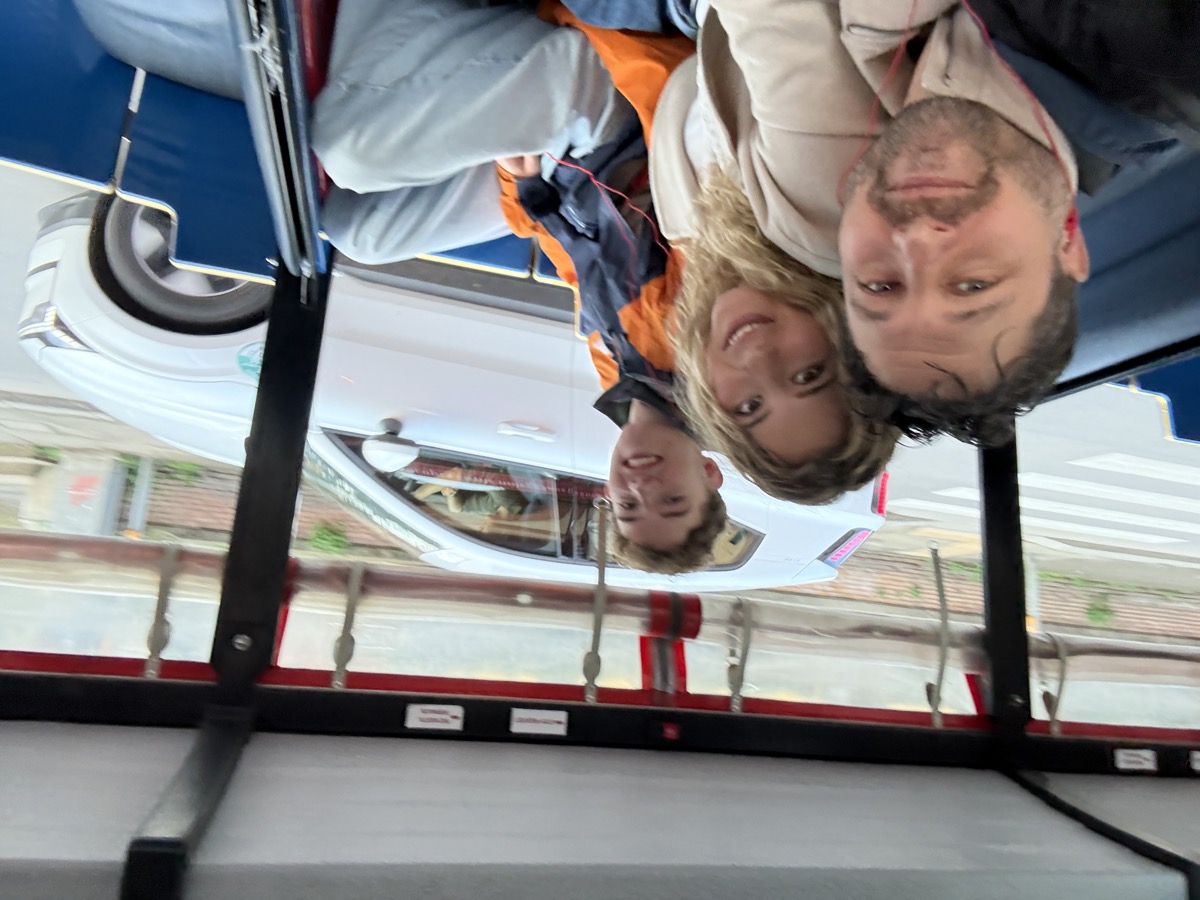
Riding the San Luca Express
🚂 TransportAdam, Nova, and Duncan aboard the San Luca Express — the little open-sided tourist train that winds up Colle della Guardia to the basilica. A much easier (and more fun) option than the 3.8 km uphill walk through the portico!
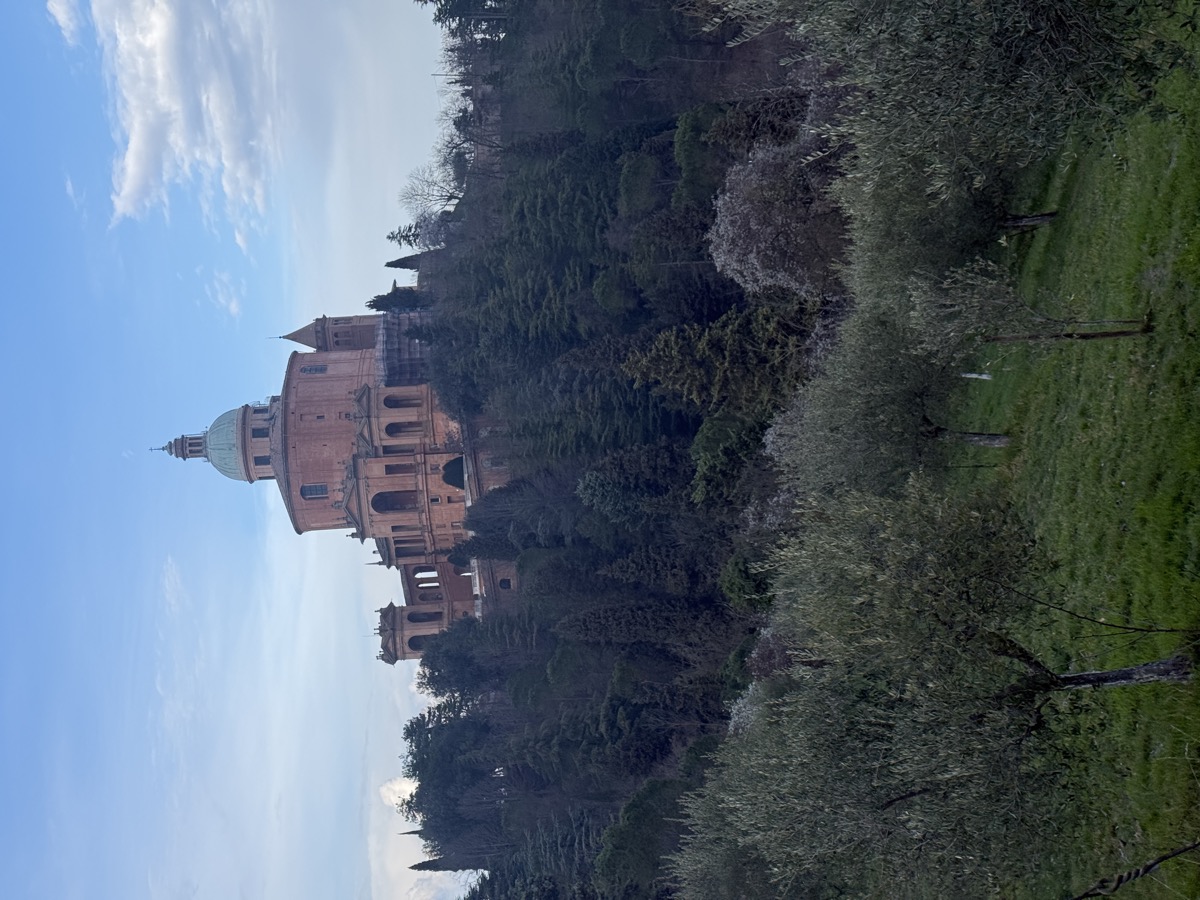
Basilica di San Luca
⛪ LandmarkThe stunning Basilica della Madonna di San Luca, perched atop Colle della Guardia at 289 meters above sea level. The current baroque church was designed by Carlo Francesco Dotti and built between 1723-1774, but a sanctuary has stood on this hilltop since 1194. Inside, it houses a Byzantine icon of the Madonna attributed to Saint Luke — legend says it was painted by the apostle himself and brought to Bologna in the 12th century.
📍 Basilica di San Luca 📖 History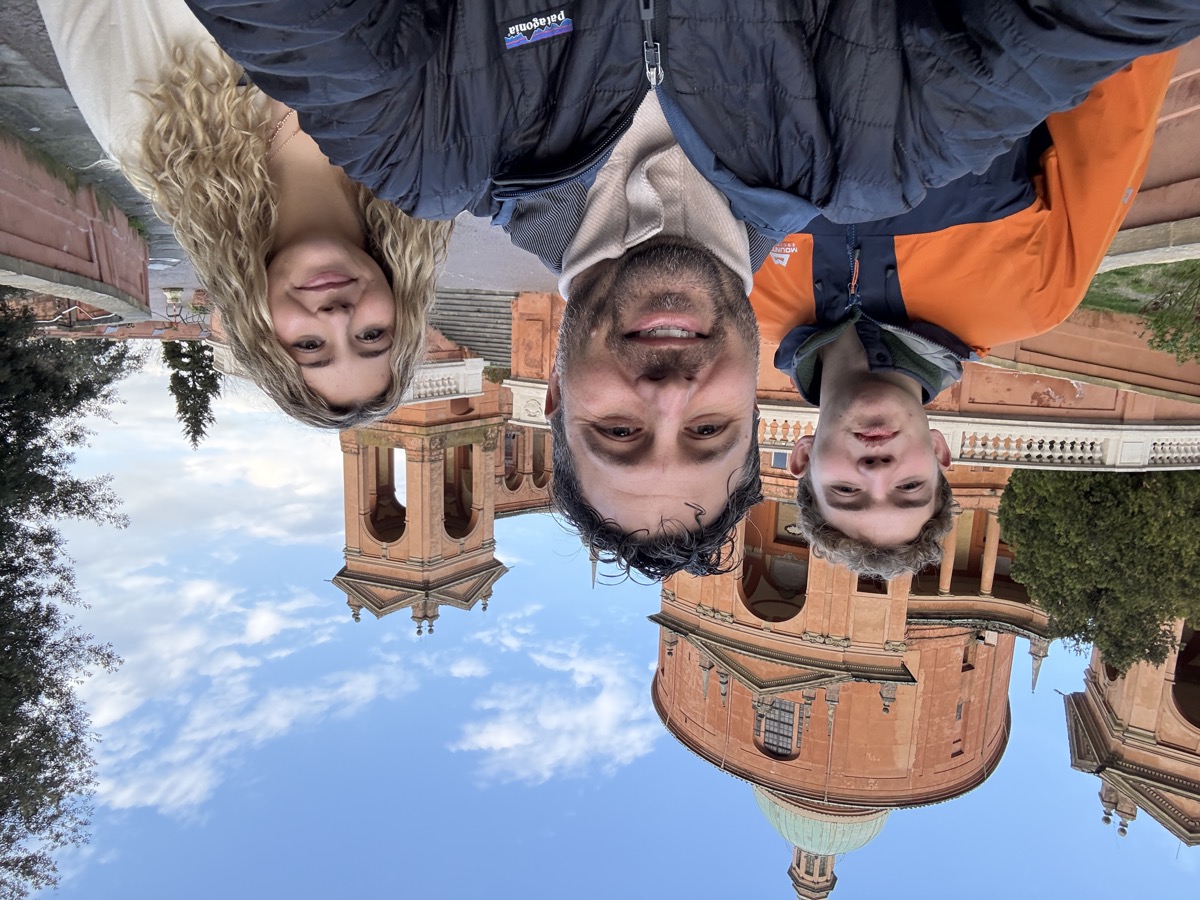
At the Top
📸 PhotoAdam, Nova, and Duncan at the entrance of San Luca. The grand circular drum with its arched loggias and stone balustrades was designed to be visible from anywhere in Bologna — it's the city's most recognizable silhouette on the horizon.
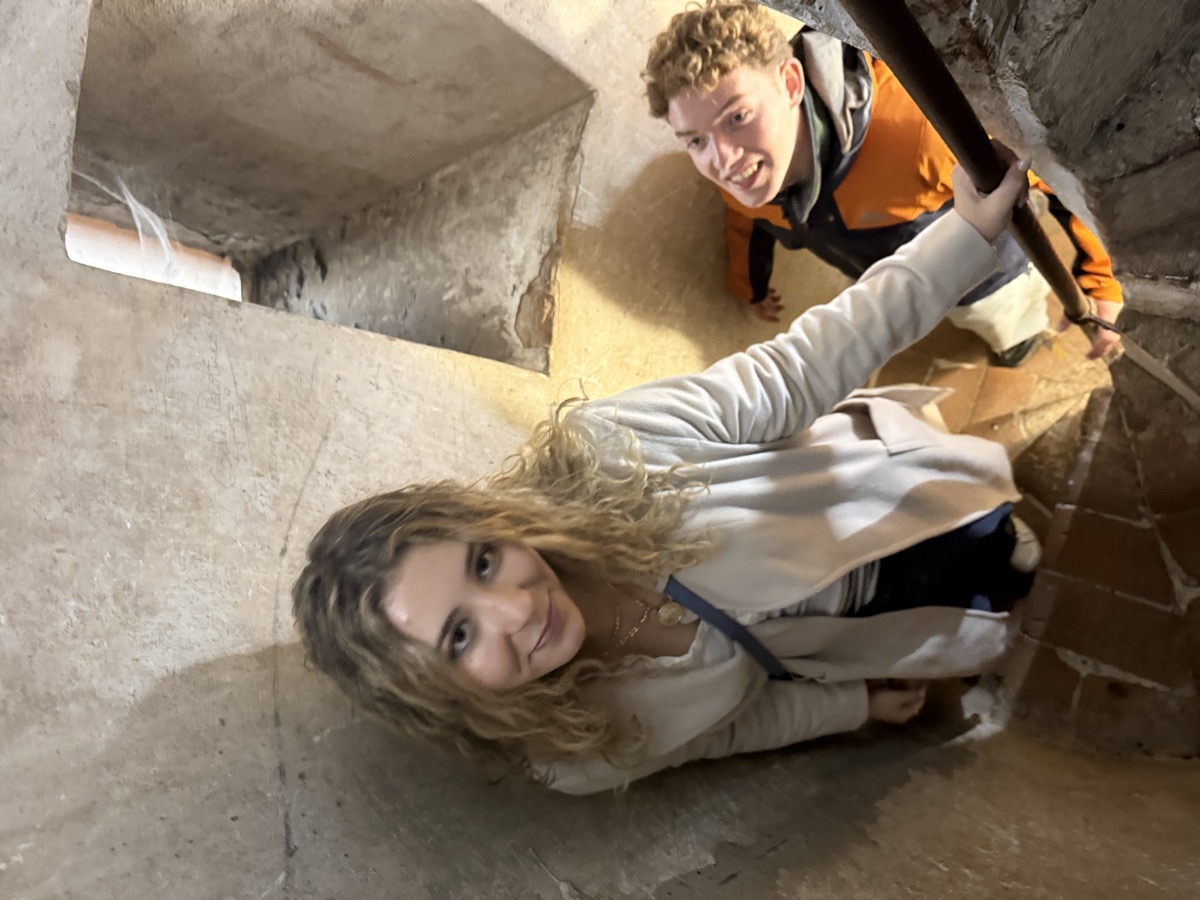
Climbing the Bell Tower
🗼 ExplorationNova and Duncan ascending the narrow stone spiral staircase inside San Luca's bell tower. These worn steps have been climbed by pilgrims for centuries. The tight, ancient passageway leads to the rooftop terrace with panoramic views of the entire Emilian countryside.
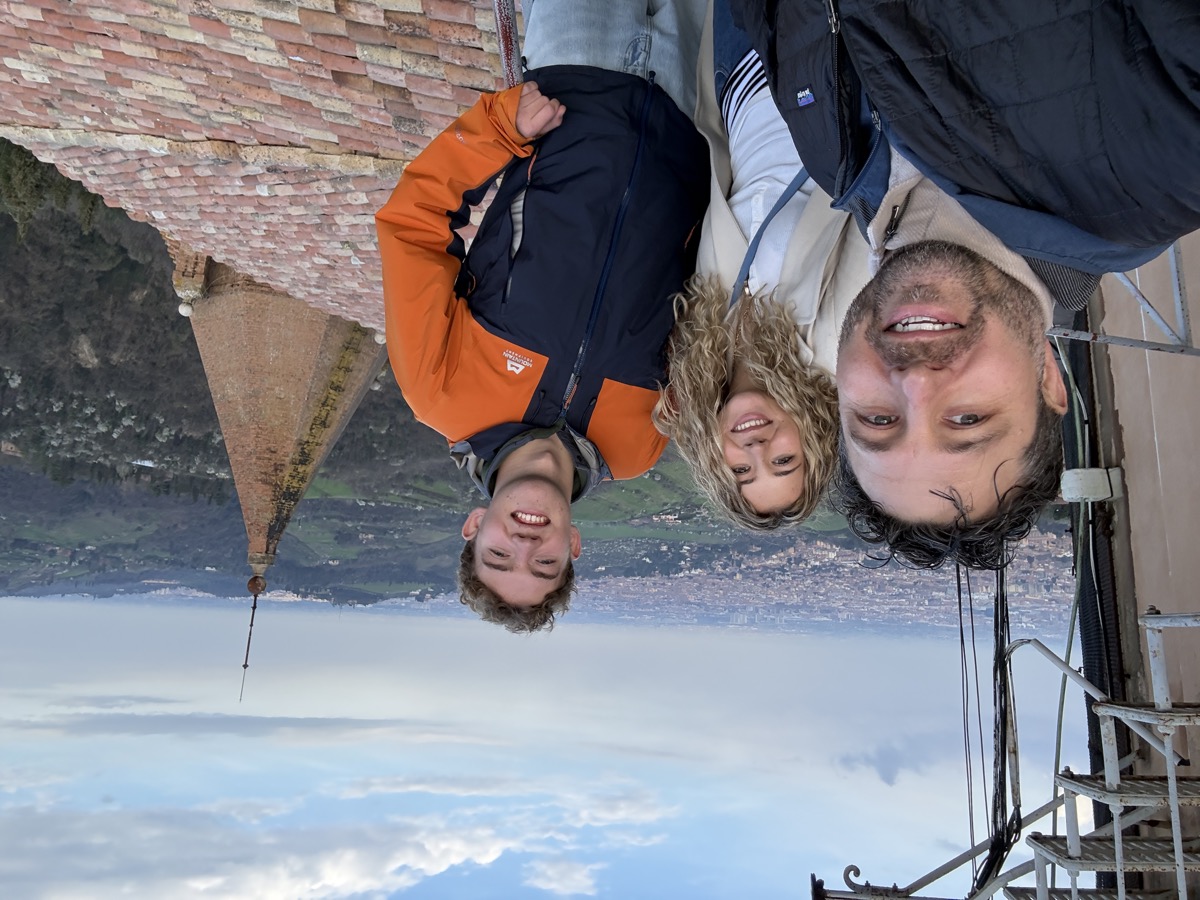
Rooftop Panorama
🏔️ ViewsThe reward for climbing all those stairs — a breathtaking 360° view from the dome terrace of San Luca. Bologna's terracotta rooftops in the distance, the green rolling hills of Emilia-Romagna, scattered villas, and the Apennine mountains on the horizon. On clear days, you can see all the way to the Po Valley and even the Alps.
📍 San Luca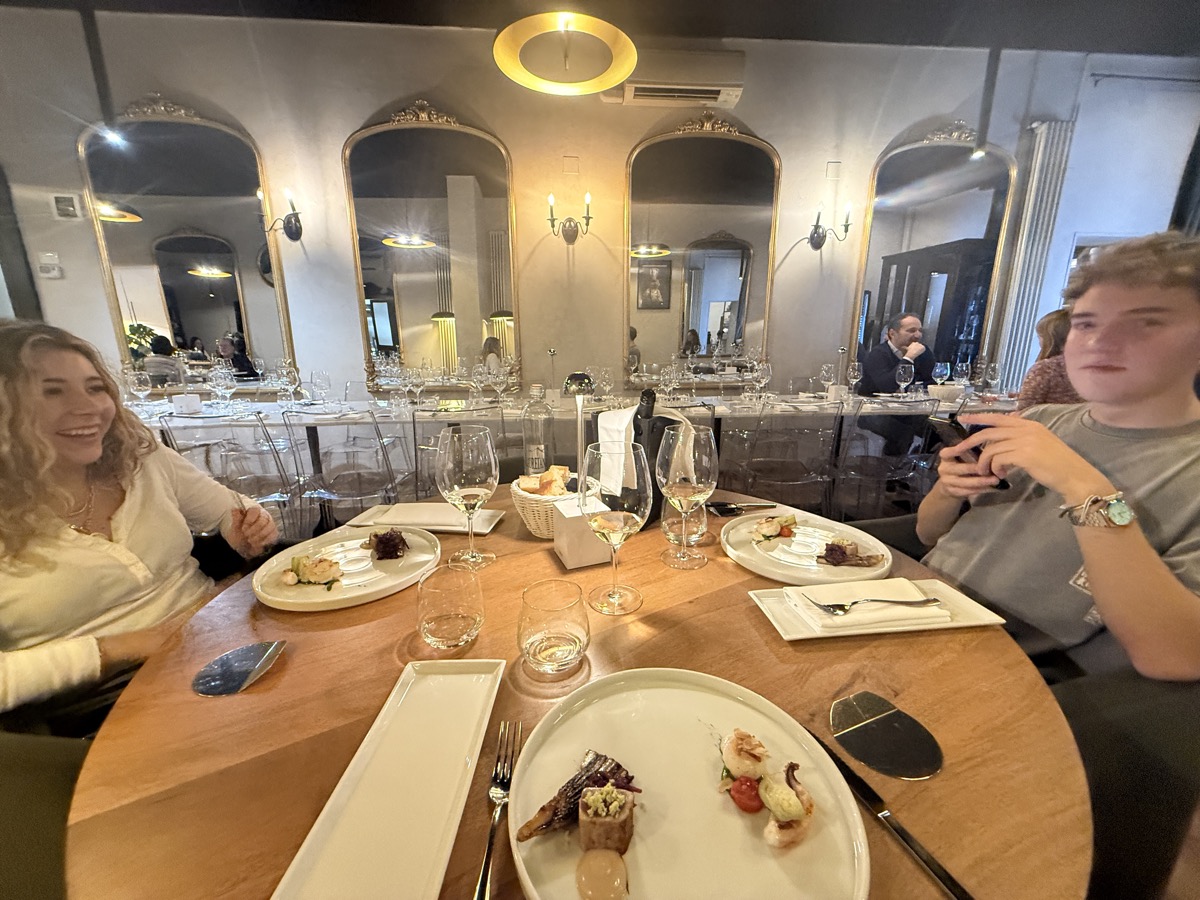
Antipasti at Pescheria Aldrovandi
🍽️ DinnerFine dining at Pescheria Aldrovandi in Piazza Aldrovandi — Bologna's premier seafood restaurant. Beautifully plated seafood antipasti with Prosecco in an elegant setting with gilt-framed mirrors and modern decor. Italian multi-course dining follows a strict order: antipasto (starter), primo (pasta/soup), secondo (meat/fish), contorno (side), and dolce (dessert). Each course is meant to be savored slowly — dinner in Italy is never rushed.
📍 Piazza Aldrovandi 11 🔗 Website ⭐ Reviews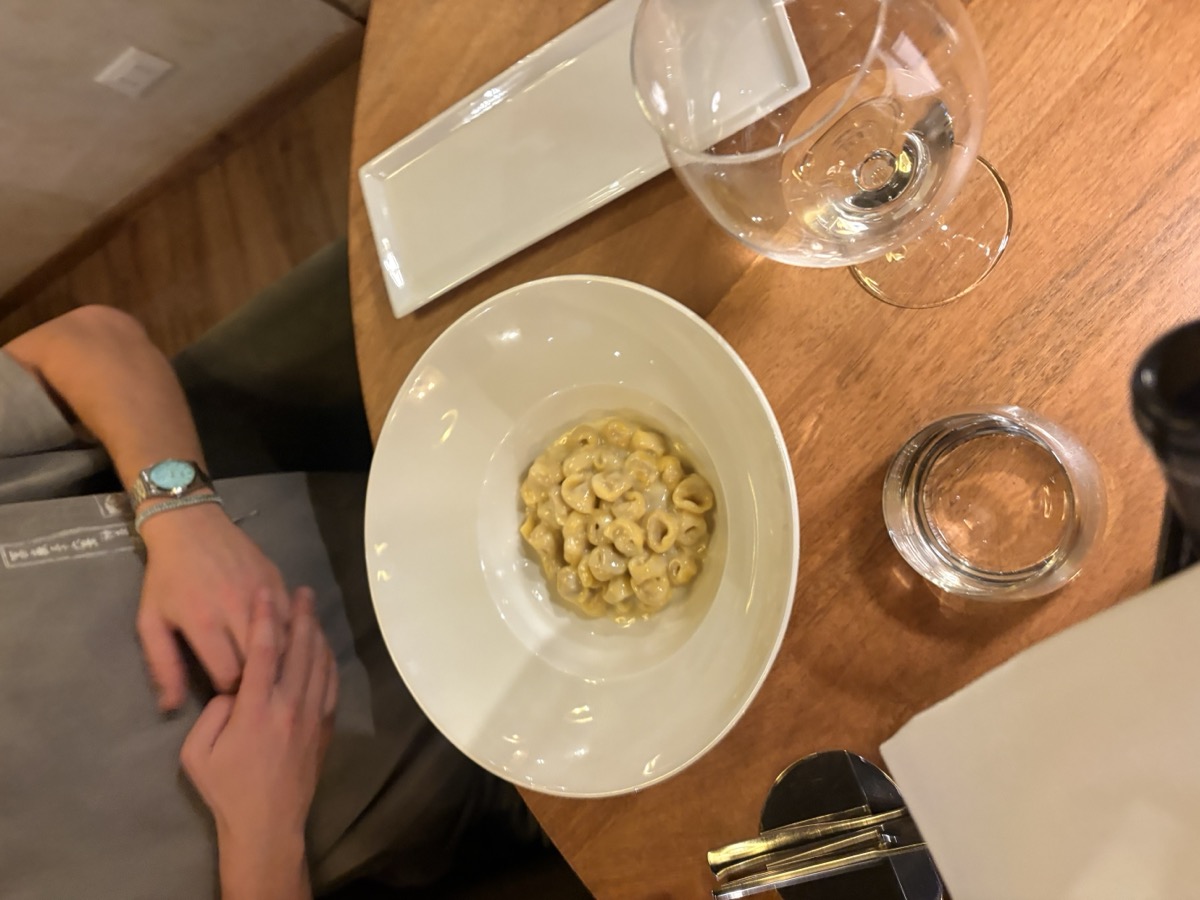
Tortellini in Brodo
🍝 PrimoThe primo course — tortellini in brodo, Bologna's most sacred dish. According to legend, a Bolognese innkeeper peeked through a keyhole at the goddess Venus staying at his inn, and was so inspired by her navel that he created tortellini in its shape. The broth is traditionally made from capon, beef, and Parmigiano rind, simmered for hours. In Bologna, asking for tortellini with cream sauce is practically a criminal offense.
📖 History of Tortellini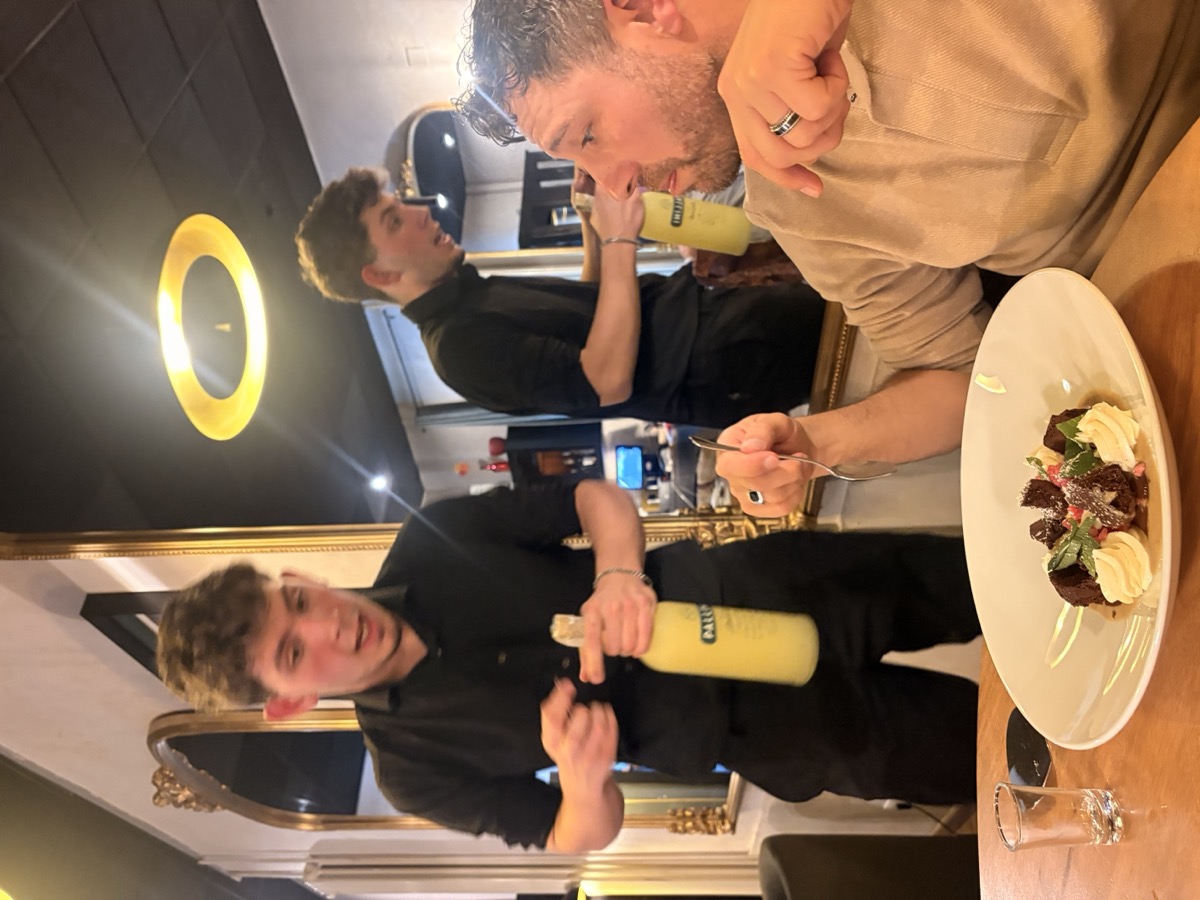
Dolce & Limoncello
🍰 DessertThe perfect ending — chocolate fondant with the waiter pouring Pallini Limoncello, Italy's beloved lemon liqueur. Limoncello originated on the Amalfi Coast using the fragrant Sfusato Amalfitano lemons. It's traditionally served ice-cold as a digestivo — meant to aid digestion after a big meal. The Italian way: sip it slowly, never shoot it.
📖 About Limoncello📸 What We Actually Did
Friday, March 13 — Last Morning in Bologna → Tenno
Opening the Window to Bologna
🎬 MorningThe best alarm clock in the world — opening the shutters to the bustle of Piazza Maggiore below. The sound of Italian voices echoing off medieval stone, the morning light hitting San Petronio's facade, people gathering on the steps. This is why you stay in the center.
📍 Piazza Maggiore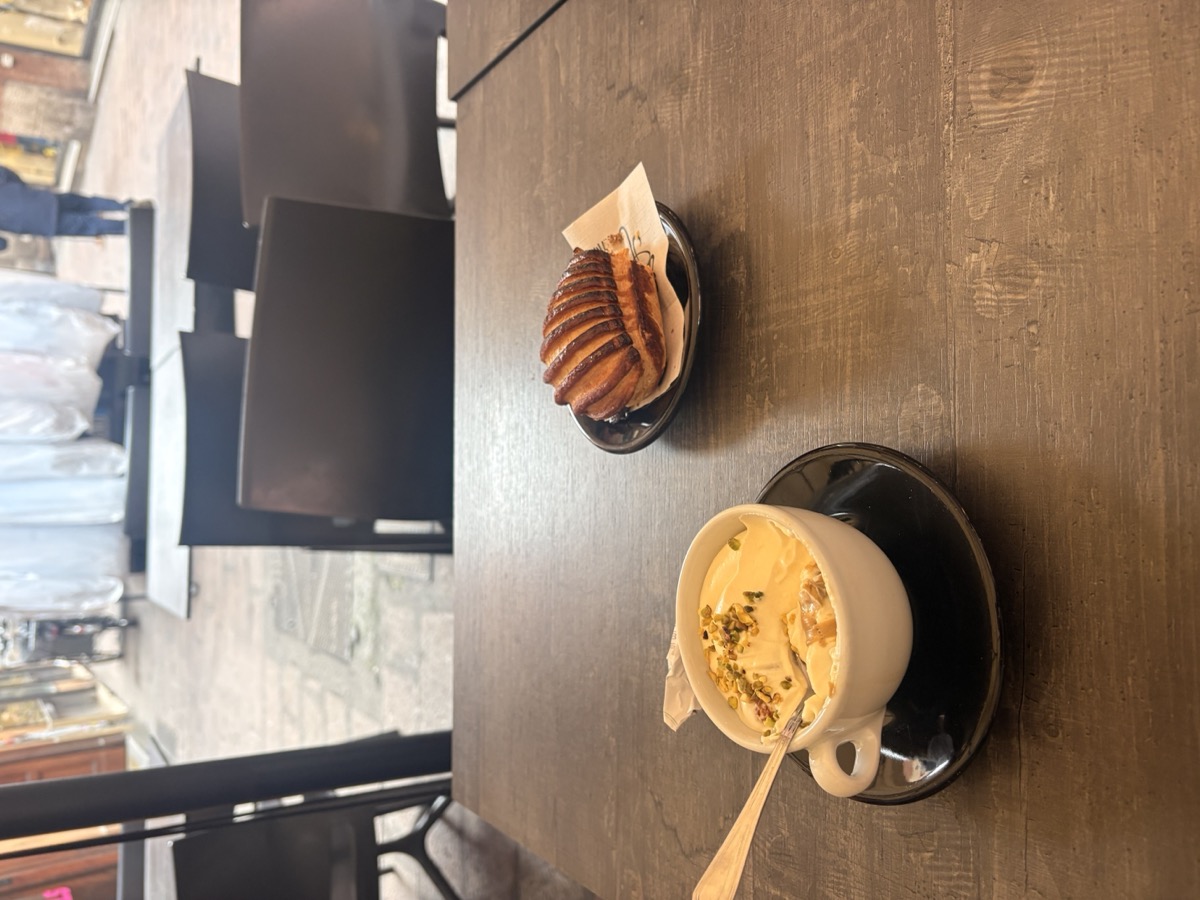
Last Bologna Breakfast
☕ BreakfastA pistachio cappuccino and a perfect golden cornetto under the porticoes — the quintessential Italian breakfast. In Italy, breakfast is sweet, not savory. A cornetto (the Italian cousin of the French croissant, but softer and less buttery) paired with a cappuccino is how millions of Italians start every single day. And in Bologna, even the simple things taste extraordinary.
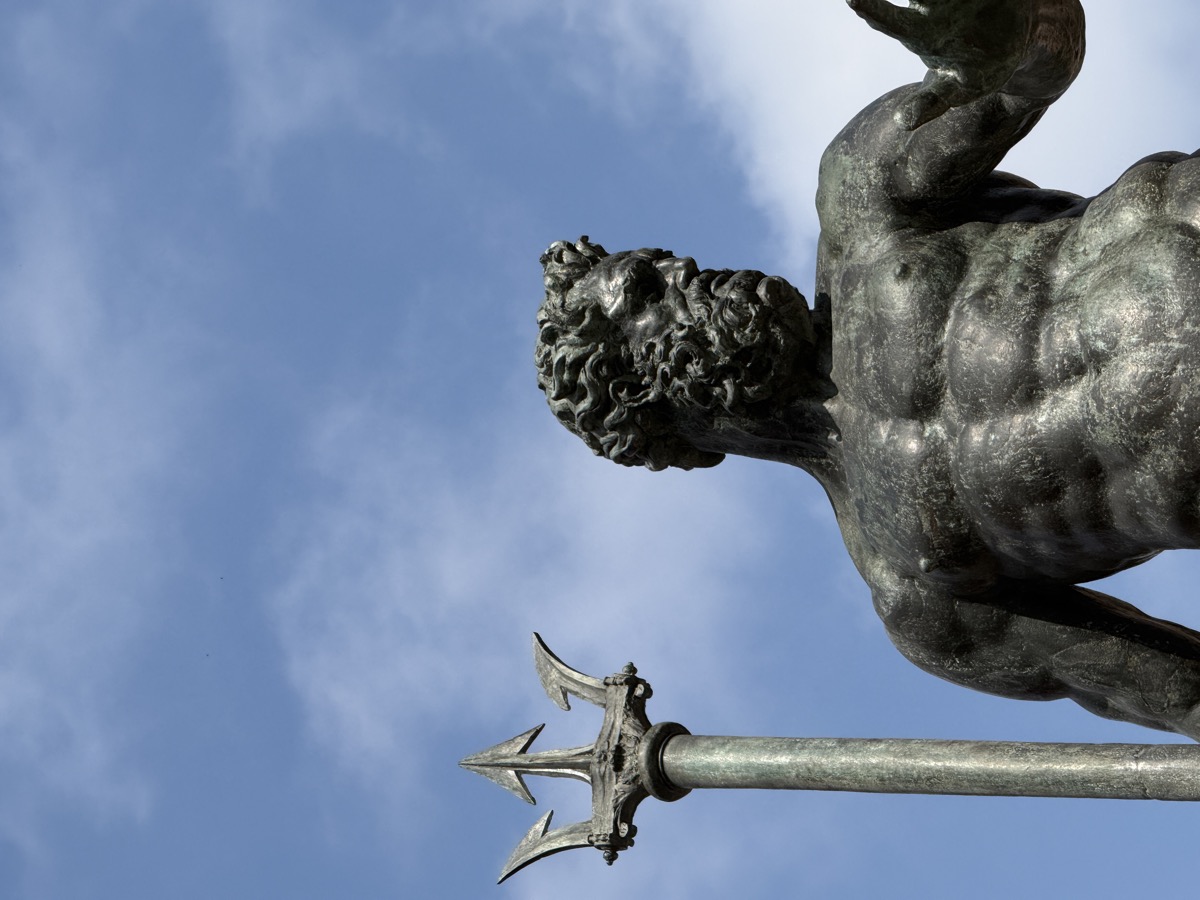
Neptune's Trident — The Maserati Logo
🏛️ HistoryLooking up at Neptune holding his famous trident. This exact trident inspired one of the world's most iconic luxury car logos. When the Maserati brothers founded their car company in Bologna in 1914, they needed a symbol. Their friend, artist Mario Maserati, looked at this very statue in the city's main square and said: "That's it." The three-pronged trident of Neptune became the Maserati logo — a symbol of power, strength, and Bologna's heritage. Every Maserati ever made carries a piece of this 460-year-old fountain.
📍 Fontana del Nettuno 📖 Maserati & Neptune 📖 The Fountain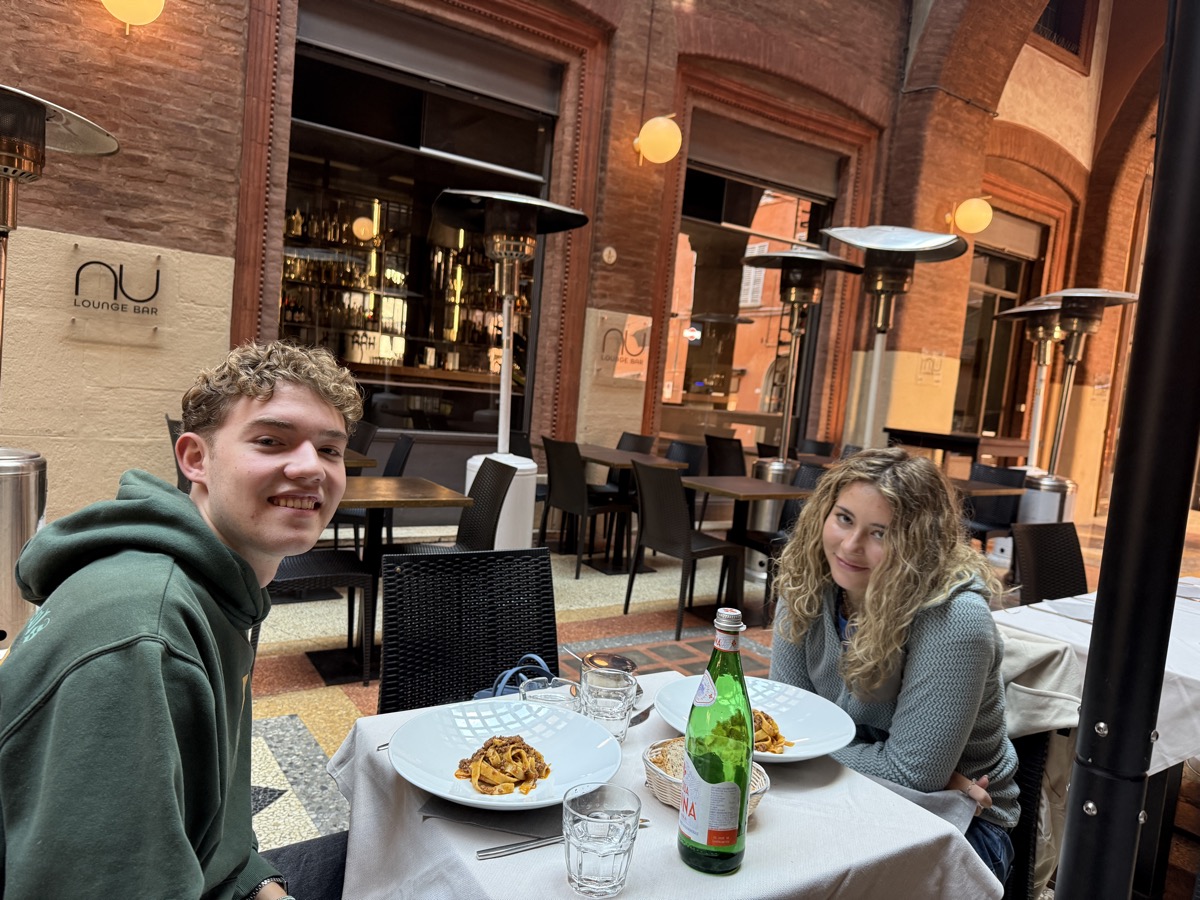
Lunch at Nu Lounge Bar
🍝 LunchNova and Duncan's last Bolognese meal — fresh tagliatelle al ragù under the porticoes. The proper name is "ragù alla bolognese" — never "spaghetti bolognese" (which doesn't exist in Italy). The real ragù is a slow-cooked sauce of beef, pork, soffritto, tomato paste, and wine, simmered for hours and served exclusively on fresh egg tagliatelle or in lasagna. Bologna earned the nickname "La Grassa" (The Fat One) for meals exactly like this.
📍 Nu Lounge Bar 🔗 Website ⭐ ReviewsArriving in Tenno
🎬 ViewsFrom the flat plains of Emilia-Romagna to the dramatic Alpine cliffs of Trentino — what a change of scenery. Tenno sits at 428 meters elevation, perched above Lake Garda with the Dolomite foothills rising all around. The medieval village below with its church bell tower and terracotta roofs, the misty mountains fading into the distance — a completely different Italy from Bologna.
📍 Tenno 📖 About TennoDinner at Agritur Acetaia Gourmet & Relax
🍷 DinnerFirst dinner at the agriturismo — carne salada (Trentino's traditional salt-cured beef, a cousin of bresaola), roasted vegetables, and the house specialty: their own handmade balsamic vinegar. "Acetaia" literally means "vinegar factory" — this agriturismo produces its own balsamic, aged in wooden barrels of different woods (oak, cherry, chestnut, mulberry, juniper) for years, sometimes decades. True artisan balsamic from Trentino is liquid gold — thick, sweet, and complex. A completely different world from the mass-produced stuff in supermarkets.
📍 Strada di S. Zeno 2, Tenno 🔗 Website 📖 Balsamic Vinegar 📖 Carne Salada📸 What We Actually Did
Saturday, March 14 — Skiing at Madonna di Campiglio ⛷️
Opening the Window in Tenno
🎬 MorningOpening the shutters to the Trentino mountains — massive limestone cliffs disappearing into the clouds, the village bell tower with its green copper dome below, and terracotta rooftops clustered together. A completely different world from the flat streets of Bologna just two days ago.
📍 Agritur Acetaia, Tenno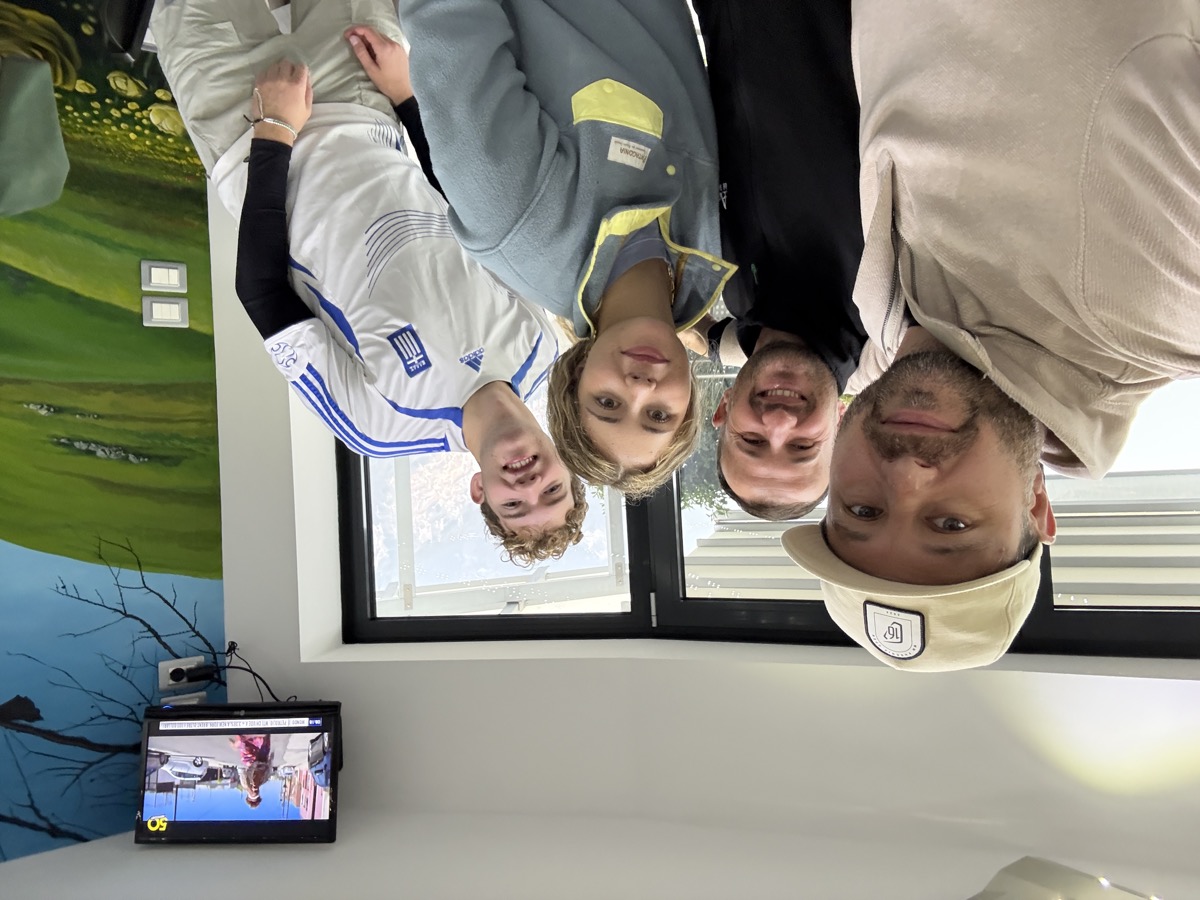
Breakfast with Tony
☕ BreakfastTony, the Italian-Albanian host at the agriturismo, woke up extra early to make sure everyone had a proper breakfast before hitting the slopes. That's the agriturismo experience — you're not a guest at a hotel, you're family. Italy has over 24,000 agriturismi, farm-stays that began in the 1960s as a way to support rural agriculture. Today they're one of the best ways to experience authentic Italian hospitality.
Threading Through Medieval Streets
🎬 DrivingDriving through the ancient Trentino villages on the way to Madonna di Campiglio — cobblestone lanes barely wide enough for a single car, centuries-old stone buildings with timber overhangs pressing in from both sides, wrought-iron lamps on the walls. These villages date back to the Middle Ages, built tight and compact for defense and warmth. The roads were designed for horses and carts, not Fiats — but somehow, Italians navigate them daily without blinking.
📖 Village History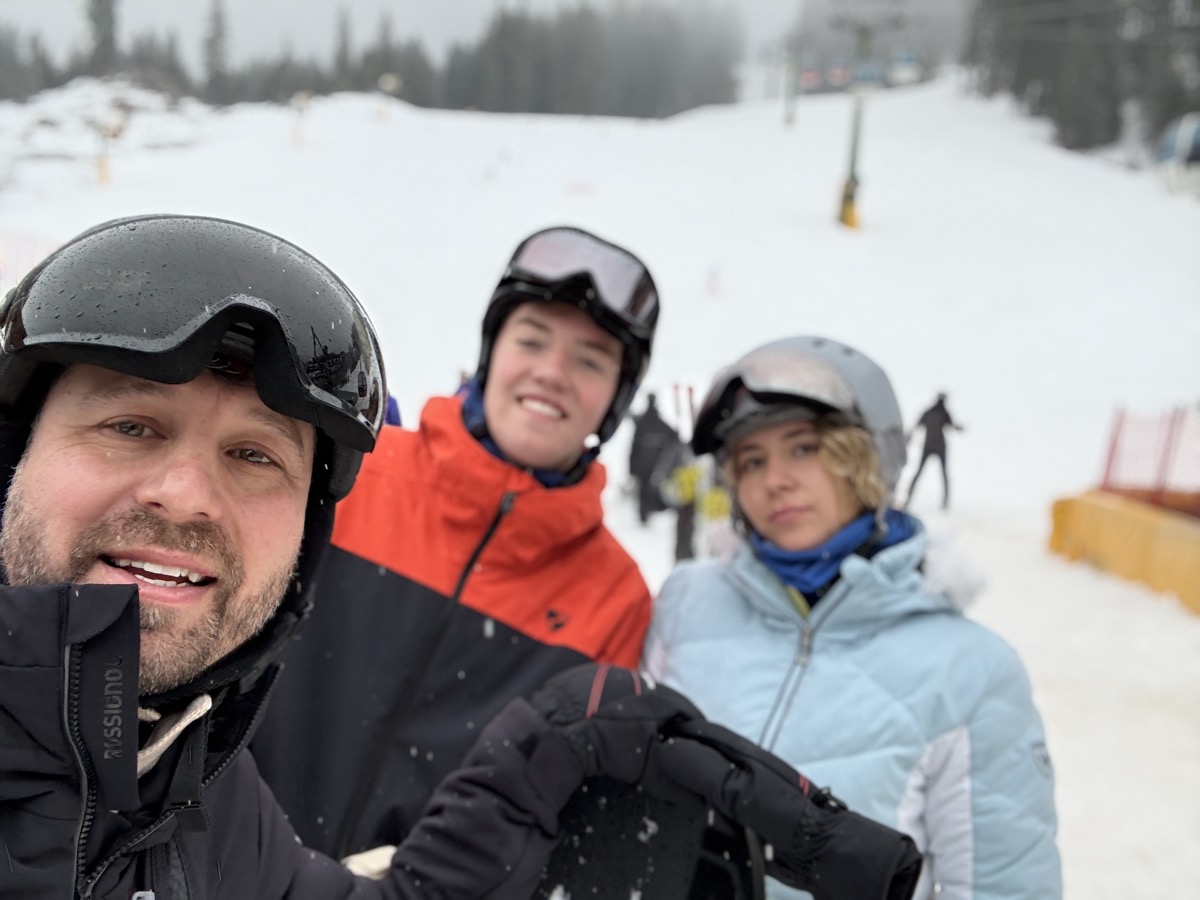
Made It to the Mountain
⛷️ SkiingFirst photo on the slopes at Madonna di Campiglio — one of Italy's most prestigious ski resorts in the Brenta Dolomites. Overcast skies, fresh snow underfoot, and the chairlift running behind. Madonna di Campiglio has been a winter destination since the 1880s when it was a favorite of Austro-Hungarian royalty. Emperor Franz Joseph and Empress Sissi vacationed here. Today it hosts World Cup ski races and remains the crown jewel of Trentino skiing, with 150 km of slopes between 1,500 and 2,600 meters.
📍 Madonna di Campiglio 📖 History 🔗 Ski Area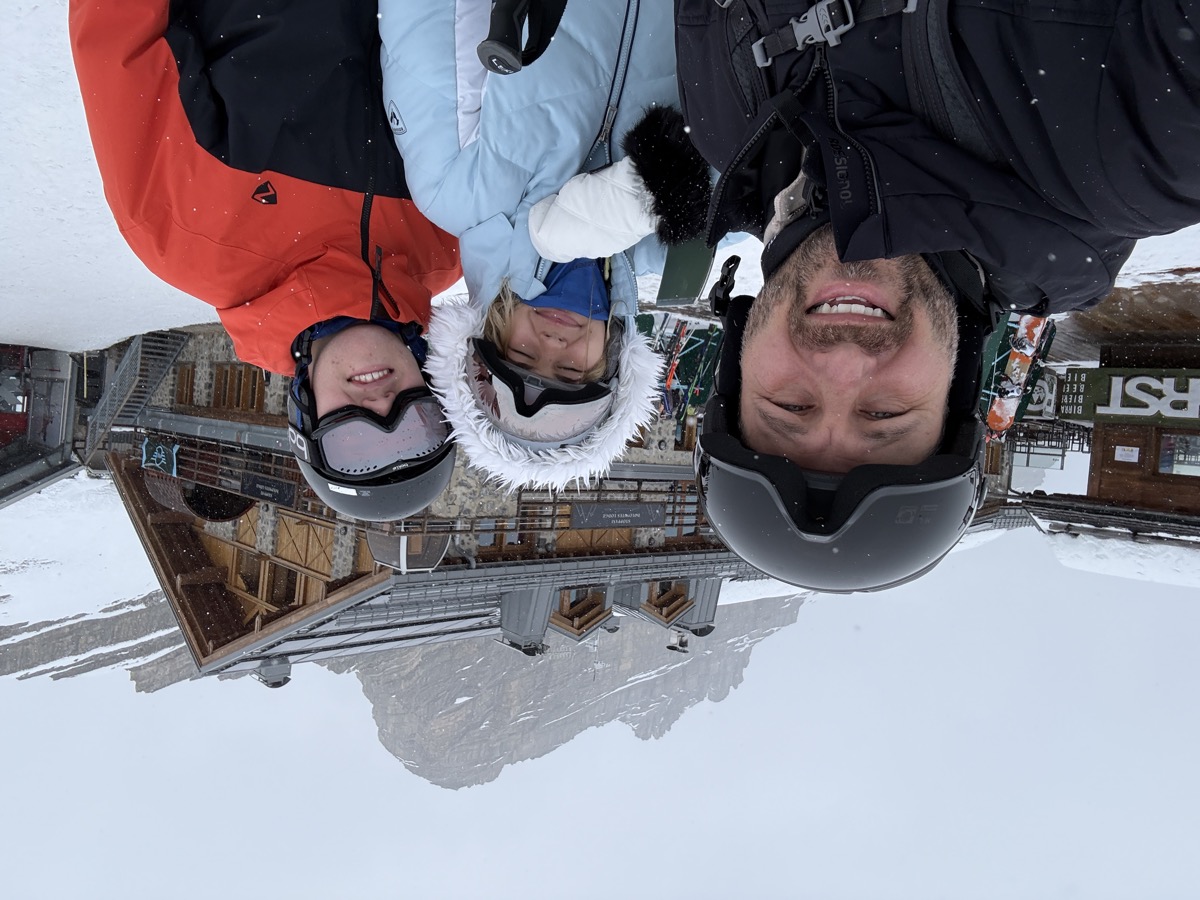
At the Rifugio — 8,500 Feet Up
🏔️ MountainsAdam, Nova, and Duncan at a mountain rifugio at roughly 2,580 meters (8,465 feet) above sea level — the summit of Madonna di Campiglio's ski area. From here, the run back down to the village drops over 3,300 feet of vertical — roughly 20-30 minutes of skiing depending on how many times you stop to take in the views (or catch your breath). The Brenta Dolomites towering behind are a UNESCO World Heritage Site — dramatic limestone spires formed 200 million years ago from ancient coral reefs when this was a tropical sea. Hard to imagine while standing in a snowstorm.
📖 Brenta Dolomites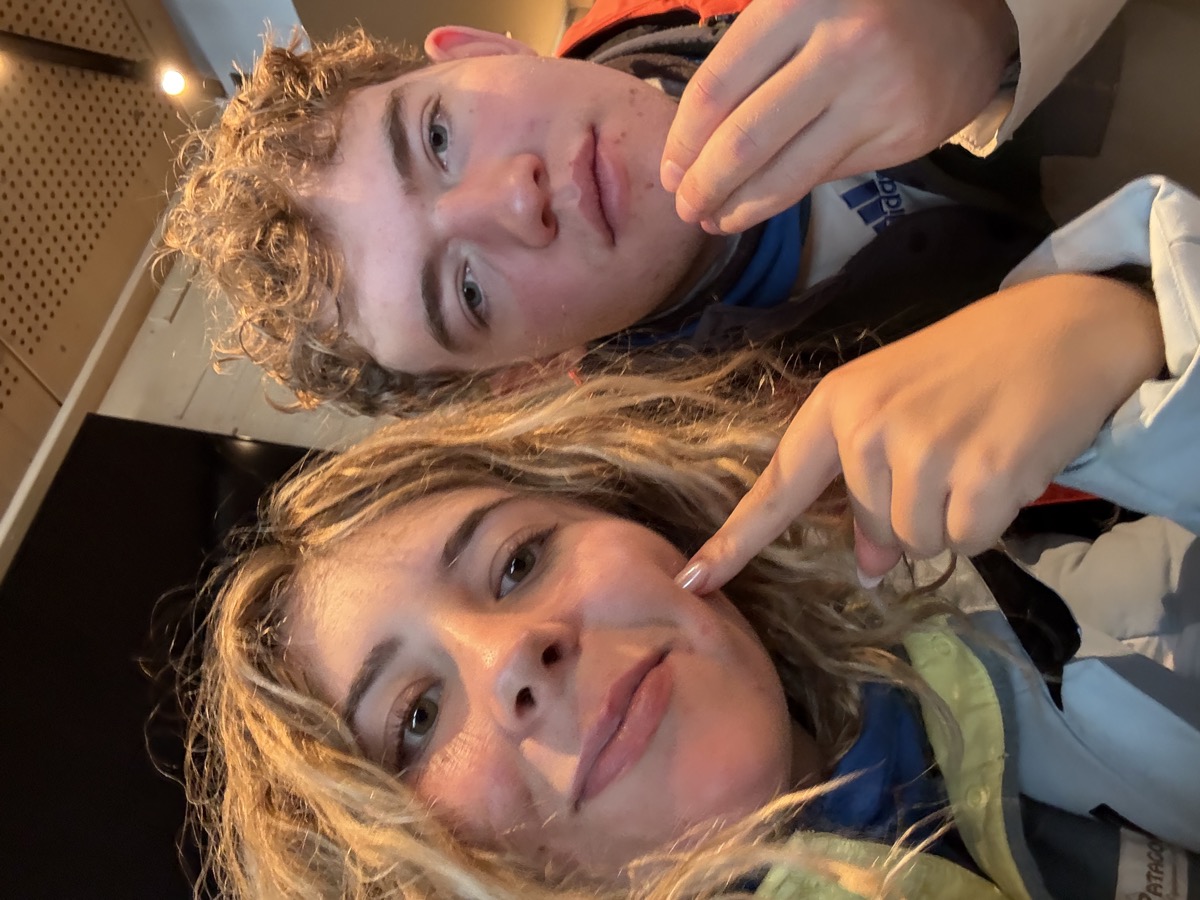
Après-Ski
🍻 Warm UpNova and Duncan warming up inside the lodge after battling the storm — rosy cheeks and damp curls, the universal look of people who just had the time of their lives in a blizzard. Après-ski (literally "after skiing") is a beloved Alpine tradition — warming up with drinks and food after a day on the slopes. In Trentino, that usually means bombardino (hot eggnog with brandy) or vin brulé (mulled wine).
The Snowstorm
🎬 WhiteoutLooking out from the lodge into a full-blown Alpine snowstorm. Visibility near zero, skiers appearing as silhouettes in the whiteout, blowing snow pouring through the doorway. Madonna di Campiglio averages over 4 meters of snowfall per season — and it felt like most of it arrived during this one afternoon.
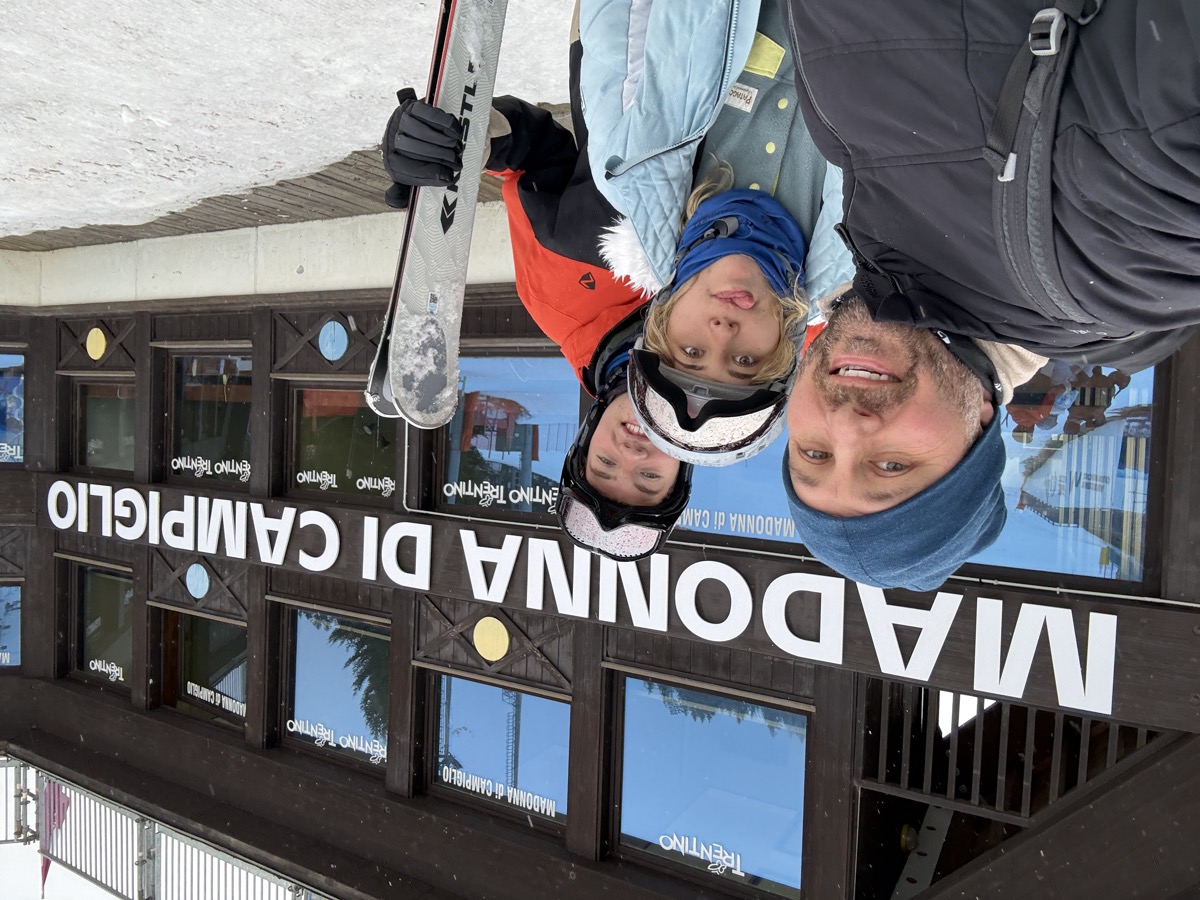
Madonna di Campiglio ✅
📸 PhotoEnd-of-day photo at the iconic Madonna di Campiglio sign. Nova sticking out her tongue, Duncan holding up the skis — a perfect day despite (because of?) the storm. When it snows like this in the Dolomites, Italians say "cade la neve e porta fortuna" — the snow falls and brings good luck.
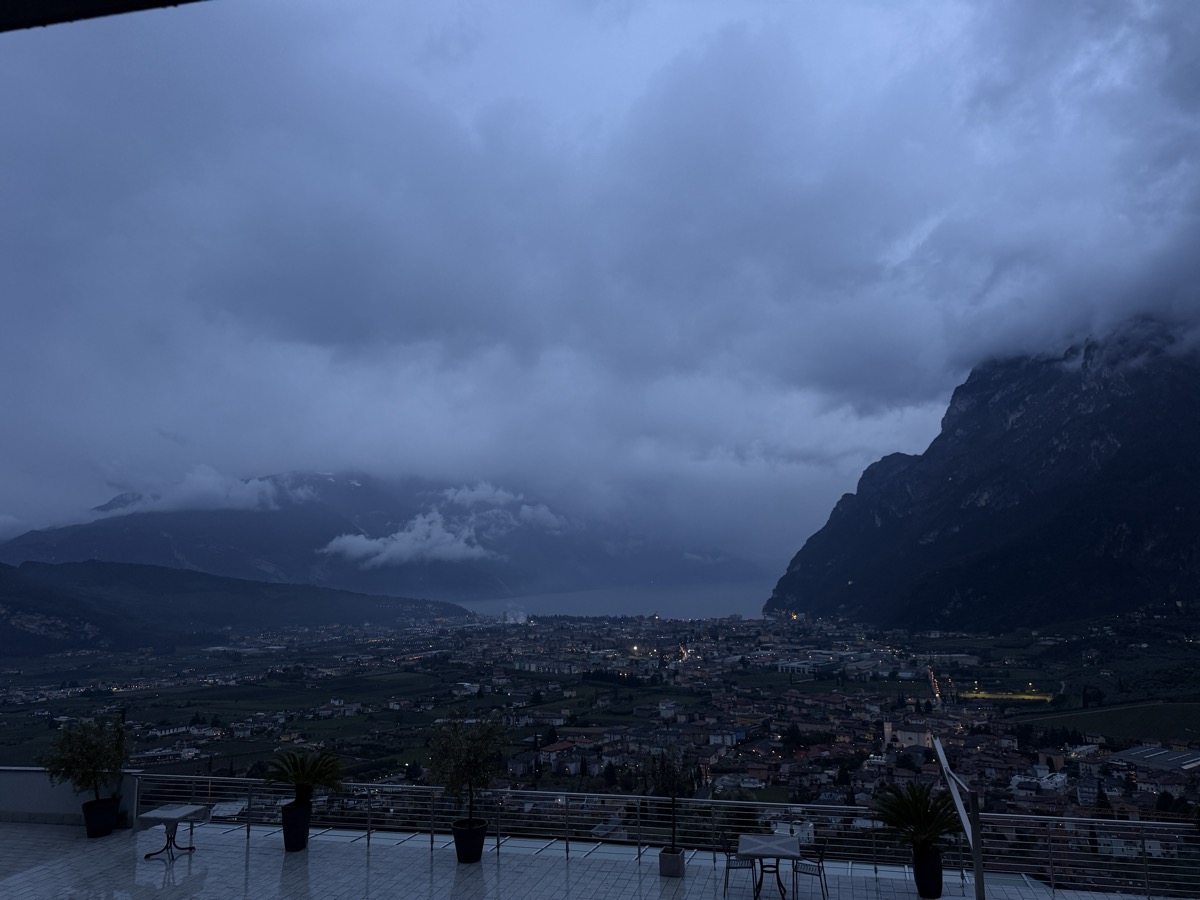
Evening View from Tenno
🌙 EveningBack at the agriturismo as dusk settles over the valley. The view from the terrace at blue hour — heavy clouds clinging to the mountains, the massive cliff face glowing in the fading light, and the lights of the valley below (Riva del Garda and Arco) beginning to twinkle. From snow-covered Alpine peaks to this Mediterranean-feeling lake valley in 45 minutes. That's the magic of Trentino — it's where the Alps meet the Mediterranean.
📍 Tenno📸 What We Actually Did
Sunday, March 15 — Mass, Arco, YWAM & the Lemon Town
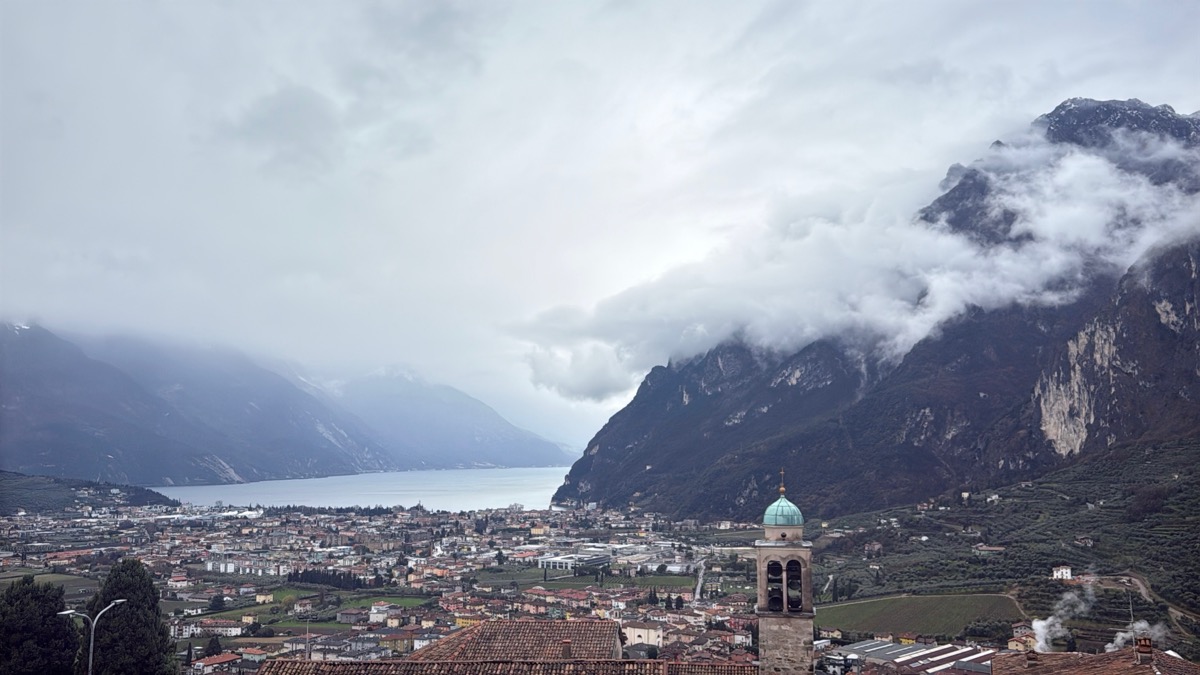
Arco from Above
📸 PhotoThe full panorama — Arco's bell tower rising above the rooftops, Lake Garda gleaming in the distance between the mountain walls, snow-capped peaks disappearing into the clouds. Arco has been a destination since the late 1800s when Habsburg aristocrats came here for the mild climate. Even today the town is full of palm trees, Mediterranean gardens, and grand Belle Époque hotels — an unlikely oasis at the foot of the Alps.
📖 About ArcoThe Bell Rings for Mass
🔔 BellsThe church bells ringing out across the valley exactly 15 minutes before the 10:30 Sunday service — calling the faithful just as they have for over 1,200 years. The Collegiata bell tower with its green copper dome in the foreground, the town of Arco spreading out below, and Lake Garda stretching south between massive limestone cliffs. The Pre-Alpine peaks are dusted with snow, clouds clinging to the summits. In Italian tradition, church bells don't just mark time — they announce births, deaths, weddings, danger, and of course, the call to worship.
📍 Arco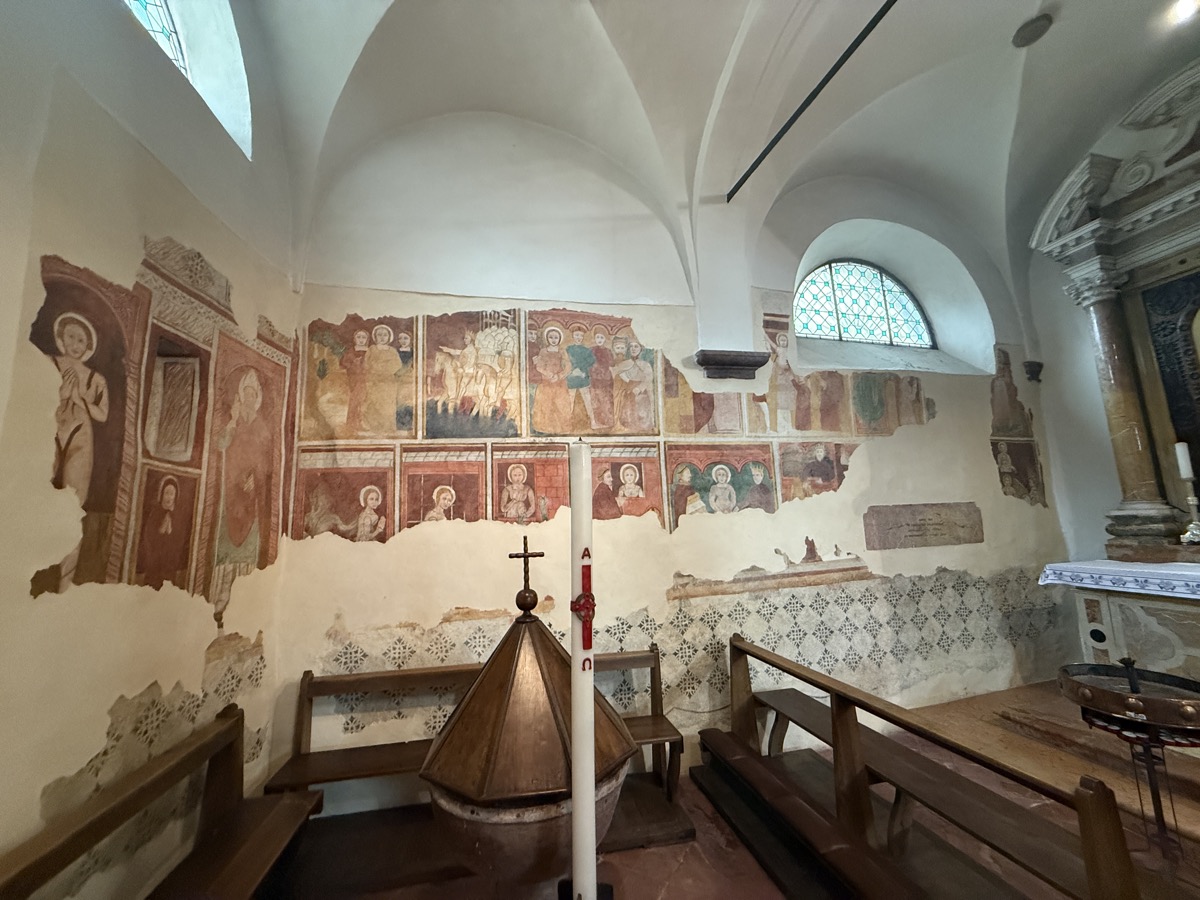
Medieval Frescoes
🏛️ HistoryInside the church, medieval frescoes dating back to the 13th–15th century cover the walls — saints with golden halos, groups of apostles in vivid colors that have survived centuries. The church is dedicated to St. Lawrence (San Lorenzo), one of the most venerated martyrs in Christian history. Lawrence was a deacon in Rome in 258 AD, responsible for distributing the Church's wealth to the poor. When the Roman Emperor Valerian demanded he hand over the Church's riches, Lawrence gathered the sick, the poor, and the crippled and presented them saying, "These are the true treasures of the Church." For this defiance, he was sentenced to death by being roasted alive on a gridiron. According to tradition, after suffering for a long time he reportedly said: "Turn me over — I'm done on this side." He became the patron saint of cooks, comedians, and the poor. The Chiesa di San Lorenzo near Arco holds the oldest frescoes in all of Trentino.
📖 St. Lawrence the Martyr 📖 Chiesa di San Lorenzo, ArcoSunday Mass
⛪ MassStarting the last full day in Italy the right way — attending Mass in a church founded around 800 AD. The purple Lenten vestments on the priest, the ancient frescoes on the walls, the flickering candles on the altar. This little parish church has been holding services for over 1,200 years — through the fall of empires, world wars, plagues, and the rise and fall of civilizations. And here we are, standing in the same nave, hearing the same liturgy. Some things endure.
📍 Church in Arco 📖 History of ArcoThe Church Exterior
🎬 ViewsThe church bell tower with its distinctive green copper dome and clock, standing watch over the cobblestone piazza. Rain-slicked stones, a small car parked under the arches — a quiet Sunday morning scene that hasn't changed much in centuries. The copper dome has oxidized to that beautiful verdigris green that only decades of Alpine weather can produce.
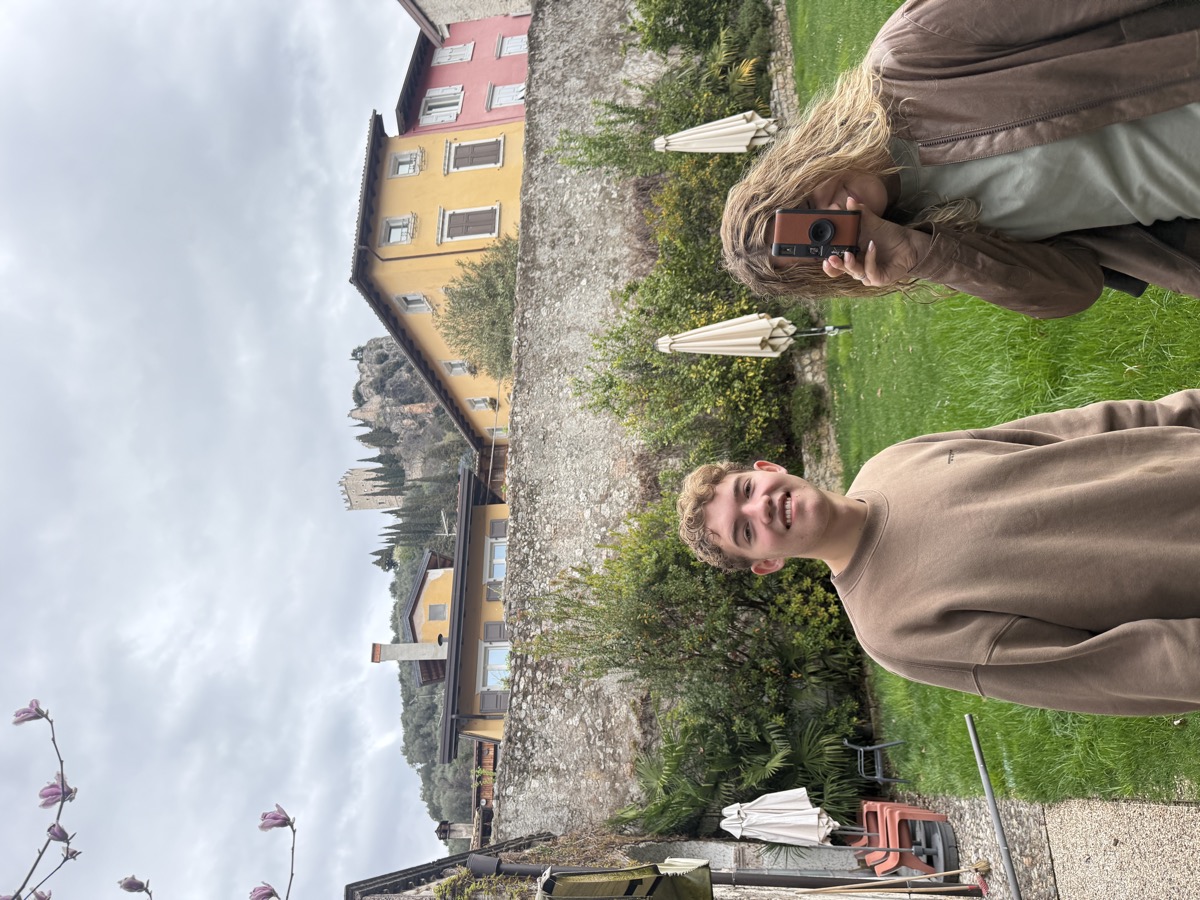
Castello di Arco
🏰 CastleThe iconic Castello di Arco perched high on its limestone crag, surrounded by Mediterranean cypress trees. This medieval fortress dates back to at least the 6th century and was the seat of the powerful Counts of Arco for over 800 years. During WWII, the area around Lake Garda played a significant role — Mussolini's puppet Republic of Salò was headquartered on the lake's western shore from 1943-1945, and the surrounding mountains saw fierce partisan resistance. The castle was already a ruin by then, but the mountains it watches over have seen more history than most countries.
📍 Castello di Arco 📖 The Castle 📖 Republic of Salò (WWII)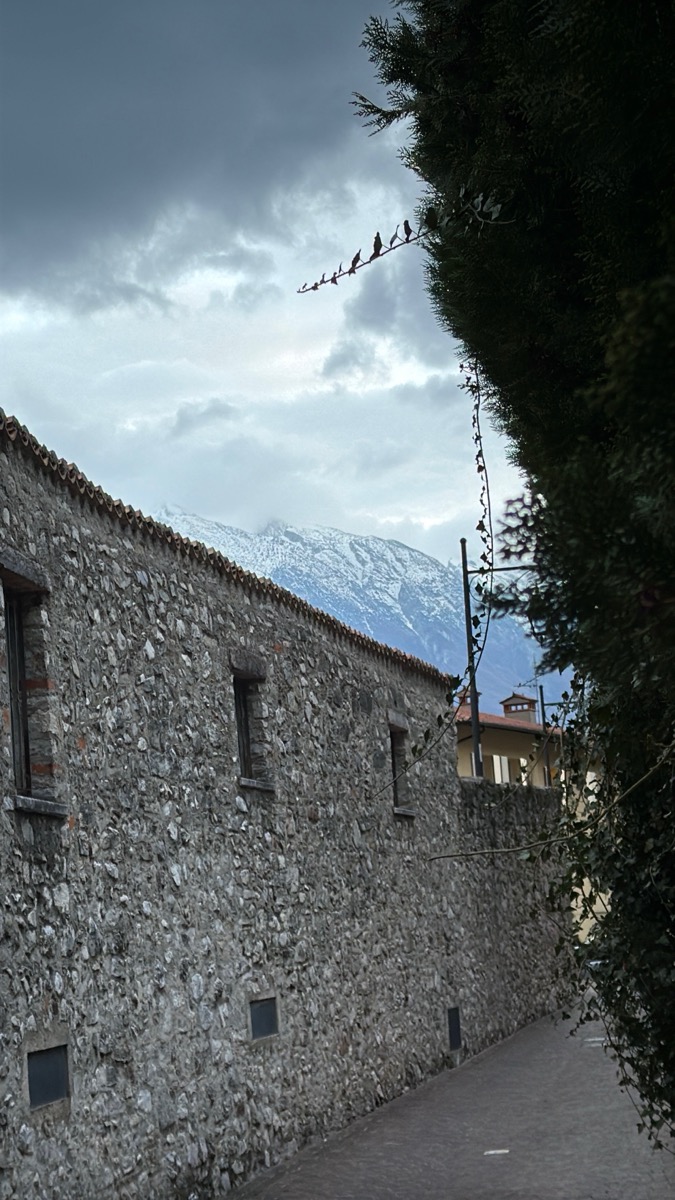
Old Stone Walls & Alpine Views
📸 AtmosphereWalking along ancient cobblestone paths lined with massive stone walls — built of rough-cut limestone and river rock in the traditional Trentino style. A row of birds perched on a bare branch, silhouetted against the snow-covered peaks behind. Cypress trees and ivy climbing the old walls. These paths haven't changed much since the Habsburgs walked them in the 19th century.
Exploring Arco's Old Town
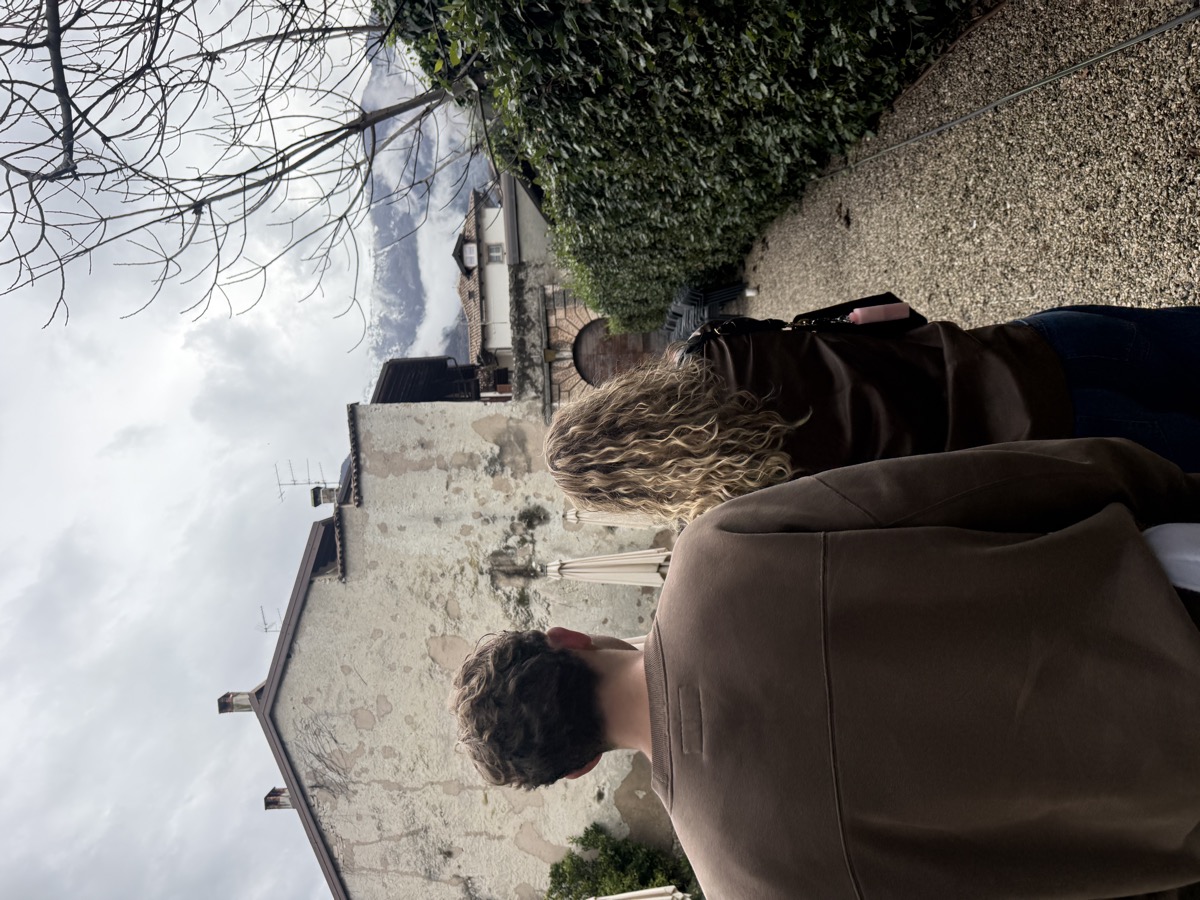
🚶 WalkingNova and Duncan walking through Arco's historic center — narrow gravel paths between ancient buildings with patchy plaster revealing centuries of stone beneath, medieval archways, and snow-capped mountains peeking through every gap. The folded parasols hint at the outdoor cafés that fill these lanes in summer, when Arco becomes one of the most popular rock-climbing destinations in the world.
📖 Arco & Rock Climbing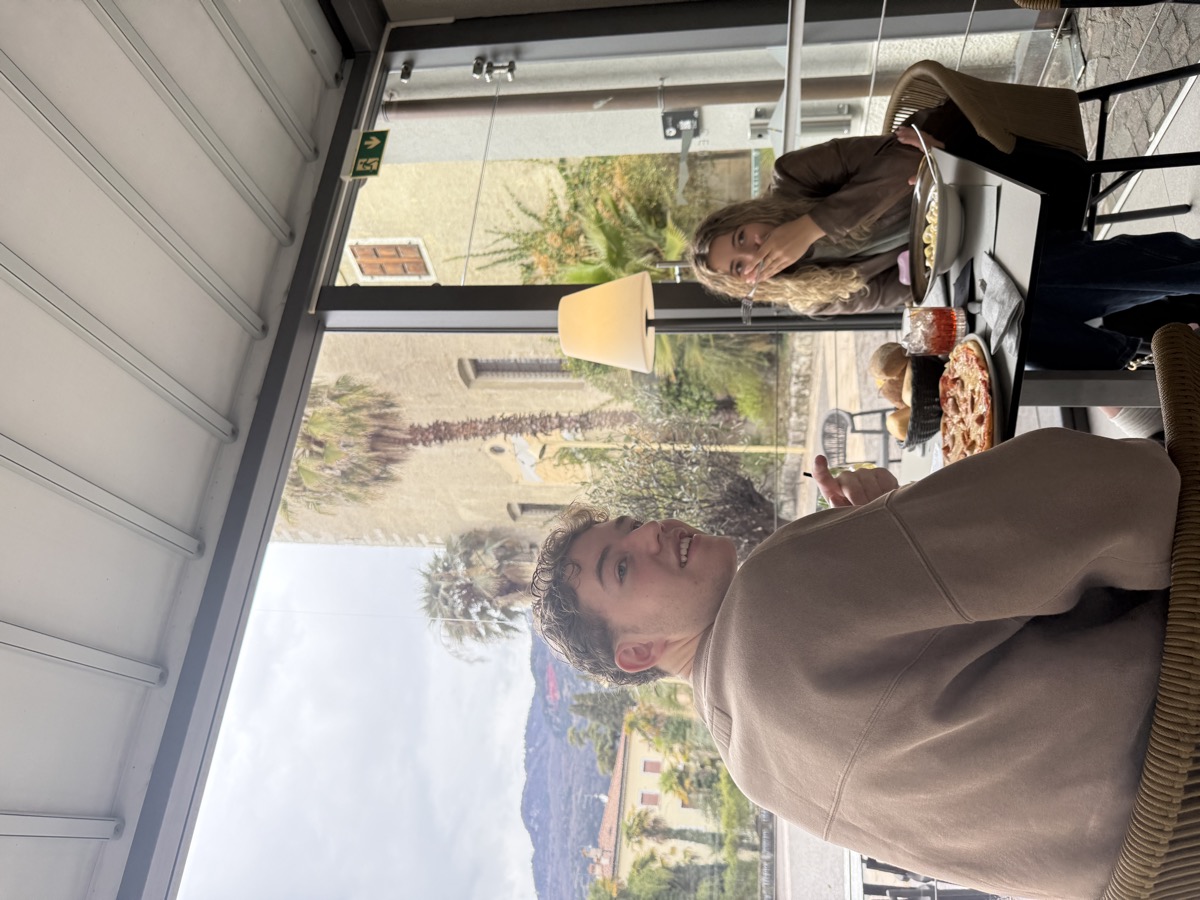
Pizza & Pasta with a View
🍕 LunchLunch at a trattoria in Arco's town center — a big pizza, a bowl of gnocchi, fresh bread, and what looks like an Aperol Spritz (the official drink of northern Italy). Through the glass enclosure: palm trees, a historic stone tower, and the mountains rising behind. The Aperol Spritz was invented in the Veneto region just east of here — three parts prosecco, two parts Aperol, one part soda, over ice with an orange slice. It's the taste of northern Italian life.
The Big Moment — YWAM Arco
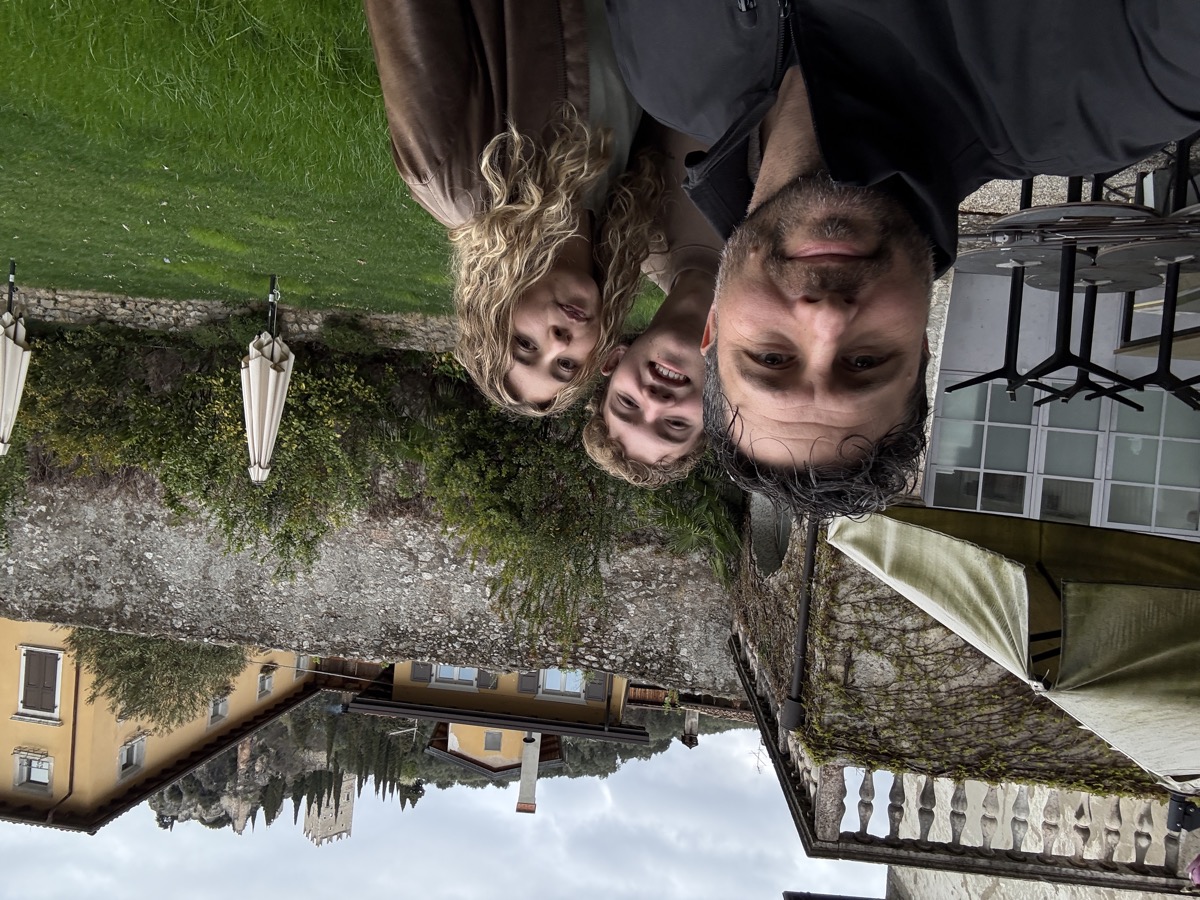
💛 FamilyThe whole reason for this trip — dropping Nova off at the YWAM (Youth With A Mission) base in Arco for her Discipleship Training School. That's the Castello di Arco towering on the cliff behind them. YWAM Arco has been running DTS programs in this stunning Alpine setting since the 1980s. For the next few months, this ancient town at the foot of the Dolomites will be Nova's home — not a bad place to spend a season growing in faith.
📍 YWAM Arco 🔗 YWAM International 📖 About YWAM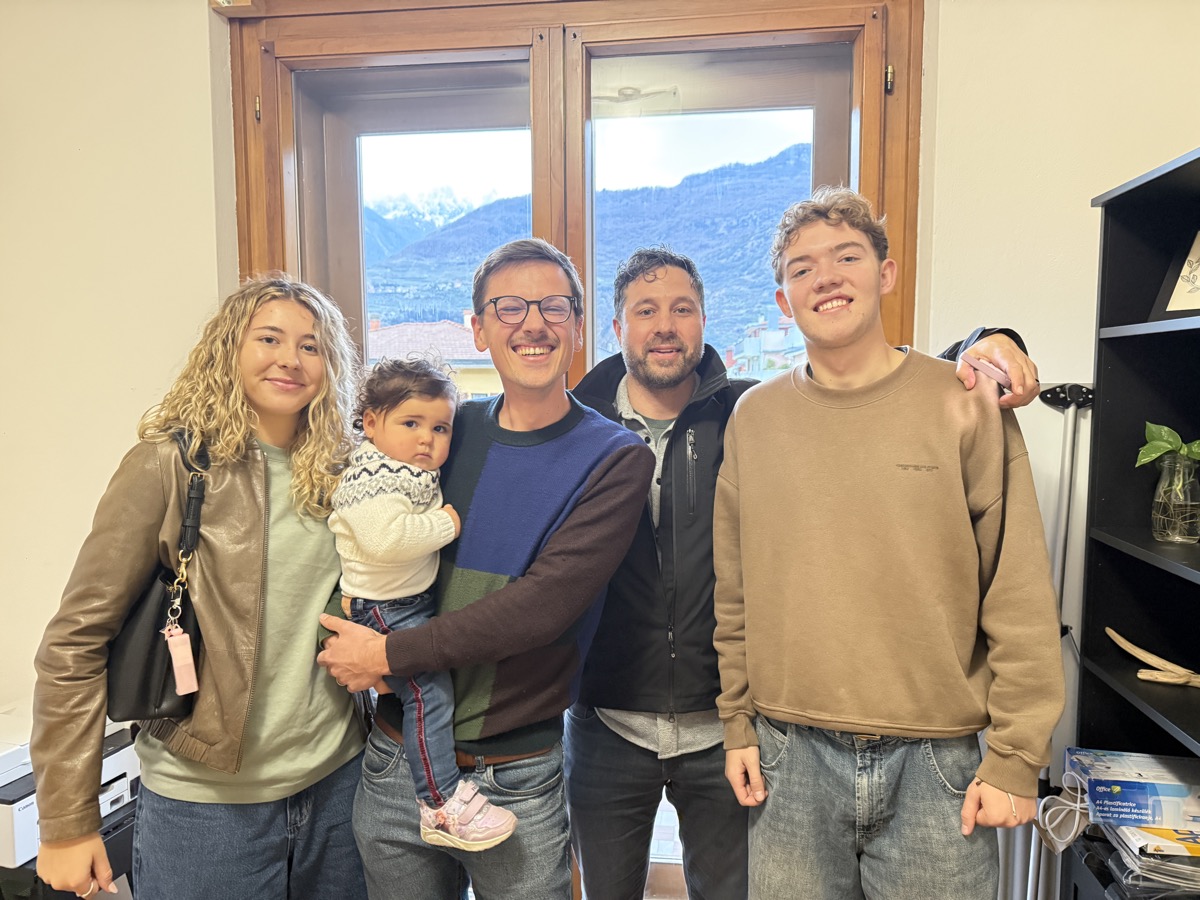
Meeting the YWAM Family
👋 PeopleMeeting the staff at the YWAM base — through the office window, those snow-capped Dolomite peaks. These are the people who'll be guiding Nova through her DTS journey. The baby in the Nordic sweater is a reminder that YWAM bases are living communities — families, couples, and individuals from all over the world living and serving together.
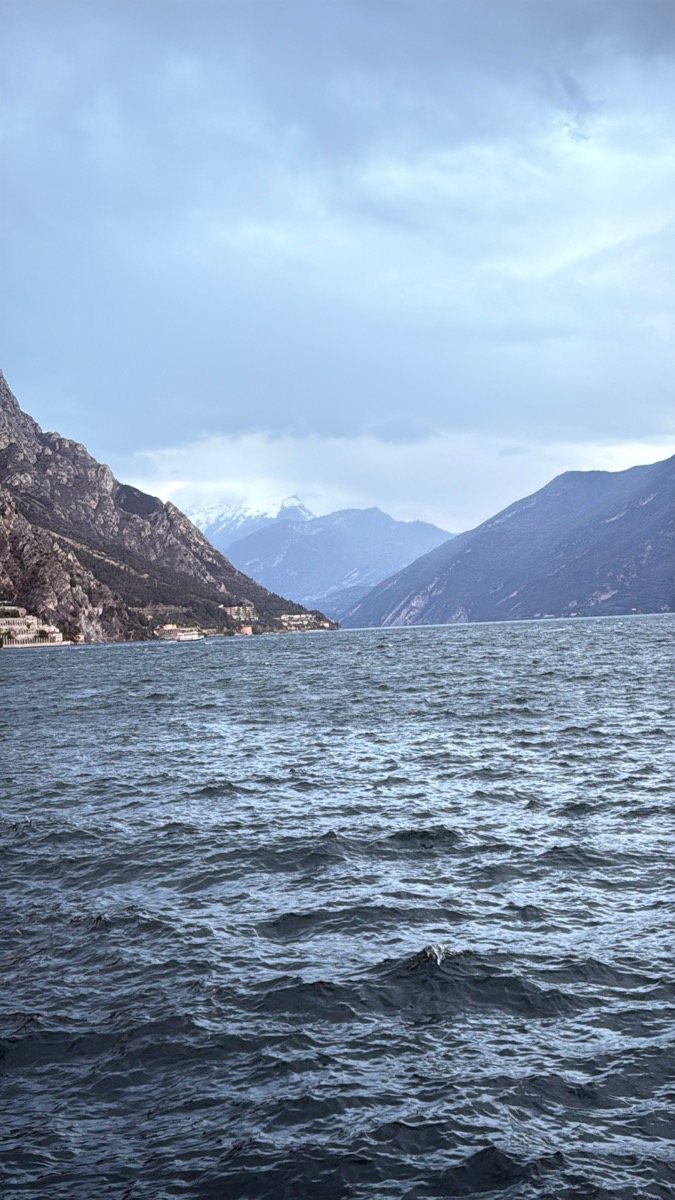
Lake Garda — Italy's Largest Lake
🌊 LakeAfter saying goodbye to Nova, the drive south along Lake Garda began — and what a drive. Lake Garda (Lago di Garda) is Italy's largest lake, 51 km long, up to 346 meters deep, and shared by three regions: Trentino, Lombardy, and Veneto. The northern part shown here looks like a Norwegian fjord — steep limestone cliffs plunging into dark blue water, snow-capped peaks in the distance. The road from Arco to Limone (the Gardesana Occidentale) is one of the most spectacular drives in Europe, carved into sheer cliff faces with dozens of tunnels blasted through the rock.
📍 Lake Garda 📖 Lake Garda 📖 Gardesana Road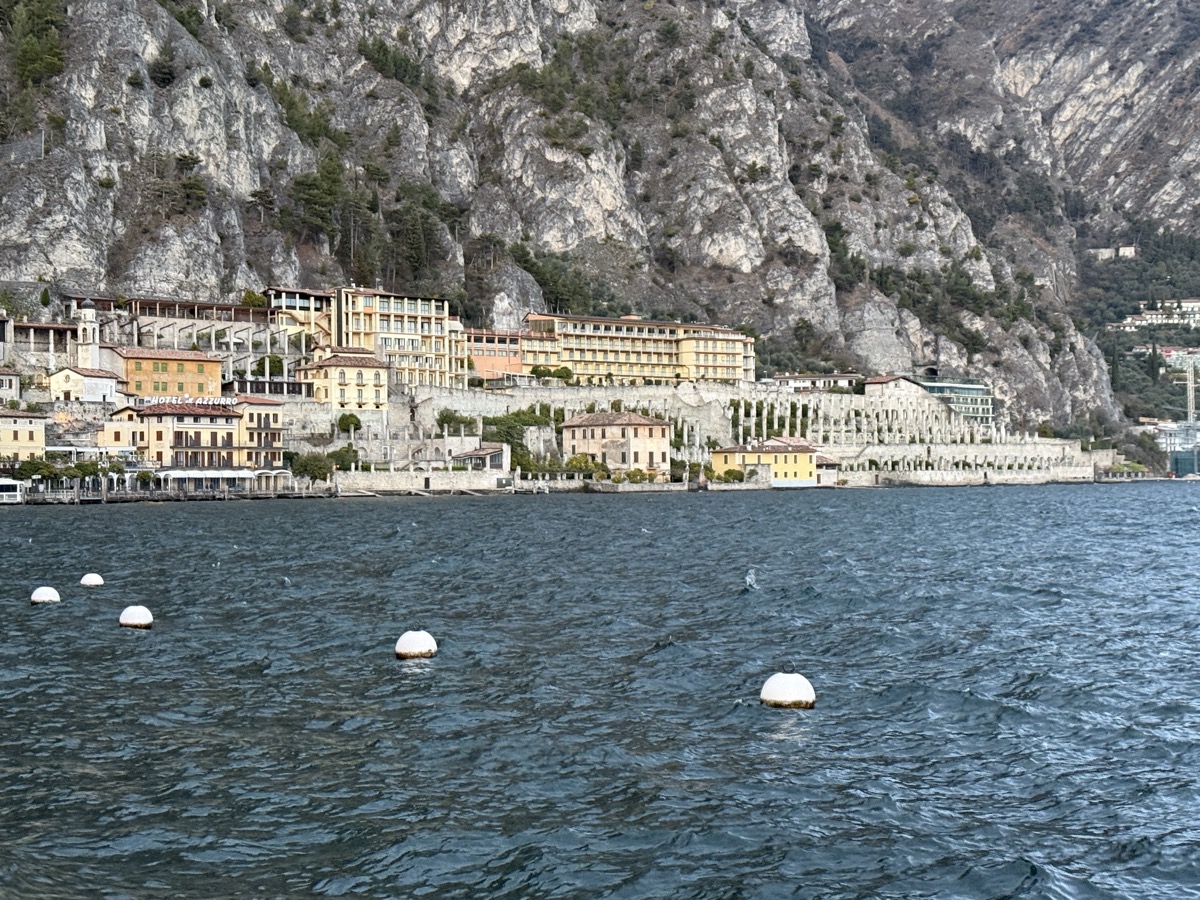
Limone sul Garda
🏘️ TownThe jewel of Lake Garda's western shore — Limone sul Garda, squeezed between massive limestone cliffs and the water. The colorful waterfront buildings include Hotel Azzurro on the left, and on the right you can see the tall stone pillars of one of Limone's famous limonaie — the historic lemon greenhouses that have been growing citrus here since the 13th century. This is the northernmost point of commercial lemon cultivation in the world, possible only because Lake Garda creates a unique microclimate that's almost Mediterranean despite being at Alpine latitudes.
📍 Limone sul Garda 📖 About Limone 📖 The Limonaie (Lemon Houses)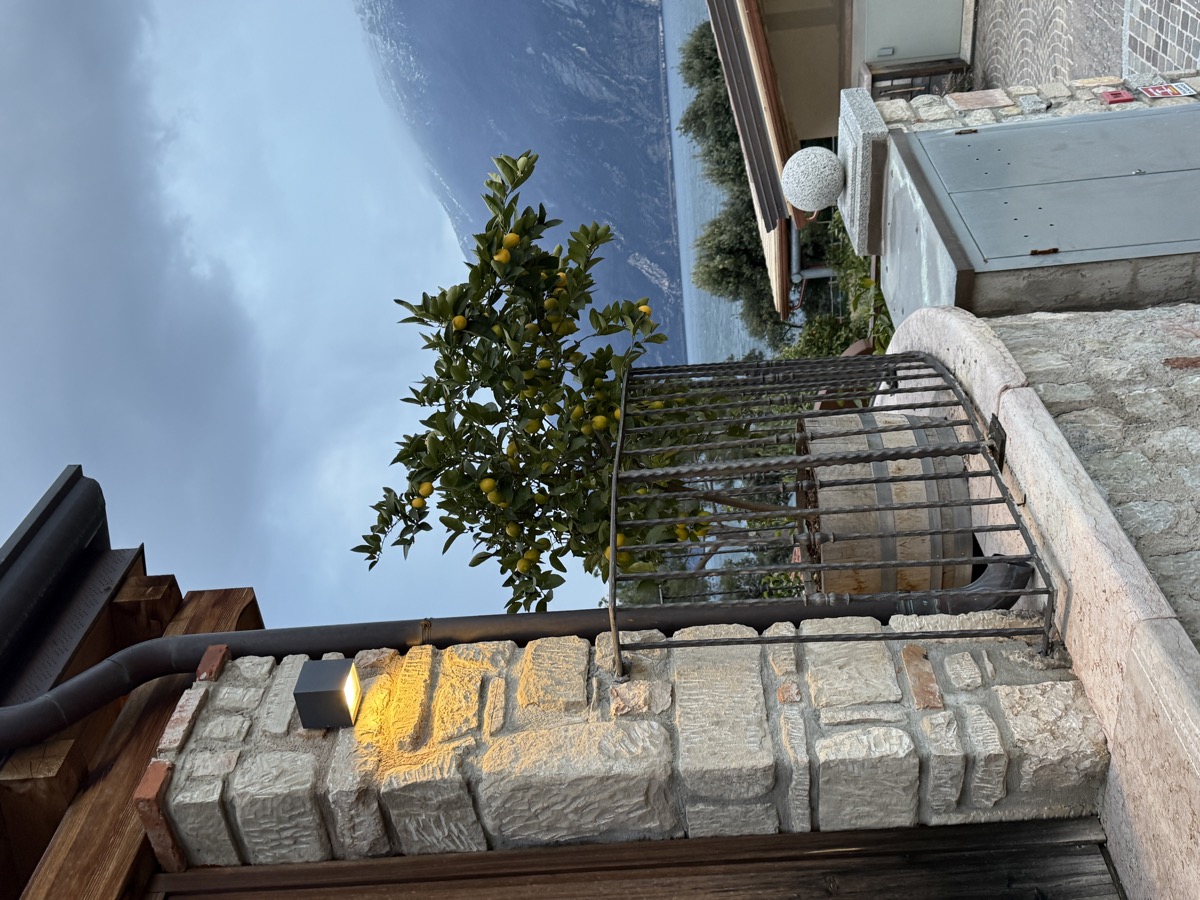
The Famous Lemons of Limone
🍋 IconicA lemon tree laden with bright yellow fruit on a stone balcony overlooking Lake Garda — this is the quintessential Limone shot. The town's lemon cultivation dates back to at least 1274. Fun fact: despite the obvious connection, the town's name likely comes from the Latin word "limen" (border), not "limone" (lemon), as the town sat on the border between different jurisdictions. But the lemons are real — and they've made this tiny town famous worldwide. In 1979, scientists discovered that many Limone residents carried a unique protein (Apolipoprotein A-1 Milano) that made them nearly immune to heart disease. They called it "the Limone gene."
📖 The "Limone Gene"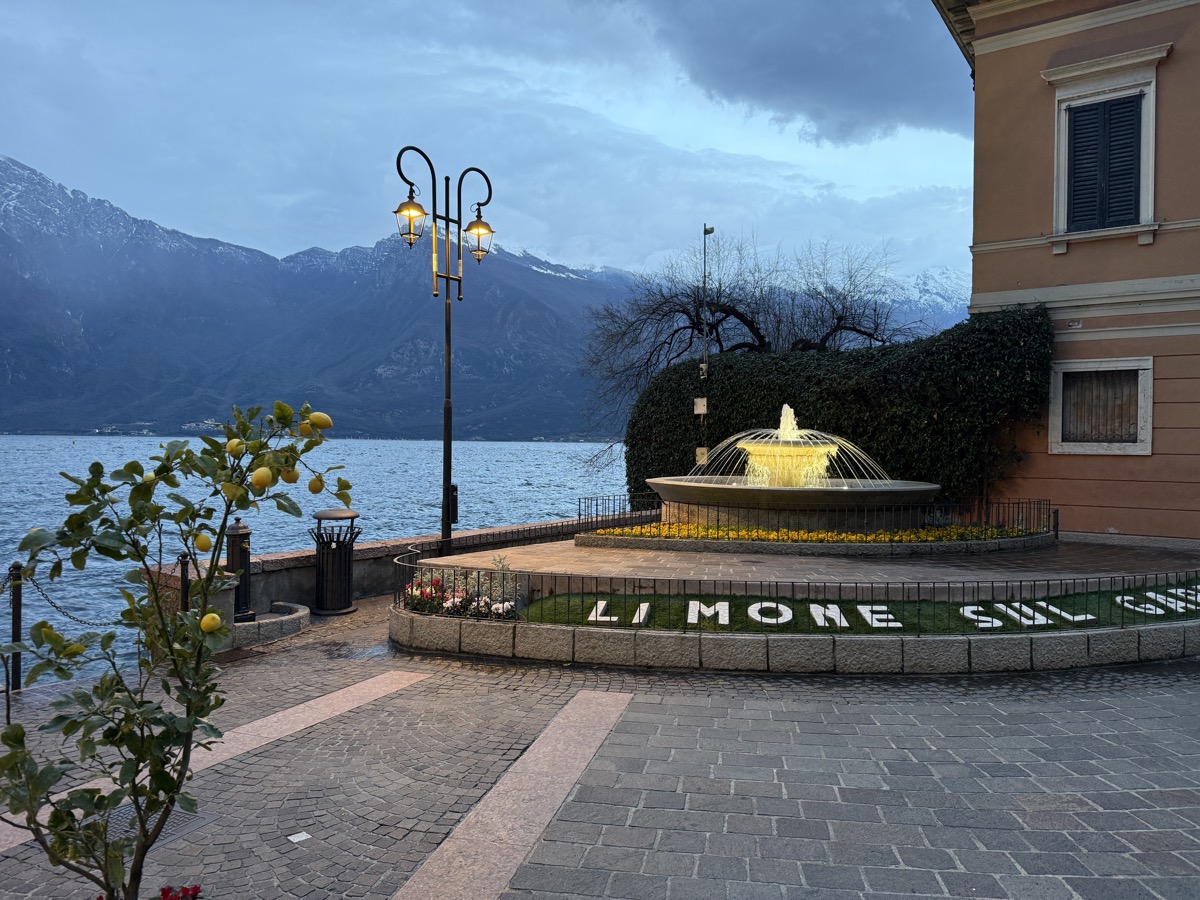
Blue Hour at the Fountain
🌙 EveningThe town fountain spelling out "LIMONE SUL GARDA" in white letters, lit golden from below. A lemon tree with ripe fruit in the foreground. The Art Nouveau street lamp casting warm light against the deep blue twilight sky. Lake Garda stretching out behind with the snow-dusted mountains of the eastern shore fading into the clouds. This is the blue hour in one of Italy's most beautiful lake towns — and it's absolutely magical.
📍 Limone Lakefront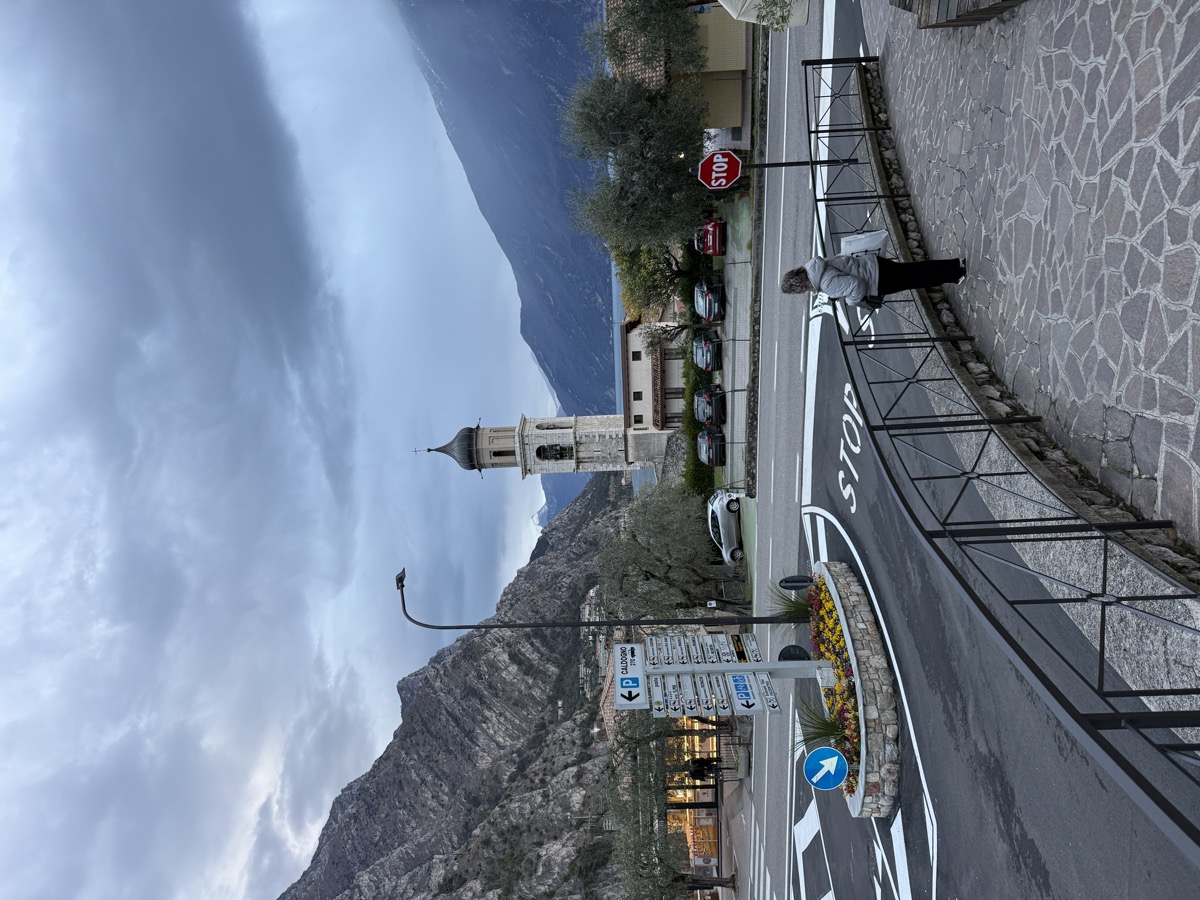
Arriving in Limone
📸 TownThe roundabout at the entrance to Limone with the Chiesa di San Benedetto's bell tower rising above the rooftops. The distinctive onion-shaped dome shows the Austro-Germanic influence — this whole area was part of Austria-Hungary until World War I. The Italians call the post-WWI border change "irredentismo" — the reclaiming of "unredeemed" Italian-speaking lands. Trentino, including Limone and Arco, became Italian in 1918 after centuries under the Habsburgs.
📖 Chiesa di San Benedetto 📖 Italian Irredentism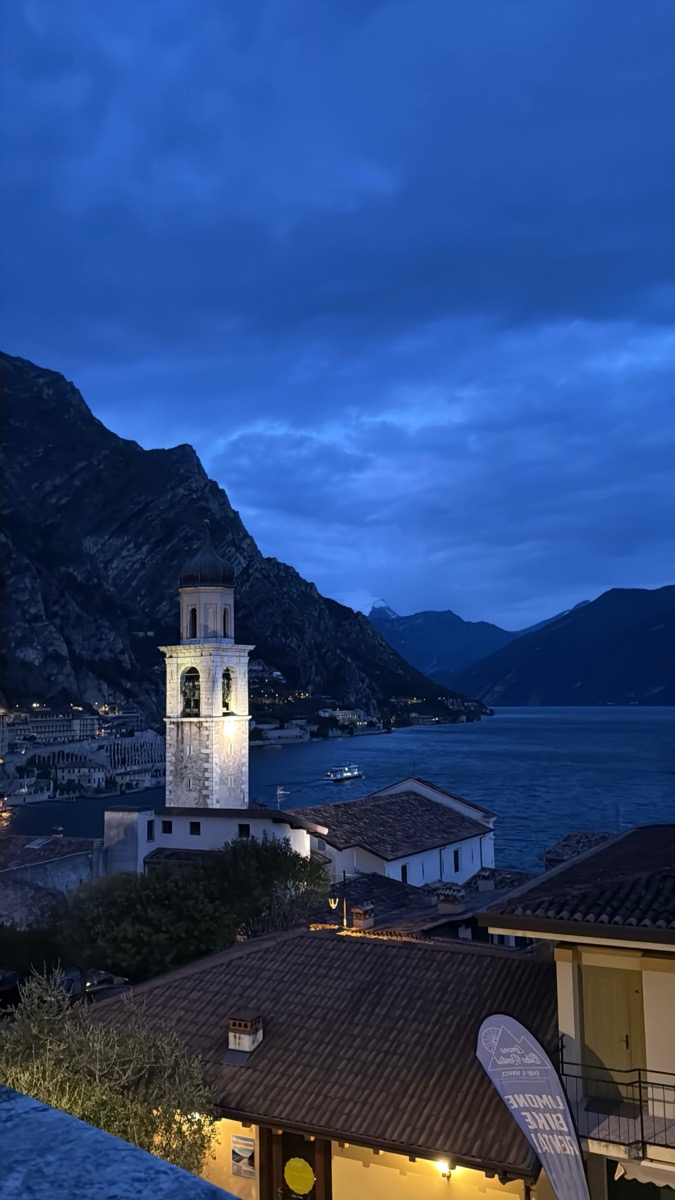
Bell Tower at Twilight
🌙 TwilightThe illuminated bell tower of San Benedetto glowing against the deep blue twilight sky, terracotta rooftops cascading down to the lake below. A distant snow-capped peak visible through the gap between the mountains. This view — ancient tower, lake, and Alps — is exactly what the Grand Tour travelers came to see when they started visiting Lake Garda in the 18th century. Goethe himself passed through here in 1786 and wrote about the "magnificence of the scenery."
📖 The Grand Tour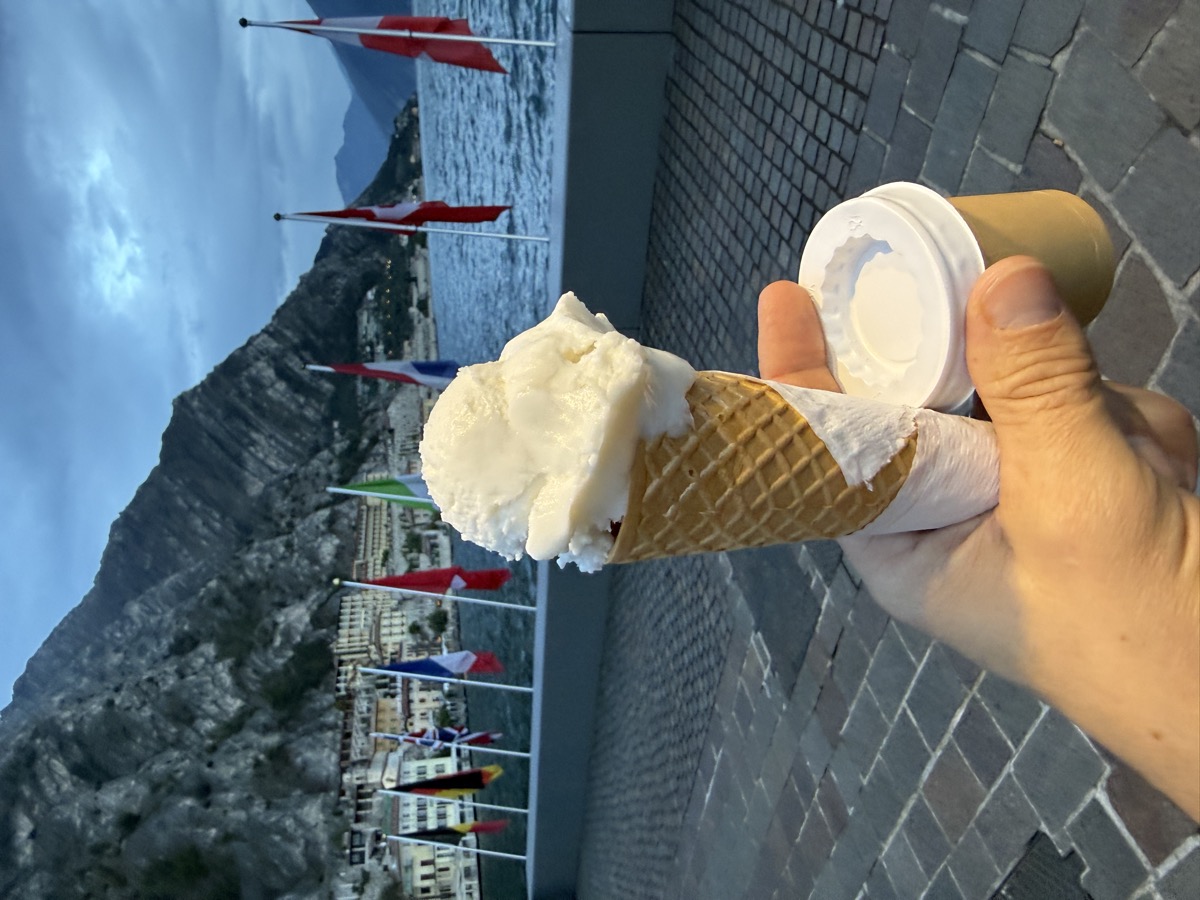
Gelato on the Promenade
🍦 GelatoWhen in the lemon town, you get lemon gelato — that's the law. The empty promenade with its row of international flags (welcoming visitors from across Europe) and the waterfront buildings lit up against the cliff face. In summer this walkway is packed shoulder-to-shoulder with tourists. But in March, you have it all to yourself. Off-season Italy is a completely different (and arguably better) experience.
Must-Eat Bologna Checklist
- Tagliatelle al Ragù (NOT spaghetti bolognese)
- Tortellini in Brodo (in broth, NOT cream)
- Mortadella (sliced thin, the real deal)
- Tigelle (small round bread with fillings)
- Parmigiano Reggiano (aged 24+ months)
- Gelato (try Amaro flavor at Cremeria Cavour)
- Lambrusco (local sparkling red wine)
🗣️ Essential Italian
🏠 Bologna Airbnb — Mar 10-13
Via Pescherie Vecchie 1, 40125 Bologna
Right in the Quadrilatero — Bologna's ancient market district. Steps from Piazza Maggiore and the Two Towers.
📍 Open in Google Maps🏔️ Agritur Acetaia Gourmet & Relax — Mar 13-15
Strada di S. Zeno 2, Tenno (Trentino)
Farmstay in the hills above Lake Garda. Balsamic vinegar tasting, infinity pool, and stunning mountain views. Our host Tony made early breakfast so we could hit the slopes.
📍 Open in Google Maps 🔗 Website🚆 Train Info
Arriving: Frecciarossa 9527, Milano → Bologna, 10:58-11:24
Coach 3, Seats 11A (Nova) & 12A (Adam)
Booking ref: FG7EKN
🍝 Food Tour
3-hour private walking food tour: prosciutto, mortadella, Parmigiano, tortellini, balsamic, gelato, wine
📍 Book on GetYourGuideTrattoria del Biassanot
⭐ Host PickVia Piella 16 -- right near the famous "little window" of Bologna where you can see the hidden canal.
📍 Directions 📞 +39 051 230644
✅ CONFIRMED! Show the QR code from your email when you arrive.
⏰ Don't be more than 15 min late or they won't hold the table.
📞 If you can't make it, call: +39 334 7013974
Caffè Impero
☕ BreakfastVia Indipendenza 39/a -- on the main boulevard between station and Piazza Maggiore
📍 Directions 🔗 ReviewsUn Chicco
☕ BreakfastVia Falegnami 16/a -- tucked in the old streets near your Airbnb
📍 Directions 🔗 ReviewsTrattoria Da Me nella Torre
🍝 RestaurantCorte de' Galluzzi 5/A -- dining inside a medieval tower!
📍 Directions 🔗 Reviews🎟️ Food Tours & Experiences
Your host recommends Viator for gastronomic tours and unique experiences in Bologna.
🔗 Browse Experiences on Viator 🍝 Book Food Tour